- MENU
- HOME
- SEARCH
- WORLD
- MAIN
- AFRICA
- ASIA
- BALKANS
- EUROPE
- LATIN AMERICA
- MIDDLE EAST
- United Kingdom
- United States
- Argentina
- Australia
- Austria
- Benelux
- Brazil
- Canada
- China
- France
- Germany
- Greece
- Hungary
- India
- Indonesia
- Ireland
- Israel
- Italy
- Japan
- Korea
- Mexico
- New Zealand
- Pakistan
- Philippines
- Poland
- Russia
- South Africa
- Spain
- Taiwan
- Turkey
- USA
- BUSINESS
- WEALTH
- STOCKS
- TECH
- HEALTH
- LIFESTYLE
- ENTERTAINMENT
- SPORTS
- METRO
- INDUSTRY
- Agriculture
- Airline
- Auto
- Beverage
- Biotech
- Book
- Broadcast
- Cable
- Chemical
- Clothing
- Construction
- Defense
- Durable
- Engineering
- Electronics
- Firearms
- Food
- Gaming
- Healthcare
- Hospitality
- Leisure
- Logistics
- Metals
- Mining
- Movie
- Music
- Newspaper
- Nondurable
- Oil & Gas
- Packaging
- Pharmaceutic
- Plastics
- Real Estate
- Retail
- Shipping
- Sports
- Steelmaking
- Textiles
- Tobacco
- Transportation
- Travel
- Utilities
- COMPANIES
- 3M (MMM)
- AT&T (T)
- AIG (AIG)
- Alcoa (AA)
- Altria (MO)
- American Express (AXP)
- Apple (AAPL)
- Bank of America (BAC)
- Boeing (BA)
- Caterpillar (CAT)
- Chevron (CVX)
- Cisco (CSCO)
- Citigroup (C)
- Coca Cola (KO)
- Dell (DELL)
- DuPont (DD)
- Eastman Kodak (EK)
- ExxonMobil (XOM)
- FedEx (FDX)
- General Electric (GE)
- General Motors (GM)
- Google (GOOG)
- Hewlett-Packard (HPQ)
- Home Depot (HD)
- Honeywell (HON)
- IBM (IBM)
- Intel (INTC)
- Int'l Paper (IP)
- JP Morgan Chase (JPM)
- J & J (JNJ)
- McDonalds (MCD)
- Merck (MRK)
- Microsoft (MSFT)
- P & G (PG)
- United Tech (UTX)
- Wal-Mart (WMT)
- Walt Disney (DIS)
- RSS
- iHaveNet.com: Middle East
Countries
Argentina | Australia | Austria | Benelux | Brazil | Canada | China | France | Germany | Greece | Hungary | India | Indonesia | Ireland | Israel | Italy | Japan | Korea | Mexico | New Zealand | Pakistan | Philippines | Poland | Russia | South Africa | Spain | Taiwan | Turkey | United Kingdom | United States
Cities
Atlanta | Baltimore | Bay Area | Boston | Chicago | Cleveland | DC Area | Dallas | Denver | Detroit | Houston | Los Angeles | Miami | New York | Philadelphia | Phoenix | Pittsburgh | Portland | San Diego | Seattle | Silicon Valley | Saint Louis | Tampa | Twin Cities
- Erdogan in Deep Trouble
- Anti-Intellectualism in Turkey
- The Islamic Scramble for Jerusalem
- Why Jerusalem is the Capital of Both
- Half an Idea Much Worse Than None
- Yemen: War Without End?
- Starvation and Cholera in Yemen
- Syrian Lives in Limbo
- Climate Change & Middle East Security
- Refugee Turns Pain Into Power
- The Power of the Kurds in Iraq
- Why Dictators Pretend to Love the Law
- Only Pope Francis Could Go to Arabia
- Exploiting Iran's Protest Movement
- Oil and Iran
- Abbas and Jerusalem
- Dangerous Portents in the Middle East
- Israel's Mythical 'Isolation'
- Where U.S. Troops Are Based
- Who Can We Trust To Measure Poverty?
- Instability, Quagmire, & Peace
- American Jews and Israel
- Time for Two American Embassies
- Israel's Demons This Millennium
- The Imponderables of the Middle East
- Trump's Jerusalem Rationale
- God's Middle East Playground
- Oil and a More Muscular Saudi Arabia
- ISIL's Defeat: It's Over, But Not Over
- The Fall of the House of ISIS
- The Exodus of ISIS Fighters
- Children of the Islamic State
- Islamic State in Egypt's North Sinai
- Israel Ambassador Pick Sets Off Alarms
- Iran: Crime against Humanity?
- Deadly Terror in Turkey
- EU Shouldn't Freeze Turkey Negotiations
- US - Saudi Relations Finally Souring
- Outdated Relationship with the Saudis
- Iraq's Future as a State
- Turkey's Policy towards Syria
- Assad Regime Must Pay Reparations
- The Old Oil Order Is Collapsing
- Challenging ISIS on its Own Turf
- Stabilizing Syria's Border

- Where Support For Autocracy Strongest
- Iraq: A Huge Ethical Leap Backwards
- Donald Trump & the Middle East
- The International Dimension of Aleppo
- Stopping Saudi Arabia's War in Yemen
- Iraq's Traumatized Minorities
- Turkey's Post-Davutoglu Era
- Israel's Rightward Drift
- Realizing Peace
- Saudi Crisis Deepens
- The Kurdish Issue
- ISIL's Cash Flow Problems
- ISIS: In Retreat or Transition?
- Syria's Moderate Opposition Lives
- Deadly Stalemate in Yemen
- Israeli Blockade Inherently Violent
- Trump & Israel: Big-League Issues
- Israeli - Palestinian Realities
- Mosul, Iraq, ISIL & the Levant
- Strange Bedfellows in the Middle East
- Saudi Arabia's Foreign Policy
- From Paris to Istanbul ...
- Why Saudis Fund Wahhabism
- ibn Abd al-Wahhab?
- Yemen: Last Chance for Peace
- After the Russian Intervention
- Jimmy Carter's Peace Role
- Bombing ISIL Like Watering Its Roots
- Islamic Extremism Synergistic
- U.S. Should Follow Suit
- When Islam Polices Extremists
- Not Only U.S. That Israel Resents
- Execution Going to Cost Saudi's
- Causes & Consequences in Yemen
- Saudi Arabia's Window Dressing
- The Global Militarisation Index
- Geopolitics of Religious Liberty
- Towards a Sectarian Political Order?
- U.S. & Saudi Arabia: Toxic Alliance
- Odds Stacked Against Mahmoud Abbas
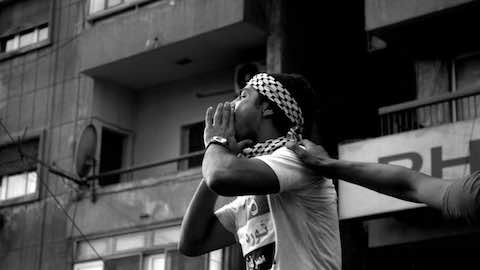
- Countries With the Most Troops
- Islamic Extremism is Protean
- Hillary Armed Saudis to the Teeth
- Saudi Support: Humanitarian Disaster
- Can We Not End Wars Anymore?
- Syria: For Money or Liberty?
- Russian Intervention in Syria
- A Greater Threat to Syria Than ISIL
- Israel: Security & Legitimacy
- Violence, Hostility & Religion
- Putin's Syrian Quagmire
- ISIL: Terror Attacks Timeline
- Schrodinger's Solution for Syria
- The Middle East's New Nakba
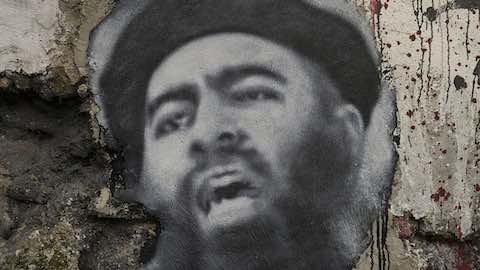
- ISIL's Obvious Next Step
- Enabling Police Brutality in Egypt
- Why Most Extremists are Engineers
- The Children's Crusade
- Dissidence & Diplomacy
- Is Russia Targeting Civilians?
- Why Turkey Shot Down That Plane
- ISIL's Sinews of War
- Religious Politics & Illiberal Religion
- The Geopolitics of Cheap Oil
- The Kurdish Resistance in Turkey
- Turkey: Majority at Terrible Price
- Radical Win-Win Solution for Syria
- Obama's Strategy in Iraq: Escalation
- What Happens When ISIL has an Air Force?
- Stop Cheering for Russia in Syria
- Inevitable Triumvirate: Syria, Russia & Iran
- A Nuclear-Weapon-Free Zone
- Containing the Islamic State
- The Dark Plot to Tip the Scales
- Deconstructing the Saudi War on Yemen
- ISIL Needs to Be Stopped, With Imagination
- Islamic Still on a Roll
- The Problem with Young Dictators
- Assad's Double-Edged Sword
- Atheists in the Arab World
- How Peace in Syria Can Happen
- The Clash of Civil Persuasions
- The Great Convergence with Iran
- Iran Deal: A Middle East Game-Changer
- Reviving the Axis of Evil?
- Authoritarian Symps
- Celebrating Wars & Destruction
- ISIS Unites the World
- An Eritrean in Israel
- Kumbaya Moment for the Middle East?
- Coalition Should Crush Islamic State
- Iraqi Army Overmatched Against ISIL
- Is Putin Really as Foolish as We Are?
- The 'Main Engine' of the Destruction of ISIL
- Plague Upon the House of Erdogan
- Islamic State Doesn't Want True Muslims
- Kids Paying the Price in Yemen
- Turkey's AKP Doomed
- A Fateful Triangle in Yemen
- ISIL's Crimes Against Islam
- DC's Dictator Summit
- How the U.S. Contributed to Yemen's Crisis
- Is Al Qaeda Waxing or Waning?
- Plausible Solution to Syria & Yemen
- Another Illegal War in the Middle East
- Jim Crow in the Holy Land
- Netanyahu's Victory: Bad as It Looks
- Healing or Harming?
- Two-Track War Against ISIL
- Why ISIS Exists
- Some Good News
- Islamic State Not Worth a Strategy
- Bin Laden Killing Based on Intelligence?
- Why Isn't World Peace Taken Seriously?
- The Star Trek Fallacy
- Foreign Policy May Love a Vacuum
- Multiculturalism Will Save Turkey
- Saudi Arabia Fixated on Iran
- Syrian President Assad Using Islamic State
- Yemen's War Redrawing the Fault Lines
- The West's Flaws When Discussing Islam
- ISIL's Strange Co-dependency With Assad
- Will Israel 'Bounce the Rubble' in Gaza?
- Yemen & the Congress of Reaction
- Autocrats United Against Yemen
- Why America Lacks Credibility in the Middle East
- America's Hydra Problem in the Middle East
- The Islamic State and Turkey's 'Precious Loneliness'
- Why Are Women Joining ISIL?
- When Bibi Came to Town
- The Geopolitics of Speeches
- Need for a New Syrian Narrative
- Understanding Turkey's Tilt
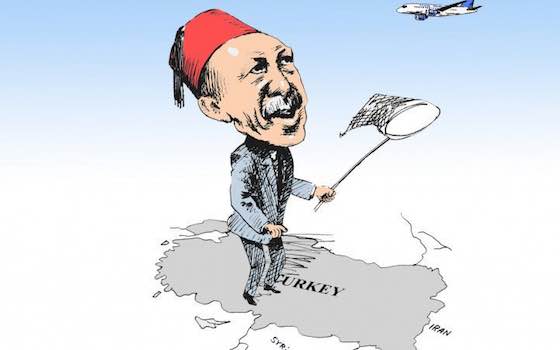
- Turkey Holding Up a Resolution in Syria
- ISIS: Nationalism Under Pressure
- Khomeini Drew the Line at Nukes
- Syria & the War against ISIS
- The Syrian Labyrinth
- Iraq Long Awash in Carnage
- Treat ISIS Like an Onion
- Iran: Netanyahu UN Speech Baseless
- Six Steps Short of War to Beat ISIS
- How the U.S. Enabled ISIS
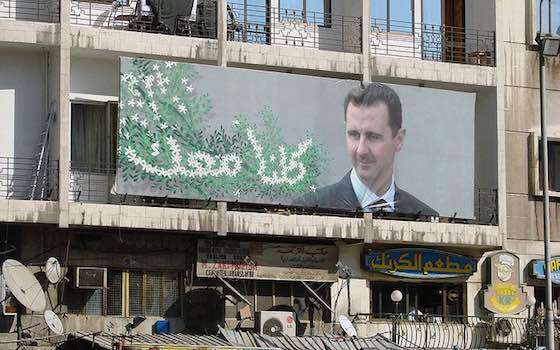
- Praying for AIPAC's Decline
- Nations & Borders are Always Messy
- Israel's Lack of Interest
- Recognizing Palestine
- So, ISIL, You Want to Rule a Caliphate
- Wanna-Be's Doing ISIL's Bidding
- Turkey's Dealings With ISIL
- Coalition to Confront ISIS is Doomed
- Turkey & Israel: There and Back Again
- Intra-Jewish Discrimination in Israel
Nearly two thirds of humanity remains offline, that is more than 4 billion people. The internet is a powerful enabler of social and economic progress and everyone deserves to be connected. It is the responsibility of the technology industry to make this happen
Gareth Porter's new book chronicles American and Israeli efforts to ensure the perpetuation, rather than the resolution, of outstanding concerns about Iran's nuclear program
What has got into the Saudis? Their unprecedented decision not to take the Security Council seat, and their angst over Western policy towards Syria and what some in Riyadh perceive as a mating dance between the US and Iran, have sent a strong signal of unease
Three years ago, Hosni Mubarak, President of Egypt, stepped down amid historic protests against his dictatorial rule. His resignation marked the climax of an uprising that was quickly recognized as one of the most significant upheavals of the 21st century
This is probably, but not certainly, the year that sees the end to the United States' three-decades-long effort to establish permanent American strategic bases in the Muslim Middle East. The American departure will leave behind much carnage and ruin
What was believed by Americans to be the omnipotence of the U.S. in the Greater Middle East is today being replaced by a fear that the United States not only has decisively lost its power, but is also responsible for why everything seems to be going wrong
The Washington Post and New York Times had the same front-page headlines recently. Both had to do with the 'Power Void' in the Middle East, deploring that America's decade of attempting to create a new order in the region now is blowing up in its face
The Iraqi army has had to scramble to regain control over of the once-liberated Anbar province against the latest incarnation of the al-Qaida terrorist menace. Not surprisingly, the call has gone out for the U.S. to come running to the rescue again
What's the point of intervening in a foreign country under the guise of humanitarianism, or sending aid, if you're just going to end up importing its citizens en masse anyway? Isn't the whole idea to shape up the place so that its people can safely remain there?
Supporters of the Muslim Brotherhood claim that it was leading an attack on Egypt's authoritarian regime when it was stopped in its tracks. This is fiction. The Brotherhood's ambition was simply to replace the old ruling party at the pinnacle of power
If there is a nation that can successfully convince the Arabs, the Jews and the Persians to sit down simultaneously for a talk, it can only be the Chinese. With immense economic interests, China is both eager and able to lay the table
What the governments of Saudi Arabia and Israel fear most is not an Iran capable of producing a nuclear bomb, but rather the easing of the tension between the United States and Iran.
As in the 1940s in Palestine, some opposition recruits have gone to Syria motivated by extremist ideologies and with the intention to commit acts of terrorism. But most have more prosaic reasons for fighting
Mother Agnes-Mariam Warns that Islamic extremists undermine peace prospects in Syria. Her analysis of conditions on the ground in Syria is far more nuanced than those of the mainstream media in the United States
After months of commendable restraint, President Barack Obama has decided to send weapons to the besieged Syrian rebels. This is either a bid to overthrow a friend of Iran or a ploy to capture Syria's oil. Or both. Sound familiar? It should
Three days before the coup that removed Mohamed Morsi from the presidency, I marched with tens of thousands of Egyptians to the presidential palace. A sea of protesters had filled Cairo's streets, waving flags and chanting for the downfall of the regime
Can the former opposition avoid the fragmentation that played a significant role in catapulting the Muslim Brotherhood to power in the first place? There are many challenges to overcome, not the least of which is that the military ultimately holds the keys to power
In the short term, the Muslim Brotherhood will continue to denounce the coup and engage in protests Eventually, however, the group will try to revive itself by re-assimilating into Egypt's political institutions, though it is in no hurry to attempt to reclaim the presidency
While president of Egypt, Mohammed Morsi was the world's only democratically elected leader to motivate over 20 million of his people, one-quarter of the population, to sign a petition calling for his ouster. So why has the United States been so doggedly supporting Morsi?
The Middle East is becoming irrelevant. The discovery of enormous new oil and gas reserves along with new oil-recovery technology is steadily curbing the demand for Middle Eastern oil. Soon, Saudi Arabia and Iran are going to have less geostrategic clout
For so many years, Iran has been a popular neighbor among most Arab states, largely because of its unremitting hostility toward Israel and the West. But now, the tables have turned. Iran has lost the friendship and support of almost every Arab and Muslim state
The Washington Post editorial: 'No time for half-measures: Syria's rebels need a robust intervention.' The New York Times: 'After Arming the Rebels, Then What? President should be careful about being dragged into brutal Syrian war.' I'm on the side of the Times
The Iraqi state, post-Saddam and post-US occupation, struggles to hold together even on a good day. But events in Syria are testing its resilience more than any shock since the country was carved out of the ruins of the Ottoman Empire
Six years ago Iraq faced its own civil war, but managed to pull itself back from the brink. Now Syria threatens to unravel its politics once again, as competing Iraqi factions are tempted to support opposing sides in the Syrian conflict
Syria savaged by civil war, shows increasing signs of national breakdown. The regime of President Bashar al-Assad in Damascus is no longer in control of considerable swaths of the country. Like other Arab states, Syria is barely a century old
The Syrian war is spreading fast, engulfing all of its Middle East neighbors and risking even larger conflicts, while leaving the pertinent question: What's to be done before the region explodes? So what should the United States and Russia do now?
If there was a moment when the United States could have productively intervened in Syria, it looks like that moment has passed. Shiite militants, including Hezbollah -- partly at the behest of their paymasters in Iran -- are racing to the defense of Bashar Assad's regime
The war that was supposed to follow the Cold War, according to the late Samuel Huntington, was to be a war between civilizations, with Islam and China improbably allied against what Huntington called Western Civilization, by which he meant the United States
Theodore Roosevelt famously advised that America should 'speak softly and carry a big stick.' President Obama, in his approach to the civil war mayhem in Syria, has got it about half right. Nevertheless, speaking softly about his intent has come much too late
The current argument is over intervention in the Syrian civil war. But to what American purpose? As always, democracy promotion, Washington says. Is this either politically or militarily feasible in Syria today? What relevance has this to America's terrorist threat?
In an alternate history, the Egyptian monarchy would not have been deposed in June 1953 and King Farouk would not have gone into exile. Nasser would be a footnote to history. But if this had come to pass would Egyptian history have been dramatically different?
'A Dangerous Delusion: Why the West is Wrong about Nuclear Iran' is a small, short book that enters what Peter Oborne and David Morrison call 'a plea for sanity' over the Iranian nuclear issue
In what could prove to be a historic day for Turkey and the decades-old Kurdish issue, fighters from the Kurdistan Workers' Party (PKK) started withdrawing from Turkish soil and returning to bases in the mountains of northern Iraq
The Americans and Europeans have had no appetite for intervention in Syria. At the same time, they have not wanted to be in a position where intervention was simply ruled out. As such, they identified the use of chemical weapons as a redline
Obama's recent announcement that he believes Syria has used chemical weapons ignited a debate. Has the Assad regime crossed the 'red line' the White House laid down? But politicians seem more concerned about credibility than suffering Syrians. So what's next?
Why did Salam Fayyad recently resign as Prime Minister of the Palestinian Authority? Nathan Thrall explores the factors that led to his departure, including the challenges of holding a position widely backed by Western powers but only weakly supported by Palestinians
The present crisis with North Korea offers us a glimpse of what, and what not, to expect should Iran get the bomb. Mahmoud Ahmadinejad would gain the attention currently being paid to Kim Jong-un -- similarly not otherwise earned by his nation's economy or cultural influence
Iran's attitude to population control has see-sawed over the past fifty years as strategic and political imperatives have changed. Currently, financial incentives and housing concessions have now been reinstated for large families
The international community largely supports the United States and Saudi Arabia on Syria: hope for peace, but failing that, throw more money at the conflict
A recent Gallup poll says that 99% of the American public now has become convinced that Iran's civilian nuclear program will threaten 'the vital interests of the United States in the next ten years.' 83% say this will be 'a critical threat.' Why?
Philip Zimbardo's TED Talk on Abu Ghraib and 'The Psychology of Evil' is up to 2,374,000 hits. Apparently people are hungry to know about the deep psychology of American foreign policy
The central problem behind Egypt's problems is its president, Mohamed Morsi. He quite obviously has no idea what he's doing. The brotherhood hadn't governed anything of consequence -- certainly not a fractious nation of 82 million people
Is Saudi Arabia synonymous with status quo'ism and Iran with revolution? This contrast may now have to be adjusted. The Arab Spring has introduced new political variables that Riyadh and Tehran must account for while pursuing their competing priorities
Iran's regional status has been compromised by the Arab Spring, ongoing civil unrest in Syria and continued tensions over its nuclear program. Indeed, Tehran could soon find itself regionally isolated to a degree that is unprecedented in its recent history
Syria is fast becoming the new Somalia -- a nation whose central government wields little control over the bulk of the country while feuding sects and gangs fight each other as well as the thoroughly discredited president, Bashar al-Assad
As Syria's civil war enters its third year, the country's humanitarian crisis worsens each day. Unless a tactical shift in the balance of power occurs, it is unlikely that either the regime or the rebels will gain control of Syria's entire territory
When an important opposition leader hints that a military coup might be preferable to the current chaos, and when a major financial organization proposes an economic program certain to spark a social explosion, something is afoot
The 10th anniversary of the American invasion of Iraq seems an appropriate time to look back at how it all happened and what it has wrought, not so much for Iraq as for the United States, which poured its own troops, treasure and world reputation into that colossal misadventure
We've lost a war without being able to surrender -- and thus divest ourselves of the consciousness that got us into it. We are unable to look honestly at what we did and why, and determine not to do it again. Ten years later, how do we get the poison out of our system?
Secretary of State John Kerry says there is a 'finite amount of time' for talks on Iran's nuclear program. Kerry made the warning during talks with Gulf Arab leaders, as he continues his first overseas trip as America's top diplomat
The leader of one of the most popular political parties in Tunisia says his model for the development of democracy in the Muslim world is Turkey. Experts debate whether secularism could take root in countries like Egypt or Tunisia
The world's driest region, the Middle East, is getting drier at an alarming rate. And yet, despite massive population growth predictions of so-called 'water wars' have failed to materialize
The Syrian government says it does not use cluster bombs against rebels or civilians. Human rights groups, however, say they have accumulated an array of evidence that are proving otherwise
A Syrian watchdog group is reporting that rebels battling troops loyal to President Bashar al-Assad have taken over large parts of the northern city of Raqa after days of fierce fighting
Israeli Defense Minister Ehud Barak says Iran's nuclear program is the biggest challenge facing Israel, the Middle East and the world, and that 'all options' remain open to addressing possible atomic weapons development
A look at Iraq by the numbers, the impact of war in Iraq on the United States and the Iraqi population
The U.S. assessment seems to be that there is not enough 'blowback' to its counterterrorism operations to warrant a policy shift. But for many Yemenis, America's shadow war is out of step with their aspirations for democracy and the rule of law
Military interventions by powerful nations into lesser ones, such as now continues in Mali (and Afghanistan), and is being urged by many into the Syrian civil war, are inherently reckless since even the most powerful states can have the whole project blow up on them
Supporters chanted slogans in favor of deposed president outside courtroom; opponents, families of protesters killed during 2011 revolution demonstrated nearby
Iran's foreign ministry issued a statement saying Tehran hopes that Chuck Hagel will change U.S. foreign policy towards Iran and 'favor peace instead of warmongering'
Salima Hamid jerked her hips to the musical chants as the older male youths clapped their hands. Behind them in the crowd, Amal Nuran and her head-scarf-covered friends exchanged pictures snapped at the day's anti-regime rally
Iran's leaders are the first to admit that Western sanctions have had a devastating impact on the country, but they're confident they can ride out the storm
There has been so much change in Egypt in the past two years, it is sometimes hard to remember how little there was for so long. Hosni Mubarak's near 30-year rule was a weight that seemed, to many, impossible to lift
Russia is calling for a political transition process in Syria, but has stopped short of saying President Bashar al-Assad should relinquish power as part of a deal to end Syria's conflict
Iran says it is prepared to return to talks with major world powers over its nuclear program. As Iran's uranium enrichment program continues, Western countries have tightened economic sanctions against Tehran
A 15-year-old Saudi girl married off by her parents to a 90-year-old Saudi man against her will won a divorce with the help of a human rights group
Kuwait sentenced a local tweeter for criticizing the ruling emir on his Twitter account. Ayyad al-Harbi was released on bail while he appeals the verdict
Syrian President Bashar al-Assad made a public address calling his countrymen to unite and defend the country against a 'bunch of criminals' and 'enemies of God' armed by Western 'puppets'
Clashes during the second anniversary of the revolution which deposed Egypt's former president Hosni Mubarak have brought the number of Egyptians killed since the uprising began to at least 1,085
Egypt should invest more in modernizing its roads and railways if it wants to bring down the shockingly high number of accidents and fatalities
The second phase of the Israeli election ritual is underway with the president's mandate to Prime Minister Binyamin Netanyahu to form a government
Analysts say a solution could be a long time coming. ​Through the 21-plus months of Syria's civil war, there has been no shortage of diplomacy, but a significant shortage of progress
The Syrian government is releasing 2,130 mostly Syrian prisoners in exchange for 48 Iranians whom rebels released earlier
Egyptian President Mohammed Morsi will ask U.S. President Barack Obama to release from a North Carolina prison a blind Muslim preacher when he visits Washington
Police and soldiers moved into a Palestinian tent camp just outside Jerusalem, evacuating about 100 squatters
An Israeli parliamentarian has proposed paying each Arab $500,000 to leave Israeli-occupied West Bank using defense funds
The loosening of the grip of the old order is taking place partly because of mortality. Within five weeks in the summer, three of the pillars of the 20th century Arab security state system passed away in quick succession
Turkey seemed to be on course to fulfil its neo-Ottoman ambition and lead the Middle East. But the Arab uprisings, and in particular the Syrian crisis, exposed the limits of Ankara's influence
The proliferation of players in the Israeli-Hamas cease-fire negotiations highlight the major shift in the regional strategic environment since the fall of former Egyptian President Hosni Mubarak
The West Bank has been calm in recent years, but significant protests have been taking place across the eastern Palestinian territory. These developments have implications in Jordan, where the regime of King Abdullah II is also struggling with political unrest
The strategic environment during the 2008-2009 Operation Cast Lead was vastly different from the one Israel faces in today's Operation Pillar of Defense. To understand the evolution in regional dynamics, we must return to 2006
The Gaza conflict comes at an interesting time in Egyptian-Israeli relations. Cairo recently saw the Muslim Brotherhood candidate assume the Egyptian presidency, while in the past two years Israel has approved Egyptian military increases in the Sinai Peninsula
Iran needed a distraction from the conflict in Syria. It now has that, at least temporarily. Iran also needed to revise its relationship with Hamas and demonstrate that it retains leverage through militant groups in the Palestinian territories
The Syrian crisis poses problems not only for refugees. The host states themselves are wary of the social, economic and political pressures their new guests have brought. Here we look at the effects on Jordan and Turkey
Benjamin Netanyahu is so eager to see Mitt Romney elected president that he's making a fool of himself
When the United States and its allies began imposing sanctions on Iran to persuade its leaders to reconsider their policy toward its nuclear program, they promised the world that the sanctions would be 'smart' and 'targeted'
The Iranian nuclear crisis is, in many ways, the story of missed opportunities borne of bad timing and diplomatic failure
The legacy of tradition will not guarantee that sovereigns are immune forever. One of the lessons of the Arab awakenings has been that a heavy-handed state response to protests can lead to an escalation in protesters' demands
In the film 'Groundhog Day,' Bill Murray wakes up each morning and relives the previous day. A similar scenario is playing out in the Middle East between Israel and her enemies
Benjamin Netanyahu is so eager to see Mitt Romney elected president that he's making a fool of himself
It is almost a year since the last US troops pulled out of Baghdad, so can Afghanistan learn any lessons from the state of Iraq's media sector?
Obama and Prime Minister Benjamin Netanyahu have never been friendly. But then Netanyahu openly supported Mitt Romney for president, the first time an Israeli prime minister has so publicly taken sides
While the appetite for cheap and tasty fare offers an ever-expanding market, the business climate in the Muslim world has a habit of turning nasty for outlets of America's fast-food chains
'Responsibility to Protect' is a doctrine which aims to end impunity for the perpetrators of atrocities such as those being committed in Syria. Gareth Evans, explains why the UN is now powerless to stop the bloodshed, and offers ideas on restoring consensus
As evidenced by the assassinations in Beirut, any type of protective security program can be defeated if it allows potential attackers to operate freely against it. The solution lies in denying potential attackers that advantage
When the United States and its allies began imposing sanctions on Iran to persuade its leaders to reconsider their policy toward its nuclear program, they promised the world that the sanctions would be 'smart' and 'targeted'
It is almost a year since the last US troops pulled out of Baghdad, so can Afghanistan learn any lessons from the state of Iraq's media sector?
Salman Rushdie just published his memoir about his years under the 'fatwa' by Ayatollah Khomeini. It is named 'Joseph Anton' after the alias he used in those years
Militants in the Sinai have targeted tribal leaders, though whether this is wise remains to be seen
As soon as we were on Syrian land, we were quickly greeted by the cruelties of war. Thousands of Syrians who had fled their homes in recent days are stranded along the border
Israel faces a crisis stemming from unraveling regional strategies, a lack of confidence and a political system incapable of unity
A conference in Jerusalem has launched an element new to the mix of public battle: the rights of 850,000 Jewish refugees forced from Arab countries between 1948 and 1951
One cultural problem is Muslim theocracy, a fundamental element in Islam. The Quran's authority over all of society has been a barrier to political and social progress
The Obama administration has authorized covert support of rebel groups, with the goal of destabilizing al-Assad. The interesting consequence is that al-Qaeda is among the groups the directive now supports
These days, more and more Muslim travelers are looking for the 'halal' label on hotels, restaurants and even airlines when they travel
King Abdullah II of Jordan has stepped in to stop the government from imposing an increase on gasoline prices, a move apparently aimed at easing growing public discontent over the government's economic policy
As the conflict in Syria continues, Lebanese officials worry that their small country will be squeezed by the conflict
As fighting in Syria intensifies, those trying to stay out of the conflict are increasingly getting caught in the crossfire
WMD insinuations, debates over impending genocide in Aleppo, and swelling ranks of refugees, all point to an orchestrated shift that makes external intervention an inevitability
The unclarified mystery about the struggle in Syria is what it is all about. Did it begin in repercussion to the Arab uprisings elsewhere? Or is there a sinister external explanation?
One potential geopolitical consequence has garnered a great deal of media attention in recent days: the possibility of the al Assad regime in Syria regime losing control of its chemical weapons stockpile
Amid all the stories about the ongoing violence in Syria, the most disturbing is the possibility that Syrian President Bashar Assad could either deploy chemical and biological weapons, or provide it to terrorists
In this strategic dialogue about Syria, Islam Qasem and Phyllis Bennis square off on the question of military intervention in Syria
Islam Qasem argues that the United States and other countries should stop making excuses and intervene to save Syrian civilians
Phyllis Bennis argues that military intervention in Syria would only make a civil war that much worse
When Yemen's President Ali Abdullah Saleh agreed to step down, many hoped Yemen was on the road to democracy. But much of the country's military remains loyal to Saleh
Located in southern Tel Aviv, Hatikva was the site of the worst race riots since Israel's founding. Egged on by Likud Party politicians, local Jewish residents brutally assaulted migrants and looted their stores
As the world struggles to deal with its two largest foreign-affairs dilemmas, Syria and Iran, resolutely standing in the way are the BRICs
A year and a half after the Tahir Square uprising, the Egyptian military used its power to offer the Egyptian people the same electoral non-choices they have had in the past
If we truly believe in the value of democracy, the value of freedom, and the power of the people's voice, we will support Egypt and its new president
Iran can no longer count on its partners in the developing world in its standoff with the West
Iran's response to sanctions deadlines has been relatively nonchalant. It suggests that the American-led sanctions are likely a sideshow to a much more serious negotiation in play
Despite the seismic changes occurring throughout the Middle East, the Israel-Palestine conflict seems frozen in amber. The politicization of archaeology by both sides merely reinforces the status quo
Israelis are known for their gregarious behavior and love nothing more than spending time with their group of close friends. It's a trait that is wreaking havoc among the quickly mushrooming singles population
In an effort to broaden its appeal among Syria's diverse ethnic groups, the largest Syrian opposition group has selected a Kurd as its new leader. But it is not yet clear whether it will be enough to convince Kurdish political parties to be more defiant against President Bashar Al-Assad's regime
After the Syrian downing of a Turkish air force jet, some things are becoming clear. Turkey, while refraining from doing anything rash and doing all it can to get international and NATO backing for its diplomatic efforts, is also leaving itself with a military option for responding to Syria's action
Iranian Defense Minister Brigadier General Ahmad Vahidi urged Syria and Turkey to peacefully resolve their differences for the sake of security in the region
When Syria shot down an Israeli-upgraded Turkish fighter jet it was delivering a message that the air force, despite the defection of a senior pilot a day earlier, was still in control and a force to be reckoned with
It was hoped that the Arab Spring would bring freedom and democracy to the Middle East and North Africa. However, continued unrest in Libya and Syria points to a potentially bleaker future for the region
Insurgent forces have been forced to withdraw from territories they once held. Loss of territory will not mean an end to insurgent forces. The reason for this rests in the very nature of insurgent warfare
Israel's government is shaken by public demands for equal army service including Israeli Arabs and 'ultra-religious'
One of the major results of the social justice protests in Israel in the last year has been a renewed debate about the budgetary priorities of the state
From furniture to cosmetics to food, dozens of Palestinian companies are seeking new markets in Jordan. Palestinian companies were in Amman for the first-ever exhibition in Jordan
Hamas police forces brought in bulldozers to begin demolishing houses belonging to Palestinians in the Gaza Strip, forcibly evicting the families authorities said were squatting on government land
Whatever may be the eventual outcome in Syria, there is no denying the fact that for all practical purposes the dream of establishing democracy and the rule of law and the institution of human rights in the Arab World is almost over
The continuing massacres in Syria present a horrid picture far more disturbing than we saw in Bosnia during the 1990s, before NATO intervened
Putin's support for the Assad regime will have long-term cost implications for Russia
The Russians could be very useful in finding a settlement and seem to ask simply that their own interests in the Middle East be respected
Washington should remember the lessons of blowback and avoid intervention in Syria
Syrians face another threat beyond the massacre of its civilians by the Assad regime
While Syria's opposition -- in larger part due to international inaction -- faces these pitfalls at present, it is Damascus's forces that bear the greatest resemblance to these long-dead atamans
We have seen Tuareg militants, previously employed by the regime of former Libyan leader Moammar Gadhafi, leave Libya with sizable stockpiles of weapons and returning to northern Mali, where they have successfully wrested control of the region away from the Malian government
Egypt's presidential election ought to be celebrated as a great success for the forces of democracy in Egypt and the Arab world
The parties must come to a compromise through negotiations
The West needs to give states with weak institutions space while they sabotage their own nuclear-weapons scientists by micro-managing and strong-arming them
Many share the assumption that unless outside powers intervene in a dramatic fashion, it is inevitable that Iran will achieve its nuclear goals. Yet there is another possibility
Does Iran's Ayatollah Khameini or doesn't he condone nuclear weapons?
The success of future nuclear talks between Iran and the West will depend in part on whether the West is able to treat Iran as an equal in word as well as in deed
The possibility that the government of Iran will agree to a compromise has grown considerably
A Kuwaiti man accused of using Twitter to defame the Prophet Muhammad has ignited a debate in the tiny but wealthy Gulf country about imposing the death penalty for the crime of blasphemy
The dilemma facing Iran has been guaranteeing national survival and autonomy in the face of stronger regional powers
Anybody familiar with the Iranian economy - whether before or after the recent US and EU sanctions were stepped up - will be skeptical of simplistic judgments
In the middle of all the discussion of the possibility of attacks on Iran, one factor in particular has been largely overlooked. The Iranians have evidently fallen in love with submarines
So far no tangible progress has been made in resolving the Iranian nuclear situation
Both elections were both exercises in political theatre, in which the middle classes were absent, the grateful poor voted en masse, the opposition protested, and fraud was alleged
Nuclear deterrence has rested squarely upon assumptions of rationality. But what, exactly, is meant by 'rationality,' and does present-day Iran really meet this expectation?
In a clip I keep replaying, a young Iranian woman dressed in black runs towards a wall, skips a good few paces up it and flips full circle through the air, landing back on her feet
Turkey appears to be moving closer to creating a buffer zone across the Syrian border as the refugee situation worsens in the regional tinderbox
Ever since Islamists took office in Tunisia, Libya and Egypt, they have been trying to convince us that they are advocates of moderation, democracy, women's rights and individual freedoms
Trying to defend a state with illegal nuclear weapons over one with none is a recipe for disaster
This article examines the political and economic ties between Israel and Azerbaijan and the discussion of Israeli plans to attack Iran from Azerbaijan
Israel has squandered its cherished state-sponsor-of-terrorism card on a bad bet
Ethics aside, democracy promotion in Iran would take too long to prevent an attack by the West
It's deeply worrying that the Saudi government is seeking to create a surveillance culture that encompasses spying on all digital media
Nearly three months after Egyptian authorities arrested three Iranians, the legal advisor of the Saudi Arabian embassy disclosed that Egypt had foiled a plot to assassinate Saudi ambassador to Cairo Ahmed Qattan
Long suppressed, Egyptian anger at Saudi Arabia's treatment of its expats emerges in protests over an activist's arrest
Declassified letters written by former al-Qaeda leader Osama bin Laden, discovered in his hideout in Pakistan where he was killed one year ago, reveal details about the organisation's inner workings and the backlash it suffered as a result of targeting civilians
Social media has been a boon for democratization forces around the world. But a recent tragedy in Turkey helps highlights the fact that social media also has a potentially dark side for democratization efforts
Turkey provides an interesting case study of a minor country becoming a great power
After a 2011 that most of the region's economies would rather forget, the Middle East looks set for more of the same this year
Less than a third of the people surveyed in Egypt, Saudi Arabia and Morocco said they are 'extremely satisfied' or 'very satisfied' with their current economic situation
A Harvard scholar points to medieval conquests as the basis for modern autocracy in the Middle East
The Tunisian Islamist party Ennahda's moderate Islam wins few friends, lots of distrust, and comparisons with Ben-Ali
More than seven months after Muamar Al-Qaddafi was toppled from power, his legacy of divide, rule and suppress has bequeathed Libya with simmering grievances now boiling over into fierce turf wars
Despite some success the interim government has had ahead of the planned June 2012 national elections in bringing militias to heel several obstacles remain
In Libya, many positive signs are emerging from the debris of battle. But much remains to be done, in particular with regard to security, justice and human rights
Days before Bahrain's Formula One Grand Prix, a campaign mounts to force its cancellation
India's growing economy needs a steady diet of Iran petroleum and resents pressure to join the sanctions regime. On the other hand, India isn't anxious to see another Muslim nuclear power emerge
The United States is now being pressed to launch two new wars
While the West continues to read Iran as a threat to world peace, the Middle Eastern nation aggressively seeks non-traditional friends and markets elsewhere
Despite the fact that they are citizens, they are not entitled to the same level of rights as other citizens of Israel. Why? Because they are living in unrecognized villages
Living and working on the edges of Israel's Start-Up Nation, Palestinian and Israeli Arab high tech entrepreneurs are trying their hand getting companies aloft by leveraging their closeness to Israel's technology juggernaut and the low cost of Palestinian engineers
Israel's middle class is shrinking even as the economy is thriving and unemployment is at its lowest in decades
The task of writing Egypt's new constitution will be in the sole hands of the Islamists after liberals and leftists said they were opting out of a process they say is destined to be dominated by the Muslim Brotherhood and Salafists
Thus doth Israel project its own sins onto Iran. To play armchair psychoanalyst, it's as if by forcing Iran to admit that it tried to develop nuclear weapons, Israel will absolve itself of its nuclear lies
Reviews of three recently published books with a focus on the Middle East namely Israel, Syra and Iraq
The millions of Syrians, the appalled majority, have had their voice stolen by the absence of journalists. It is their word that is the most powerful in reminding the world of what is truly being lost in Syria's post-revolutionary war
Zbigniew Brzezinski -- the US National Security Adviser to President Carter -- in an interview with Alan Philps, who helped broker the Camp David Accords, discusses the Middle East, Syria, Iran and Israel
The interim agreement with Iran not only paves the way for a conclusion to the decade-long Iranian nuclear impasse, but also for a gradual rapprochement between Iran and the United States after more than three decades of hostile relations
Iranian-American author Hooman Majd says that Americans are starting to see Iran as more than just a bunch of crazy mullahs shouting 'Death to America' all the time
A dangerous alliance is forming in the region, joining Israel with Saudi Arabia, thus merging the almost bottomless wealth of the Arab oil kings with the powerful and sophisticated Israeli army
When the Egyptian military ended Egypt's first ever-ever democratic experience, toppling the Muslim Brotherhood and imprisoning President Morsi, Egypt perhaps became the only country in the world that had a revolution against democracy
Benjamin Netanyahu wants negotiations with the Palestinians to continue for decades to come. But the Palestinian leadership would be foolish to continue. It's time to find other means of achieving Palestinian rights and statehood
Egypt's crisis goes much deeper than the recent political chaos. With the leader of the Constitutional Court taking over the presidency, the new government will likely represent a coalition of interests facing many of the same challenges that brought about Mohammed Morsi's downfall
The Arab Spring was an exercise in irony. On the surface, it appeared to be the Arab equivalent of 1989 in Eastern Europe. Looking back on the Arab Spring, it is striking how few personalities were replaced, how few regimes fell, and how much chaos was left in its wake
Was the move to oust Egyptian President Mohammed Morsi tantamount to a military coup? Considering that the Egyptian army forcibly removed a democratically elected president in the wake of unrest, it is indeed a coup. However, it differs from other military coups
If Iran's President-elect Hassan Rouhani can get the clerics behind him and accommodate the interests of Iran's military and security forces and the broader electorate, his chances of reaching a dialogue or negotiated settlement with the West will be much improved
Anti-government protests in Turkey have exposed long-dormant fault lines in the country's complex political landscape. But even as the appeal of Prime Minister Erdogan's ruling party is beginning to erode, it will remain a powerful force in Turkish politics
A great deal has been written about the miserable failure of the Iraq war. Much lost -- 4,500 American lives and $2.2 trillion dollars, 13 percent of the national debt -- and little if anything gained. We traded one despot for another, and now Iraq is on the verge of civil war
To believe the media narrative, the 'Arab Spring' has arrived in yet another Islamic nation -- Turkey this time -- snowballing at record speed. This simplistic explanation might have more merit if Turkey wasn't the staging ground for Western interests in Syria
A now vigorous Turkey, heir of the Ottoman Empire that was the main loser from that 20th century order, is taking a new look at the region. A major change is under way after decades in which Turkish policy was predicated on making the best of what it found in the Middle East
The war in Syria is Russia's to lose. Arguably, it could very well end up being Russia's biggest test as a player on the world stage since the end of the Cold War. The outcome in Syria is largely dependent on Russia's willingness to lead. No doubt it's a strange angle
Now comes the Arab Winter of chaos and growing Islamic authoritarianism. Egypt is a mess, with a wrecked economy and widescale persecution of Coptic minorities. No one knows exactly what happened in Benghazi. More than ever, the stubborn Assad clings to power
What if America's ultimate exit strategy for the Syrian conflict is to have it grind on ad infinitum because there's very little advantage to doing anything else? Increasingly, it's Russia that has the most to lose from the ongoing hostilities in Syria
Before we see another Mediterranean renaissance, constitutional government would have to sweep the Muslim world. The bureaucracy of the European Union would have to reform or disappear. Unfortunately, the Mediterranean is reverting to its stagnant 18th-century past
The Saudi Arabian Justice Ministry boldly declared that the government is finally going to attack a significant national problem: child marriage. It's not uncommon to hear about girls 12 years old or younger being forced to marry men in their 70s or 80s
What is the significance of all this? It reflects the long-standing American (and Israeli) concern that their officers or government figures might one day find themselves before the court on charges of breaking international law or as bearing responsibility for war crimes
Abdulkader al-Dhon, 27, was a student when the Syrian uprising started. For the past two years he has travelled the country to help reporters and human rights groups make sense of the Syrian crisis
Is the complex political system that Ayatollah Khomeini bequeathed to Iran in turmoil? This article considers what this predicament means for the Iranian electorate and external efforts to open up the country's political space
Israel's continued disregard for Palestinians is yet again highlighted in its latest segregation of the region's bus systemâ€"modern day apartheid at its finest. Especially problematic is the fact that the bus system is a public service
Obama's visit to Israel was a great success, but don't expect peace between Israelis and Palestinians anytime soon. So now we may have more cordial relations. But settlements continue to be the main thing blocking any Palestinian peace deal
A day will undoubtedly come when Osama bin Laden will occupy the same place in 21st century history as Gavrilo Princip holds in the history of the 20th Century. Both committed acts that provoked great wars, brought down empires and profoundly altered their times
There is no sign anywhere of a New Middle East. There are only intimations of more American-supported war to come, likely to involve Iran, Iraq, Syria or Lebanon -- as well as continued war, in and after 2014, in Afghanistan
Saudi Arabia's population is heavily weighted with young people. Some 64 per cent of its 19.4 million citizens are below the age of 30. A deeper dive into the data shows that 13 to 17- year-olds now make 12 per cent of the population
In some ways the Syrian civil war resembles a proxy chess match between supporters of the Bashar al-Assad regime -- Iran, Iraq, Russia and China -- and its opponents -- Turkey, the oil monarchies, the United States, Britain and France
Is an Iran with nuclear weapons acceptable or even a potential good? To answer this question, Emily Landau takes Kenneth Waltz's notorious argument that nuclear weapons may enhance security and applies it to the Middle East
Israel is in the process of watching a peace treaty unravel. I don't mean the one with Egypt, but the one with Syria. No, I'm not crazy. Since Henry Kissinger's shuttle diplomacy in 1974, the Israelis have had a de facto peace agreement of sorts with the al Assad family
After several years of mutual silence, Turkey and Israel are talking to each other again. However, this latest rapprochement owes more to US diplomatic efforts than a genuine desire by Ankara and Tel Aviv to reset diplomatic relations
The Middle East along with the larger Islamic world are the perfect demonstration of a 'world on fire'. When have we ever seen such widespread turmoil, destruction and death as we are witnessing right now?
The first year of Iraqi autonomous political rule since US troop withdrawal was, to put it delicately, complex. While some of the challenges are inherent, the issues affecting long-term stability have not been dealt with in any meaningful way
Ten years on from the US-led invasion of Iraq what are the prospects for this fractured country and can oil wealth end its misery? If one had to reflect on what lessons might be learnt from the sequence of events in Iraq one could identify three
'5 Broken Cameras' is one of five candidates for the Oscar in the Best Documentary Feature category this year. Palestinians hope this Oscar-nominated documentary depicting a non-violent struggle against Israel will succeed in telling their story
Algeria, the biggest country in Africa, played an eerily subdued role in the Arab Spring. It is only now, two years since a wave of popular uprisings spread across the Middle East and North Africa, that Algeria has become a focus of world interest
Residents of Syrian towns that have run out of heating oil say they are getting sick after resorting to burning crude oil to keep warm. The nearly two-year conflict in Syria made fuel widely unavailable
The worst type of history is that inspired by political rivalry. The Iraq story is no exception; the received wisdom is largely shaped by Democrats vilifying the legacy of George W. Bush. The result is that most of the criticism focuses on the invasion itself and its aftermath
It is more than a year since the last American troops withdrew from Iraq and America's goals in Iraq appear contradictory. Iraq seems to be fading from the US consciousness with extraordinary speed. So where does that leave the US - Iraqi relationship today?
Whether it's angry Copts or the ongoing demonstrations against his rule, Egyptian President Mohamed Morsi continues to face growing challenges and growing nationwide unrest
Life in Egypt for refugees has moved from bad to worse after the revolution. Refugees and migrants are frequently the victims of unprovoked arrests and disappearances, while also struggling to feed themselves and pay rent
As Egyptians celebrated the second anniversary of former President Hosni Mubarak's ouster, protests organized by opposition groups continued against the rule of Mubarak successor Mohamed Morsi, whom some believe will meet Mubarak's fate
Don't try to find anyone to go on the record as being a Hamas member in Ramallah. While recent polls show the faction became more popular throughout the West Bank of late, Hamas members lay low to avoid arrest
Once strong and unified states on the vanguard of Arab nationalism, Iraq and Syria are on the verge of partition, fragmentation, and dismemberment. Amidst all this, the Kurds of northern Iraq may come out on top with an independent state
Foreign powers' actions in the Syrian conflict will have long-term consequences, particularly for Saudi Arabia
There is no doubt that the regime of Bashaar al-Assad is responsible for killing tens of thousands of Syrian citizens and destroying much of the country's infrastructure. But to say that is to say only part of the story
As the conflict in Syria approaches its second anniversary, the number of refugees crossing into Iraq continues to rise. Relief groups are no longer able to provide aid to Syrian families who are facing dire winter conditions
Aleppo's industrial zone and the old city have become increasingly difficult places to do business as the fighting in Syria becomes more intense, sending production costs skyrocketing and looting
Radical Shi'ite cleric Moqtada al-Sadr has called for the fair implementation of national security laws that have drawn weeks of protests from minority Sunnis who see them as biased
King Abdullah II's uncle, Waleed Kurdi, has reportedly fled to England at the royal family's urging to avoid prosecution for allegedly stealing hundreds of millions of dollars
Residents of the Holy City woke up to a blanket of white as some six inches of snow fell overnight, the largest snowfall since 1992. Schools were cancelled, businesses closed and joyful children rejoiced
Over the next two years President Obama will have to make a fateful decision on whether to go to war with Iran over its nuclear programme or push the world to accept a deal that is unlikely to satisfy the Israelis
A re-elected Netanyahu will find himself face to face with a re-elected President Obama, back on their familiar sparring ground of Iran, the issue that has chilled relations over the past year. He intends Iran to be the defining issue of his premiership
From Nazi Germany to Rwanda, some of the most inhumane atrocities and genocides were committed while the rest of the world was watching. Today we are all witnessing the atrocities and mass destruction in Syria
Egyptian President Mohamed Morsi may have inadvertently provided his critics with a temporary unifying device
Egypt is the largest Arab country and one that has been the traditional center of the Arab world. Equally important, if Egypt's domestic changes translate into shifts in its foreign policy, it could affect the regional balance of power for decades to come
The UN vote on Palestine was a most amazing event. Only nine of 193 nations voted against the motion. What made this so striking is that most prognosticators had guessed that, after the Gaza conflict, Palestinians would muster less sympathy
The conflict in Syria has taken tens of thousands of lives, destroyed entire neighbourhoods and sent hundreds of thousands of people fleeing. But more quietly, it has also eaten away at the country's healthcare system
It is no longer possible to accurately depict Bashar al Assad as the ruler of Syria. At this point, he is merely the head of a large and powerful armed force, albeit one that still controls a significant portion of the country
In their planning to support the Libyan revolution, Western powers appear to have neglected the impact on its sub-Saharan neighbours. This gap in thinking may reflect the institutional gulf in foreign ministries between sections focused on the Middle East and North Africa
Is 'killed by a drone strike' the new 'alive and well'? If you pay close enough attention, it makes you wonder what's really going on. Here's how this charade usually goes
Global governance has yet to prove its relevance to any civilization except that of the post-Enlightenment West, and one can question its relevance there. Political identity remains bound to national history -- the fundamental underpinning of sovereignty
The chameleon -- Egyptian President Mohamed Morsi -- is finally showing his true self: a Muslim Brotherhood fundamentalist who is contemptuous of the West, hates Israel and wants to turn Egypt into a fully Islamic state
What exactly is it that Israel intends to do with the Palestinians now in the territories that it has just opened for home construction for Jewish settlers, thereby extending its policy of occupying and annexing what are legally Palestinian lands?
Contemporary T-ball war works out like this: A far weaker Gaza sends a shower of missiles into Israel, hiding its launchers among civilians to ensure collateral damage and favorable propaganda during Israeli retaliation
Military gas has claimed a major place in discussion of the civil war in Syria. The Syrian government has admitted to holding major stocks of gas in or near the areas of fighting the insurrectionary movement
Egypt could well embrace the dark side and become the region's biggest force for extremism, just ahead of the Wahaabists in Saudi Arabia, though Iran with its race toward nuclear weapons poses the most immediate danger
The view that Islam and democracy are incompatible is gaining strength in the western world. How can Tunisia prove the skeptics wrong?
Israel's Prime Minister Benjamin Netanyahu and Syrian President Bashar Al Assad have an important thing in common: When a part of the populations under their control rise up against them, they do not negotiate or compromise
Many Western observers have been in denial about what has been going on. In less than half a year, Mohamed Morsi has deftly built the foundation for despotism
As with most dictatorships, Egypt had an election and it could be its last "free" one. Morsi's government is now about the business of suppressing dissent, a familiar practice among dictators
Arab newspapers barely mentioned Israeli Prime Minister Binyamin Netanyahu's decision to go to early elections, some nine months ahead of schedule
Sheikh Nasser Shareef grimaced as he described the state of public services in his tribal area in Marib Governorate, about 100km east of Yemen's capital Sana'a
Iranian President Mahmoud Ahmadinejad has downplayed his previous statements, but a quick look at Iran's government media leaves little doubt about the true nature of the Iranian regime
Western sanctions on Iran are as comprehensive and punishing as they have ever been. And yet they haven't worked and probably never will
The CIA claims that it never saw the storm coming, but Canadian intelligence sure did
The deeper reason for the heated response to 'Innocence of Muslims' from the Muslim world is not so much Western rhetoric but Western policy
It isn't the policies and attitude of the United States toward the Arab world that need changing. It's the attitude and policies of the Arab world that need to change
President Morsi has been looked upon with some apprehension, suspected of supplying a modest and accommodating facade for a movement considered to be committed to a fundamentalist version of Islam
The anti-American foment sweeping through the Middle East demonstrates that the new governments, and the older but chastened ones, are still letting them down
Speeches, rhetoric and emotions aside, intensifying psychological pressure on Iran is more likely than war
Recent events in the Middle East only forewarn of future turmoil as the democratization of the media in the West meets the political awakening in the Arab world
Ayaan Hirsi Ali, author of 'Infidel,' the political ideology embedded in Islam that makes no room for any criticism of its foundational father and sacred texts
Muslim mobs took to the streets to murder the American ambassador in Libya and three of his staffers. American embassies were attacked from Egypt to Yemen
The killing of four American diplomatic personnel in Libya exposes the consequences of the Arab Spring uprisings
The United States is backing off from the Middle East -- and the Middle East from the United States
The major threat in the Middle East to international peace is Syria's civil war, not the rhetorical battles between Iran and an Israel that claims to be straining against its American leash
If extremists learn the lesson that we will abandon a core principle because they throw tantrums or even commit murder, what does that tell them about us? What might we next be bullied into doing?
Anti-U.S. protests in the Middle East over a film mocking Islam's Prophet Mohammad continued with clashes at the U.S. embassy in Yemen killing one protester
The most important facts about Iran go unstated because they are so obvious. And these facts explain how regime change or evolution in Tehran -- when, not if, it comes -- will dramatically alter geopolitics
The question has morphed from 'Should Israel attack Iran to try to stop its nuclear program?' to 'When will Israel attack Iran to try to stop its nuclear program?'
Now that the talks with Iran on its nuclear program appear to be on the ropes, are we on the road to war? In a sense, we are already at war with Iran
China and the United States compete for influence in the Persian Gulf, but they also have overlapping interests in the region
The violence that has gripped much of the country finally arrived in Damascus. The so-called Free Syrian Army mounted a campaign of attacks on government buildings in Syria's capital
Syrian Foreign Ministry spokesman Jihad Makdissi said that the government troops would not hesitate in using chemical weapons if it faces a foreign attack
Fighting in the Syrian capital Damascus has added to a growing problem of displacement within Syria, with the SARC now estimating that 1.5 million people are displaced across the country
A new regime might emerge that could exercise control. On the other hand, Syria could collapse into a Lebanon situation in which it disintegrates into regions held by various factions
Negotiating with the various factions in Syria would infuse Turkey with national pride and international prestige
Shaul Mofaz, leader of the Israeli political party Kadima, offered his rationale for leaving the Knesset majority they'd made possible when they joined Netanyahu's Likud-led coalition
Shaul Mofaz, chairman of the centrist Kadima party, abruptly pulled out of Prime Minister Benjamin Netanyahu's governing coalition
The Palestinian Authority has total control over neither its own funds nor its security forces
It is often said that the Arab Spring proves American support for Middle Eastern autocrats for more than half a century was wrong because the policy did not bring peace or stability. Nonsense
The bombing that killed Syrian Defense Minister Daoud Rahja may have been the handiwork of defectors from President Assad's inner circle
This is a useful moment to think seriously about the regional implications should Syria return to Sunni hands. In particular, we would like to examine what such a scenario would mean for Iran
A new documentary portrays the least famous and least successful of the Arab Spring revolts
Mohammed Morsi has been Egypt's president for less than a month, and already senior clerics in his country and around the Islamic world are loudly calling for the demolition of the pyramids
Syria's ambassador to Iraq Nawaf Fares became the first Syrian diplomat to abandon President Bashar al-Assad's government in wake of civilian violence
Turkey and Iran don't see eye to eye on Syria. But their mutual interests in other arenas temper their disagreements
The United States is trying to pressure Russia to put pressure on Syrian President Assad
The presidential election in Egypt, won by the Muslim Brotherhood's Mohammed Morsi, challenges contemporary deniers and enablers who refuse to acknowledge the threat advancing Islamism poses to Israel and the West
U.S. Secretary of State Hillary Clinton heads to Cairo for a two-day visit that aims to give a hearty handshake to the new Islamist president and move to temper any radical moves by his government
Studying a group's progress in bombmaking can tell us much about the group and whether it's receiving outside training
U.S. and Israeli officials have declared that a nuclear-armed Iran is a uniquely terrifying prospect, even an existential threat. In fact, by creating a more durable balance of military power in the Middle East, a nuclear Iran would yield more stability, not less
Debates about the possibility of containing a nuclear Iran often hinge on judgments of whether the regime there is rational. But even an arguably rational leader can be unreasonable -- and very hard to deter
More than a dozen security officials converged on human rights activist Nabeel Rajab's Manama home and forcibly placed him under arrest
Not all Yemeni citizens trust the American commitment. Shiite Houthis believe that this assistance is just a pretext for the US military presence in Yemen
The conflict in Syrian hits home for many in the Balkans as the diaspora and locals start to mobilise support
While the world has become more peaceful for the first time since 2009, the Middle East and North Africa has now surpassed sub-Saharan Africa as the least peaceful region on earth
The interesting thing about Israel and Russia is that while they seem to be operating in the same areas of interest and their agendas seem disconnected, their interests are not always opposed
The international sanctions against Iran were designed to punish the country for the continuing efforts to develop its controversial nuclear program. But it appears the sanctions are also starting to impact the daily life of average Iranians
Egypt's Islamists carry widespread support throughout the country. Nonetheless, the surge of enthusiasm for Hamdeen Sabahi demonstrates the growing strength of Nasserism in post-Mubarak Egypt
By almost every measure, Egypt is in deep trouble: economic growth has stagnated, foreign currency reserves are down to dangerous levels, the government has a yawning budget deficit and political uncertainty remains overwhelming
The Muslim Brotherhood in Jordan celebrated the election of Islamist Mohamed Morsi as president of Egypt as if he was one of their own, opening their offices across the kingdom to hand out sweets and gloat before shocked Jordanian authorities
Attacks from Iraq's Sunni militant groups are unlikely to provoke Shia reprisals. But what the violence can do is increase the chances that Iraqis will lose complete faith in their political leaders
Tunisia is straining, pulled on one side by violence in the streets and campuses and on the other by political paralysis in parliament
The biggest and richest country in the Arabian peninsula is also one of its potentially unstable ones because of its aging Saudi monarchy that needs to change fast in order to face the threat of the Arab Spring
Democrats joined Republicans in passing a new bill that makes peace between Israel and its Arab neighbors all the more difficult
There has been a lot of chatter in intelligence and academic circles about al Qaeda in the Arabian Peninsula (AQAP) bombmaker Ibrahim al-Asiri and his value to AQAP
A year after President Obama promised that Washington would stop buttressing autocratic regimes, Bahrain's popular revolt is still being crushed
The United States lifted restrictions on a host of sales to the moderate Crown Prince of Bahrain in hopes of increasing his influence in the government
Now is the time for the world's leaders to show support for human rights in practice, not just words
Iraq is better known for exporting refugees than receiving them. But Syrian Kurds are increasingly crossing the border
With sanctions not working, and with the Chinese, Iranians and Russians not eager to see Assad go, there is lots of talk that the United States and its allies must intervene to help the outmanned and outgunned Syrian opposition
Wondering when America is going to intervene militarily in Syria? Psst ... this IS the military intervention
It's starting to look more and more like Osama bin Laden was not only in hiding at Abbottabad, he was in forced exile
Migrant workers are the slaves of the modern world
It's time Europe stopped viewing immigrants as a threat to society
The desire for coping with the rising cost of living has toppled aspirations for 'living in a democracy' among Arab youth
There is a new Gulf war underway, but be careful what you call it. Google unwittingly sparked the conflict last week when it dropped the name 'Persian Gulf' from the body of water separating Iran from the Arabian Peninsula
Israeli acts of aggression continue to enjoy broad bipartisan support in Congress, even from so-called 'progressive heroes'
Military intervention in Syria is a high-risk enterprise. Here's a set of principles by which the intervening forces must abide
Syria's Assad administration seeks to double-down on Kofi Annan's peace proposal by demanding the opposition turn in its weapons
Has the Free Syrian Army stolen the revolution?
History does not repeat itself, according to Mark Twain, but it does rhyme. The second, his son Bashar, is faithfully copying his father's methods
Diplomacy has had a poor run this century. Syria is just the latest example of how two sloppy doctrines have led to an unintended consequence
Community-based organizations have arguably played the largest role in helping thousands of Syrian refugees pouring into neighbouring Jordan
Israel is now entering its third strategic environment due to the rise of Iran as a regional power and the need to build international coalitions to contain it
Palestinian authorities say they aim to ban Israeli potatoes and other produce in a move aimed at protecting Palestinian growers. They deny polticis is playing a role
In Israel, young women are drafted as recruits, but higher up, it's just about men only
From Israel's perspective, the Middle East isn't so dangerous these days -- the Palestinians are quiet, Syria is in turmoil, Iran faces sanctions. But trouble in Cairo looms
An Islamic civil war could result if the Wahhabi/Salafists are permitted to take control with the US 'managing' the conflict and the Wahhabi/Salafists doing the dirty work
Energy-starved Jordan wants to build an atomic plant, but residents and Islamists are opposed
As Egypt's foreign reserves plummet, an International Monetary Fund delegation leaves Cairo without terms for a loan
Stockholm Institute figures show a 13 percent rise in arms sales to the Middle East between 2007 and 2011, with a big jump last year
At least 588 people were executed across the Middle East and North Africa last year, the largest number anywhere in the world except in China and a 50 percent rise over 2010
The Internet is enjoying explosive growth across the Middle East and North Africa, but that has made governments of the region more fearful than ever of the on-line community
The Syrian army regularly raids public hospitals and clinics, arrests or shoots injured people
Syrian President Bashar Al-Assad has taken out the torture toolkit his father once employed as he engages in the most widespread and appalling abuses
Although the impulse to try to end the ongoing repression by the Syrian regime against its own people through foreign military intervention is understandable, it would be a very bad idea
Concerted action by the international community appears to be the only recourse in Syria
The government of the brittle, one-party state remains dug in against a determined but fractured opposition. Expert Joshua Landis discusses the fault lines in the Syria uprising
Syrian President Bashar al-Assad can almost certainly hear the drip, drip, drip, like a leaky faucet, of his life dribbling away
Are the chemical weapons that Syria possesses cause for intervention?
Syrians fleeing from hot spots like Dera'a say increased army operations in the area in the last few weeks have made life there all but impossible
Traditional humanitarian agencies have been unable to access many of the areas affected by more than a year of unrest in Syria. A new generation of aid workers have been filling the gap
The 40 percent drop in value of the pound over the last year should be good news for Jordanian traders, enabling them to pay less for the goods they bring across the border. But it hasn't worked that way
New protests at universities highlight shifting cultural norms and will test the government's ability to suppress dissent
Saudi Arabia has agreed to field female athletes in the 2012 Olympics for the first time, assuaging critics aboard, spurring controversy at home
The policy of containment, it should be remembered, proved itself both wise and prudent for nearly half a century after World War II
Worsening domestic discord is pushing Iran closer to brinkmanship, while Arab leaders sit on the sidelines hoping that any containment of Iran does not result in war
Iraq is showing leading neoconservatives the limits of America's influence in a country it laid to waste
A new strain of foot-and-mouth disease in Egypt has killed several thousand livestock, put farmers' livelihoods at risk and could threaten regional food security
Tense times in Egypt as Christians choose successor for Pope Shenouda
Post-revolution chaos, wandering youth spur Egyptian families to stretch budgets to stay in touch by cellphone
The Arabs' exceptionalism was becoming not just a human disaster but a moral one. Then, a frustrated Tunisian fruit vendor summoned his fellows to a new history. The third Arab awakening came in the nick of time, and it may still usher in freedom
More than a year into the Arab Spring, women get more of a voice in Tunisia, Libya, but Egypt seems to be marching backwards
Americans -- left, right, Democrats and Republicans -- are all sick of thankless nation-building in the Middle East. Yet democratization was not our first choice, but rather a last resort after prior failures
World News
- Africa
- Asia Pacific
- Balkans
- Caucasas
- Central Asia
- Eastern Europe
- Europe
- Indian Subcontinent
- Latin America
- Middle East
- North Africa
- Scandinavia
- Southeast Asia
- United Kingdom
- United States
- Argentina
- Australia
- Austria
- Benelux
- Brazil
- Canada
- China
- France
- Germany
- Greece
- Hungary
- India
- Indonesia
- Ireland
- Israel
- Italy
- Japan
- Korea
- Mexico
- New Zealand
- Pakistan
- Philippines
- Poland
- Russia
- South Africa
- Spain
- Taiwan
- Turkey
© iHaveNet.com