REGIONS: COUNTRIES:
Don't Let Haiti's Tragedy Fade Away
Carl Hiaasen
The situation in Haiti is not incomprehensible, and it's not indescribable -- just the opposite. A graphic rendition of hell is what it is, a nightmare of nightmares. Officials still don't know how many people died in the earthquake, and they'll never know. The current estimates range from 50,000 to 200,000, but it's all grim guesswork. Those who survived are in dire peril
Upcoming Iraqi Elections - Political Tremors
Brett H. McGurk
Recent news that Sunni candidates were banned from upcoming Iraqi elections has focused attention on that March 7 vote -- a crucial election for a new government to serve through 2014. Much is at stake, and the United States will have to maneuver carefully, supporting but not overtly interfering with the vote, cabinet formation, and then a new Iraqi government.
U.S. & China Trade Barbs After Google's Ultimatum
Alex Kingsbury
What began as a quiet post on Google's official blog has ballooned into a full fledged international tempest, with the U.S. and China trading barbs about the role of the government in regulating the Internet. Secretary of State Hillary Clinton on Thursday condemned cyber attacks and called for an Internet where all have equal access to knowledge and ideas
Why Neither Ronald Reagan Nor United States Won the Cold War
Alex Kingsbury
Ronald Reagan never claimed to have bested the Soviet Union and won the Cold War. Indeed, the very idea that a winner of the decades-long rivalry between the superpowers emerged was a political formulation. The notion that the United States forced the collapse of the Soviet Union and vanquished communism is not only a myth but a dangerous canard, Jack Matlock says in his new book ...
Economic Risk in 7 Countries Spooking Investors
Matthew Bandyk
Despite federal spending consuming 27.2 percent of GDP, the United States maintains a Aaa rating. But you can't say the same about many countries in both the developed and developing world where continued fallout from the economic crisis is hurting their credit ratings. As a result, investors have viewed the economic situations in these countries as increasingly risky bets.
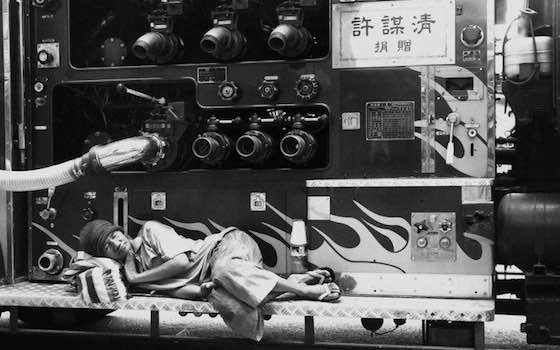
Devastation in Haiti
(c) Paul Tong
Earthquake Buries Progress in Haiti
Joshua Kucera
Even before Haiti's massive earthquake, the news from Haiti could seem relentlessly grim, from hurricanes to political violence to desperate poverty. But for the last year or so, things had actually started to look up in the hemisphere's poorest country.
Beyond Haitian Relief Effort, How to Fix Haiti
Bonnie Erbe
Rescue and cleanup efforts following the horror of Haiti's incalculable earthquake losses will continue for months and reconstruction will continue for years. But as large parts of the nation are rebuilt, foreign policy experts are asking, how does Haiti rebuild in a way that leads to long-term economic gain and political stability?
Haiti Needs a Version of the Marshall Plan
Andres Oppenheimer
President Barack Obama and other world leaders reacted swiftly to the devastation that hit Haiti in the first days after the earthquake that may have left up to 50,000 dead. But, considering the magnitude of the tragedy, what they have offered so far is peanuts.
Tough Love Only Long-Term Cure for Haiti
Jonah Goldberg
Despite the heroic efforts of aid workers and the battered Haitian government, it looks as if Haiti's problems will persist well into the 21st century, long after the debris is cleared and the houses are rebuilt. While the scope of the tragedy in Haiti is nearly impossible to exaggerate, it's important to remember that last week's earthquake was so deadly because Haiti is Haiti.
Haiti: The Media Spectacle
Robert C. Koehler
Haiti falls apart and America's journalists are on the ground, bringing us the spectacle of devastation. We care, we donate, we shake our heads in horror at the human toll of poverty.
Pat Robertson
(c) Dan Wasserman
Pat Robertson & Rush Limbaugh: Absence of Conscience
Leonard Pitts Jr.
As Haiti reeled and staggered, two icons of conservatism offered their analyses of the earthquake that devastated Haiti. Pat Robertson opined that Haiti's woes stem from the deal with the devil two centuries ago. Rush Limbaugh suggests the relief effort would 'play right into' Obama's hands. It left me wondering whether conservatism has a conscience, whether conservatism has a soul.
Pat Robertson Again Blaming the Victims
Carl Hiaasen
It's no secret that the Rev. Pat Robertson is a yammering fool, but last week he hit a new low. During a chatty sit-down segment of his television program, the 700 Club, the prominent Christian preacher offered his viewers a unique explanation of the terrible earthquake in Haiti ...
Haiti - Tragedy and Opportunity for Haiti
Kara C. McDonald
The January 12 earthquake that devastated Haiti's capital, Port-au-Prince, is the first test of the Obama administration's ability to mount a full-scale international disaster response, and it is no ordinary test. Haiti is the poorest nation in the hemisphere, with abysmal infrastructure, struggling to stabilize
Haiti - Sometimes the Earth is Cruel
Leonard Pitts Jr
That is ultimately the fundamental lesson here, as children wail, families sleep out of doors, and the dead lie unclaimed in the rubble that once was Port-au-Prince, Haiti
Afghanistan: Report Calls Military Intelligence Ignorant and Oblivious
Anna Mulrine
A bracing critique of U.S. military intelligence in Afghanistan came from an unlikely source earlier this month: the head of U.S. military intelligence in Afghanistan. Widely circulated and hotly discussed, the report was remarkable for its blunt candor regarding the intelligence community's mode of operation in Afghanistan.
Politics Behind Hugo Chavez's Currency Devaluation
Andres Oppenheimer
A lot has been written in recent days about the economic impact of drastic devaluation of the Venezuelan currency announced by Venezuela's authoritarian-populist President Hugo Chávez. But the measure's political impact may be just as important, if not more.
Iran Sacrifices Its Future
Paul Greenberg
I have just read about a new high-water mark in the persecution of intellectuals. Or just the intelligent. For setting it, the world can thank Mahmoud Ahmadinejad, president of the Islamic Republic of Iran, and his clerical keepers, notable among them the Ayatollah Ali Khamenei
Global Political-Risk Outlook for 2010
Ian Bremmer and David Gordon
The biggest risk for 2010 comes from the point at which these trends converge: U.S.-China relations, Iran, European Fiscal Divergence, U.S. Financial Regulation, Japan ... Our top 10 geopolitical concerns for 2010 and their impact on the world
Two Ways of Looking at the World
Mary Sanchez
The perspectives of two elderly men crossed my desk recently. Both are men of the World War II era. I will not compare our times to theirs. But the world remains a dangerous place. And our nation remains vulnerable to serious economic setbacks. And what worries me is how we will respond to the challenges ahead ...
Fight Against Terrorism Could Shift to Yemen
Joshua Kucera
In the wake of the airplane bombing attempt over Detroit on Christmas, President Obama vowed to take an aggressive stance against those who were behind the plot. 'The United States will do more than simply strengthen our defenses,' he said. 'We will continue to use every element of our national power to disrupt, dismantle, and defeat the violent extremists who threaten us.'
Al-Qaida Using United States to Accomplish Goals
William Pfaff
The real reason for attacking Westerners in the West, or in airplanes on the way there, is to provoke the Western governments to send more Western soldiers to Afghanistan, Pakistan, Yemen and elsewhere in the Muslim world to attack Muslim jihadists on the Islamists' own ground, where the latter have tactical and human advantages that Western soldiers can never overcome.
2010: Our Year of Decision
Victor Davis Hanson
Sometimes long-festering problems collide -- and explode -- in a single memorable year. We can go as far back as the fifth century B.C. to see this phenomenon -- and we may see it again in 2010. Events may come to a head and overwhelm the existing American-led global order
Integration and Disintegration: The Future of Our Puzzling World
Paul Kennedy
The world really does seem to have changed for the better. There are signs of progress and prosperity. However, there are the many indicators of disruptive tendencies, of environmental catastrophes, financial instabilities, currency turbulences, civil wars, failed states, quarrels over contested historic lands and borders, human-rights abuses, terrorism, and displays of angry, egoistic nationalism.
Overcoming the Obstacles to a Nuclear-Free World
Charles D. Ferguson
Over the past three years, a remarkable bipartisan consensus has emerged in Washington regarding nuclear security. This presents a conundrum, however: In a world where the strongest conventional military power cannot envision giving up its nuclear weapons before all other nations have abandoned theirs, how will humanity ever rid itself of these weapons?
Nuclear Disorder - Surveying Atomic Threats
Graham Allison
The current global nuclear order is extremely fragile, and the three most urgent challenges to it are North Korea, Iran, and Pakistan. In fact, the global nuclear order today could be akin to the global financial order was two years ago, when conventional wisdom declared it to be sound, stable, and resilient
Tension Simmers in Iran
William Pfaff
Continued post-election protests in Iran identify either a pre-revolutionary situation or that condition which the French call 'fin de regime' -- political decadence suggesting that the end may be near, but might also be very bad. Recent events in Iran resemble those that led up to the revolution that compelled the Shah to flee Iran in 1979 and were followed by the creation of the Islamic Republic. The question is what will the outcpome be this time and what impact it will have on stability in the Middle East
2009 Chickens and Their 2010 Roost
Victor Davis Hanson
2009 may seem to have ended relatively quietly for the world. But in foreign relations, in the war against terror, in massive borrowing, and in energy policies, we created chickens that soon will come home to roost in 2010
Helping Women Help the World
Isobel Coleman
Nicholas Kristof and Sheryl WuDunn argue that "the brutality inflicted routinely on women and girls in much of the world" is "one of the paramount human rights problems of this century." Their statistics are numbing: every year, at least two million girls worldwide "disappear" due to gender discrimination. But Kristof and WuDunn go beyond moral outrage.
Why International Aid Does Not Alleviate Poverty
Jagdish Bhagwati
The African silence has been broken by Dambisa Moyo, a young Zambian-born economist with impeccable credentials. Educated at Harvard and Oxford and employed by Goldman Sachs and the World Bank, Moyo has written an impassioned attack on aid that has won praise from leaders as diverse as former UN Secretary-General Kofi Annan and Rwandan President Paul Kagame.
Preventive Force, Terrorism and International Security
Abraham D. Sofaer
Preventive action endorses using force against states that supported terrorism or failed to prevent it. This was a controversial position, since using (or threatening) preventive force is generally considered a violation of international law. However, preventive action is now an essential element of U.S. national security. And it appears that Obama will continue this aspect of Bush doctrine
The New Energy Order
David G. Victor and Linda Yueh
The last decade has seen an extraordinary shift in expectations for the world energy system. After a long era of excess capacity prices for oil and most energy commodities have risen sharply and become more volatile. As such, a crisis is looming which will be difficult to resolve.
Why Failing to Complete Green Revolution Could Bring Next Famine
Carlisle Ford Runge
Rising food prices have intensified the risks of large-scale hunger. The reasons are complex, but one of them is that demand for food is increasing as populations and incomes grow even as the supply of food is increasingly being diverted to other uses, such as the production of biofuels. As a result famine is again stalking the world's poor
Nuclear Disorder - Surveying Atomic Threats
Graham Allison
The current global nuclear order is extremely fragile, and the three most urgent challenges to it are North Korea, Iran, and Pakistan. In fact, the global nuclear order today could be akin to the global financial order was two years ago, when conventional wisdom declared it to be sound, stable, and resilient
Solving World Health Issues a Few Dollars at a Time
Philippe Douste-Blazy and Daniel Altman
Starting in this quarter, hundreds of millions of people will have an unprecedented opportunity to help the world's most unfortunate inhabitants. When purchasing airline tickets through most major reservation Web sites or through a travel agent, consumers will be asked if they want to make a direct contribution to the fight against the world's three deadliest epidemics
The New Population Bomb
Jack A. Goldstone
Averting this century's potential dangers will require sweeping measures. Policymakers must adapt today's global governance institutions to the new realities of the aging of the industrialized world, the concentration of the world's economic and population growth in developing countries, and the increase in international immigration.
Facing Realities on North Korea
Henry A. Kissinger
It is time to face realities. We are now in the 15th year during which America has sought to end North Korea's nuclear program through negotiations. These have been conducted in both two-party and six-party forums. The result was the same, whatever the framework
Mind of Martyr: How to Deradicalize Islamist Extremists
Jessica Stern
Is it possible to deradicalize terrorists and their potential recruits? Saudi Arabia, a pioneer in terrorism prevention and rehabilitation, claims that it is. And yet so far, the Saudis have shared very little information about their program's successes and failures.
Obama Talking Peace While Making War
Jules Witcover
When President Obama went to Oslo, he knew he was bringing with him a major contradiction. He was there to accept the Nobel Peace Prize at a time he was carrying out his responsibilities as a war president waging armed combat in two foreign countries.
Has War Really Changed
Victor Davis Hanson
Human nature, after all, does not change. And since the beginning of civilization the point of war has always been for one side through the use of force to make the other accept its political will. We should remember that and get back to basics in Afghanistan. Here's why ...
'The Great Global Security Underwriter' Will Pay a High Price
William Pfaff
Most surveys on America's two current wars and on foreign policy generally, find majority support for staying at home and minding America's own business. Especially now, when it has become no longer possible to treat the national deficit as if it doesn't matter, and when the president has just ordered another 'surge' of troops to the Afghanistan war.
China Takes Tiny Steps on Climate Change
Kent Garber
China says that it's getting serious about tackling global warming. After President Obama pledged two weeks ago to cut greenhouse gas emissions in the United States, China came out with its own plan, promising to slow the growth of its fast-rising carbon pollution
A Visit with China's New Moguls
Clarence Page
As a guy who was raised in Cold War America, the dazzling ease with which communist China has accommodated capitalism is hard for me to fathom, but I was there to learn.
Voting Present on Iran
Victor Davis Hanson
Instead of complying with international requests to stand down, Iran has decided to step up efforts to enrich uranium, which, despite the government's denial, is all but certainly intended for a bomb. Here's why ...
Obama Playing Nice With China
Joshua Kucera
When President Obama visited China, he had a good case to make to his hosts that he was trying to see things their way. He'd recently declined a meeting with the Dalai Lama in Washington and said that he wanted a strategic partnership with China. What did he get for his troubles?
Financial Crisis, Enron, Hurricane Katrina Examples of Leadership Gone Wrong
Tamara Lytle
The New Orleans masses who huddled in the Superdome after Hurricane Katrina, the Enron retirees who lost their life savings, and the laid-off workers buried under the economic ruin of financial companies all live with a simple truth. Just as spectacularly as great leadership can spark success, failed leadership can bring down cities, businesses, and economies
New Corruption Ranking Says a Lot
Andres Oppenheimer
A new survey on corruption around the world confirms what many of us have long suspected: Fiery populist leaders who rise to power vowing to eradicate corruption often end up leading sleazier governments than their predecessors
Afghanistan: A Missed Turning Point
Jules Witcover
President Obama offered only a change in approach in his long-awaited plan to press on with the war in Afghanistan. His decision to approve of most of the troop surge requested by General McChrystal, with more finely tuned schemes for troop deployment in Afghanistan, is a thinly veiled agreement to continue Bush's stay-the-course commitment.
Free Markets, Free Muslims
Jon B. Alterman
Vali Nasr's new book, Forces of Fortune, was written largely in the exuberant phase of Dubai's story, but it is being published in a more sober time. It reflects some of the old enthusiasm for the notion that 'the Dubai model' -- a multiethnic, capitalist society insulated from violence and ideology -- could save the Middle East from a downward spiral of intolerance and political extremism.
The Taliban Vs. Global Civil Society
Paul Kennedy
Almost two generations ago, out of the ashes that were the Second World War, our forefathers bequeathed to us the idea and the very institutions of global civil society. Those visionaries pointed us to many rights, and thus to many futures, but key to it all was the rule of law, the right to free speech, and the right to vote
G-2 Talk Aside, United States & China Hardly on Equal Footing
William Pfaff
I have never understood the widely touted idea or assumption of China-U.S. equality or partnership or joint rule of the world or superpower-partnership. In what ways do any of these descriptions really fit the situation?
Palestinians Start to Show Progress
Mortimer B. Zuckerman
There is still a ways to go, but the progress being made by the Palestinians, especially in terms of controlling the terrorists and criminal gangs, is one of the most promising developments to have occurred in decades.
Reagan, Obama and Legacy of the Berlin Wall
Kenneth T. Walsh
The fall of the Berlin Wall was a conclusive sign that the United States and the other Western democracies had finally won the Cold War. In the end, two presidents deserve much of the credit: George H.W. Bush and Ronald Reagan. Twenty years later there are plenty of lessons for President Obama's approach to foreign policy.
Possible New U.S. Option in Afghanistan: Getting Out With Grace
William Pfaff
There are two tried and disproved methods for dealing with insurrection in a non-Western country. The third and reliable method is not to go there in the first place. The fourth is get out with such grace as is possible, as rapidly as possible.
Disillusionment in Afghanistan
Jayshree Bajoria
The international community is increasingly concerned about whether Afghan President Hamid Karzai can be an effective partner. Karzai recently won another term after an election fraught with accusations of fraud; his previous term was beset with allegations of corruption.
A Year With Obama and U.S. Foreign Relations Have Only Worsened
William Pfaff
Who would have thought a year ago that most of the issues of conflict in America's foreign relations would be made worse during the first year following Barack Obama's election as U.S. president?
Circling Sharks Smell American Blood
Victor Davis Hanson
On his recent trip to Asia, President Obama found China, Japan and South Korea -- like many nations these days -- in no mood to hear more American lectures. The United States needs to re-establish itself as financially credible and responsible so that when we lecture -- about everything from global warming to Iranian nukes -- we do so from a position of strength.
The New International Dialogue
William Pfaff
The international conversation among policy makers has since the cold war and the Second World War tended to be Anglophone and something of an American monologue. Today, the United States is widely perceived as a large part of the present world problem. Today the effort is how to cultivate new institutions of international cooperation and governance. Washington used to do it all alone, but a major part of the world is restless.
When Freedom Was at High Tide
Paul Greenberg
The great tide had been building for years, for decades. But it would take daring and determination to release it. Walls do not come tumbling down by themselves, however much it might seem that way looking back. There is a tide in the affairs of men which, taken at the flood, leads on to freedom. High tide came November 9, 1989, when the Wall came down
Despite Obama's Concessions, Russia Remains Unhelpful on Iran
Joshua Kucera
The Obama administration's announcement last month that it was scrapping plans to build missile defense sites in Poland and the Czech Republic removed a prime irritant in the U.S.-Russian relationship; Russians felt the missile defense network was targeted as much at them as against the purported threat, Iran. And the move appeared at first to pay dividends. However ...
For Europe, U.S. Is Country That Cries Wolf
William Pfaff
Officials such as Philip Gordon regularly travel to Europe to ask for support for American initiatives. The Europeans reply that they have not been consulted in making these policies. The Americans say we will be happy to discuss them, but we are putting up most of the men and money, so it's too late to change anything. Maybe next time.
Afghan Mythologies
Victor Davis Hanson
As President Obama decides whether to send more troops to Afghanistan, we should remember that most of the conventional pessimism about Afghanistan is only half-truth. Remember the mantra that the region is the 'graveyard of empires,' where Alexander the Great, the British in the 19th century, and the Soviets only three decades ago inevitably met their doom?
With al-Qaida Diminished, There's No Sense in Expanding Afghan War
William Pfaff
Al-Qaida's relations with the Taliban today are troubled. Effective counter-terrorism strategy in Afghanistan is on the brink of completely eliminating al-Qaida. There will be no organization to return. This is the result of effective international and domestic intelligence cooperation as well as good police work. So why, one asks, is the U.S. expanding its war in Afghanistan?
In the Quicksands of Somalia
Bronwyn Bruton
The U.S. government needs to change its Somalia policy -- and fast. For the better part of two decades, international attempts to create a government have failed. And since 9/11, U.S. attempts to prevent Somalia from becoming a safe haven for al Qaeda have visibly backfired, alienating the Somali population, and propelling an indigenous Salafi jihadist group, called al Shabab, to power
Obama's Missile Defense Concession Holds Opportunity for European Security
Paul J. Saunders
It's a concession, but it could present an opportunity as well. While the move highlights the unhappy geography and tough political choices facing Central European leaders, it could also create an important opportunity to strengthen European security. The administration would do well to use this chance to try to encourage new and different relationships between the former Soviet bloc and Russia.
A Simple Plan for Killing al Qaeda
Alex Kingsbury Interviews Howard Clark
Howard Clark's answer is to both amplify the nihilism of its message and promote moderate Islamic voices. Clark, a former marine who served two tours in Iraq, now works as a consultant on counter-terrorism problems for the Department of Defense. He is also president and founder of Seventh Pillar, a nonprofit that seeks to combat al Qaeda's ideology. He recently spoke about his three-part plan for strengthening moderates and defeating extremists
Hamid Karzai, Afghanistan and Memories of Indochina
William Pfaff
The United States is in Afghanistan for its own reasons. The Afghan president said what he did to encourage the U.S. to keep him their man in Kabul. If the Afghan people should decide that he's nothing more than an American puppet, they will get rid of him. But Washington will get rid of him, too, since he would have lost his plausibility, and hence his value
Puzzling & Dangerous U.S. Foreign Policy Comes to an End
William Pfaff
President Barack Obama's cancellation of his predecessor's missile-defense scheme for Poland and the Czech Republic presumably brings to a close one of the least explicable and most dangerous American policy initiatives since the cold war officially ended.
Three Dangerous Stooges: Gadhafi, Ahmadinejad & Chavez
Victor Davis Hanson
Recenty, three dictators -- from Iran, Libya and Venezuela -- delivered lunatic hate speeches at the UN General Assembly. Why do these dictators feel so free to damn America from downtown New York? Why do their abettors spurn our requests for help? And why do creepy regimes plot to get nukes, and fund terrorists? Easy. They do not fear, much less listen ...
Afterthoughts from Obama U.N. Address
Jonah Goldberg
The United Nations is an odd venue to say such things. The Security Council is premised on nothing if not a balance of power, and the U.N.'s roots go nowhere if not deep into the chilled soil of the Cold War. It is odder still for the president of the United States of America to say such things
Iran: Words Without Action or Resolved to Be Unresolved
Paul Greenberg
'Iran is breaking rules that all nations must follow, endangering the global nonproliferation regime, denying its own people access to the opportunity they deserve, and threatening the stability and security of the region and the world.' No, that wasn't Israel's tough-talking prime minister, Bibi Netanyahu, warning against Iran's aggressive tendencies again. It was Barack Obama addressing the UN Security Council.
Interview with India's Environment Minister
Jayshree Bajoria
India and China have long maintained their economic growth will suffer if they accept binding emission targets under an international agreement on climate change. Instead, they have called for mitigation commitments by the developed world and financial support from rich countries to help developing countries adapt to climate change.
Tutu: Religious Strife due to Faithful, Not to Faith
Archbishop Desmond Tutu Interview
Amina Chaudary of Islamica Magazine recently sat down with Archbishop Desmond Tutu, a Nobel peace laureate, in Johannesburg, South Africa.
The Second World War -- Seventy Years Later
Victor Davis Hanson
Seventy years ago World War II broke out with the German invasion of Poland. Thousands of books have been written about the war. And by now revisionist historians of revisionist historians engage in an endless cycle of disagreement over why the war started, how it ended and what it all meant. Here are a few more controversial thoughts on the horrific conflict that killed 60 million people, wrecked Europe and set the stage for an ensuing half-century Cold War.
Iraq War -- What War
Victor Davis Hanson
The war in Iraq is scarcely in the news any longer, despite the fact that 141,000 American soldiers are still protecting the fragile Iraqi democracy, and 114, as of this writing, have been lost this year in that effort. But after the success of the surge, there are far fewer American fatalities each month
An Agenda for NATO: Toward a Global Security Web
Zbigniew Brzezinski
NATO now confronts historically unprecedented risks to global security. The paradox of our time is that the world, increasingly connected and economically interdependent for the first time in its entire history, is experiencing intensifying popular unrest. Yet there is no effective global security mechanism for coping with the growing threat of violent political chaos stemming from humanity's recent political awakening.
The Default Power and American Declinism
Josef Joffe
Every ten years, it is decline time in the United States. Declinism took a break in the 1990s, but by the end of the Bush administration, it had returned with a vengeance. The history of declinism shows that doom arrives in cycles, and what comes and goes, logically, does not a trend make. Today, as after past prophecies of imminent debility, the United States remains first on any scale of power that matters--economic, military, diplomatic, or cultural--despite being embroiled in two wars and beset by the worst economic crisis since the Great Depression.
The Diplomatic Myths and Illusions of the Middle East
by Robert Schlesinger
Incorrect preconceptions and misguided conventional wisdom hamper American policy in the Middle East, Dennis Ross and David Makovsky write in Myths, Illusions, and Peace: Finding a New Direction for America in the Middle East.
Journalists freed from North Korea
(c) M. Ryder
Relief Over Freed U.S. Journalists Tempered by Long-Term Implications
Henry A. Kissinger
Amidst the widespread relief that the two American journalists have avoided the brutal fate meted out to them by a North Korean court, it may seem captious to consider the long-term implications. The impulse to save two young women from 12 years of hard labor in a North Korean gulag is powerful. Yet now that this goal has been achieved, we need to balance the emotions of the moment against the precedent for the future.
'Never Again' in North Korea? Think Again
Jonah Goldberg
For decades now, we've known that what's going on in North Korea is too terrible to contemplate. Even so, what once haunted us as an ill-defined and foreboding suspicion has clarified into the secure knowledge of broad and systemic evil.
The Arrogant and the Ignorant
Cal Thomas
On my last visit to the UK three months ago, Members of Parliament were embroiled in a scandal involving outrageous expense claims for such things as moat cleaning, a baby crib and second homes that were sometimes occupied by friends and relatives, or not at all
Time to Get Out of Iraq
Joe Galloway
Defense Secretary Robert Gates has suggested that he might speed up our withdrawal from Iraq by pulling out an additional brigade combat team by year's end. Good idea! How about pulling out FIVE more brigades by then
One Year to Prove Strategy Is Working in Afghanistan
Robert Gates Interview
The clock in Washington on Afghanistan is going to depend on what happens on the ground. I think we need to show we are making some headway by next spring or early summer. We are not going to win it by next summer. We aren't going to be on the verge of winning it next summer; this is a long-term prospect.
General McChrystal: The New Strategy In Afghanistan
General McChrystal Interview
General Stanley A. McChrystal is commander of international forces in Afghanistan. In his interview with Julian Barnes, General McChrystal discusses the strategy and progress in Afghanistan.
Iran at Crossroads of History
Will this Regime Fall Like Shah's
Abolhassan Bani-Sadr
Within six short weeks since the recent election, the government of the Islamic Republic has been publicly divided, delegitimized, challenged and weak. As a result, we can now draw some analytical parallels between the current regime and the pre-1979 monarchy, and between the two occasions of political unrest.
Israel Fortifies Presence in Latin America
Andres Oppenheimer
Following three years of frantic Iranian activities in Latin America that included three trips by Iranian President Mahmoud Ahmadinejad to the region -- a fourth visit is scheduled in August to Brazil -- and the opening or enlargement of a half-dozen Iranian embassies, Israel is beginning to raise its own profile in the region.
Working Together, Brazil, Russia, China and India Increase Leverage
Ian Bremmer
In 2003, a report authored by Goldman Sachs economists popularized the term BRICs -- Brazil, Russia, India and China -- to describe a whole new category of emerging-market powerhouse. The report argued that with sound political leadership and relative international stability, the BRIC economies would together outpace the original G6 industrialized nations in dollar terms by 2040 -- a fundamental shift in the global balance of power. Since then, these four countries have assumed ever-greater importance in the international investment community's collective imagination.
Growth With Equity: Brazil's Path to Economic Recovery
by Patrus Ananias
The financial crisis has left few corners of the global economy unscathed, but many of the loudest cries reflecting the deepest pain are largely ignored. These are the cries of the world's poorest citizens whose suffering is not measured in battered portfolios and retirement plans but in their daily survival
'U.S. Bases' in Colombia May Be Less Than Meets the Eye
Andres Oppenheimer
What's most surprising about South America's growing uproar over Colombia's plans to allow 'U.S. military bases' on its territory is that there may be no such thing in the making -- but rather a major Colombian PR blunder.
Partisan Split on Honduras Can Be Costly
Andres Oppenheimer
The conflict in Honduras is rapidly becoming the focus of a fierce partisan fight in Washington, D.C. -- and that may not bode well for the future of U.S. policy in Latin America. Sources in Washington tell me that 17 senators -- mostly conservative Republicans and not part of the usual crowd of legislators interested in Latin American affairs -- are trying to open a new front against Obama on top of healthcare accusing him of being "soft" on anti-American leaders in Latin America.
China Rising in Latin America, but Won't Overtake United States
Andres Oppenheimer
The latest figures showing that China is emerging from the global crisis sooner than anticipated is triggering speculation that China will soon overtake the United States as Latin America's top business partner. Granted, speculation about China's impending leap to becoming Latin America's top economic partner spread like wildfire recently when Brazil announced that it will trade more with China than with the United States this year for the first time. It sounds very interesting, but don't bet on it.
Britsh prime minister Gordon Brown
(c) Nancy Ohanian
Why Sometimes Pays to Be Like Gordon Brown
by William Pfaff
Flamboyance of the Latin kind gets you into the newspapers, but for bad reasons as well as good.
Nicolas Sarkozy of France is not a man noted for charm but for his unchecked energies and the restless activity. Italy's Silvio Berlusconi is another matter entirely. He is a success in politics apparently because the majority of Italians like him.
Indeed, sometimes pays to be a nondescript politician like Gordon Brown of Britain.
Israeli - Palestinian Peace
(c) M. Ryder
Obama, Solana Mean Business About Two-State Solution
by William Pfaff
The Israeli press reports with alarm that the United States has threatened to reduce by $1 billion the guarantee the U.S. Treasury customarily provides for Israel state borrowings, which assure them the best commercial terms.
This is evidence that the Obama government is serious about halting Israel's colonization of the Palestinian territories -- and about imposing, rather than merely inviting, a two-state Middle East solution.
From Iraq to Afghanistan, U.S. Foreign Wars Not Going According to Plan
by William Pfaff
In Iraq, tension was reported to be increasing between the Americans and the Iraqi military and security forces, who were supposed to take over the Americans' responsibilities. Move to another front: Pakistan-Afghanistan. Here there was also supposed to be a straightforward job to do: drive the Taliban out of Afghanistan, into the Tribal Areas of the Pakistan border. There, the Pakistan army, with American urging and help, would defeat and disarm them.
How to End the Insurgency and Win the War in Afghanistan
by Anna Mulrine
A longtime
War and the Balance of Power
(Nancy Ohanian)
War By Other Means
Robert C. Koehler - International Politics & World Affairs
We live in a world where arrogance and power are concentrated to an unbelievably fine point, while responsibility is diffused into a global mist.
A few fanatics can plot and wage a war, stirring up consequences infinitely beyond what they are capable of imagining, then retire, when things go bad, into a luxury tinged with disgrace.
Bearing Witness 2.0: You Can't Spin 10,000 Tweets and Camera Phone Uploads
Arianna Huffington
China just delivered a stunning, real-world demonstration of the changes rocking -- and transforming -- modern journalism. When deadly riots broke out in the western province of Xinjiang earlier this month, the Chinese government sprang into message control mode. It choked off the Internet and mobile phone service, blocked Twitter and Fanfou (its Chinese equivalent), deleted updates and videos from social networking sites, and scrubbed search engines of links to coverage of the unrest. At the same time, it invited foreign journalists to take a tour of the area.
Heart of the Future Between Russia & United States
by Robert C. Koehler
Last week's announcement from Moscow, of a new treaty between the U.S. and Russia to begin cutting their nuclear stockpiles by a quarter to a third, is indeed "modest" and perhaps downright "disappointing" in its tentativeness, as critics have pointed out. Even so, the heart of the future beats here.
Europe: Battle Over the Burqa
by William Pfaff
Since President Barack Obama in his recent Cairo speech made a tut-tutting remark about countries that restricted wearing religious garb in school, the controversy over the Muslim burqa has resumed in Europe
Another Swine-Flu Casualty: Good Journalism
by Andres Oppenheimer
The swine flu outbreak that has wrecked Mexico's economy may become a case study in reckless journalism. Like most of you, I had taken it for granted that the disease had started in Mexico.
Iranian Elections 2009: Iran's Crisis of Legitimacy
Islamic Republic Acronym
(David Horsey)
Iran Election Mess Is Just a Reflection of Global Human Failings
by Louis Ren� Beres
Today's dramatic Iranian instability is more a specific symptom of general civilizational fragility than an isolated disease.
Beneath the surface, all world politics readily reveals a distinctly common disorder. This is the incapacity of human beings to find both meaning and identity as individuals, within themselves.
Missing Our Moment in Iran
by Victor Davis Hanson
Last month, hundreds of thousands of Iranians took to the streets to protest a rigged presidential election. Our president was extremely cautious in his initial criticism of the Iranian government's fierce crackdown against the protestors. At first, President Obama said that the United States -- given our history in Iran -- should not be "meddling" in
- Iranian Protests a Direct Challenge to Khamenei
- Iran Election Twitters In a Revolution
- As Iranians Revolt, Their Government Reveals True Self
- Iran: Death to Election Fraud
- President Obama's Iran News Conference
- The War Between Civilizations That Never Was
- Iran's (So Far) Revolution-less Struggle
- Hungary 1956, Iran 2009
- Iran Elections: The Silent Revolution
- Iranian Regime Change Is for Iranians to Decide
- The 'Neda Moment' Shows Promise of Social Networking
- Obama's Iran Policy Is a Bomb
- Obama's Choice Is Not to Choose on Iran
- Iran's Crisis of Legitimacy
- Iran Must Void Elections to Restore Peace on Streets
- Will Iran Look More Like Turkey, or Turkey Like Iran
Violence Spikes as U.S. Troops Withdraw From Iraq's Cities
by Alex Kingsbury
Militants in Iraq staged a series of bomb and machine gun attacks in the past ten days that left more than 250 dead and the country on edge. Increased carnage as the U.S. forces prepare to depart was not unexpected, American and Iraqi officials say.
'W' is For Withdrawal
by Robert C. Koehler
National Sovereignty Day, the day U.S. troops withdrew from Iraqi cities. Sorry, but Iraq is still America's sovereign lackey: broken and smoldering. Some 130,000 U.S. troops remain in the country, withdrawn for the most part to the permanent bases we've built over the last six years. The country's infrastructure is shattered, and shocking bursts of violence remain a common occurrence
The Nation-State is Back & How
International Politics & Foreign Affairs
by Paul Kennedy
About 500 years ago, in parts of Western Europe, a funny thing happened to human society. The national state had arrived, and the world would never be the same.
Addressing China's Fear Of North Korean Collapse
Joseph S. Nye Jr. Interview
It is by now a cliche to say that greater pressure from China can force North Korea to change. The problem is that China has two objectives: They want a de-nuclearized North Korea, but they also want a North Korea that doesn't collapse into chaos on their borders. The consequence of these cross-purposes is that the Chinese have been reluctant to use the leverage they have
Tiananmen's Enduring Challenge
by Wang Dan
Twenty years have passed since our landmark demonstrations in Tiananmen Square for democracy and free speech and against corruption. And during this time, China has changed in important ways. Economic reforms have allowed millions of Chinese people to lift their families out of poverty, and many in China find their lives changed for the better. But the central causes the Tiananmen generation, students and citizens alike, took up remain unresolved: corruption, workers' rights, free speech and the need for government reform to address the needs of China's 1.3 billion people.
Asia Economy: Tamed Asian Tigers, Distressed Chinese Dragon
by Brian P. Klein and Kenneth Neil Cukier
Since the 1960s, Asian economies have focused primarily on exports. It was the key to success in Japan, South Korea, Hong Kong, Singapore, and Taiwan. Much of Southeast Asia and China soon followed suit. Over the past decade, the region's exports have increased from 37 percent to 47 percent of GDP. By hitching their wagons to exports, however, Asian countries left themselves vulnerable to a drop-off in Western consumption
Elections Give India's Congress Party Clout to Push Agenda
by Ian Bremmer
For nearly a year, an unmanageable coalition government in India has obstructed the ruling Congress Party's policy agenda and brought the country's economic reform process to a grinding halt. Now that an impressive electoral triumph in national parliamentary elections held in April and May has allowed the party to shed unreliable allies, can its leaders move the country in a more market-friendly direction. There are grounds for both caution and optimism
India's Fortune: Prospects of a Country on the Rise
by Edward Luce
Nandan Nilekani's book, Imagining India, charts how India arrived at the potentially transformative moment it has reached today and describes the gargantuan challenges the country will have to overcome if it is to fulfill that potential
Indian Ocean: Center Stage for 21st Century Struggles Between India & China
by Robert D. Kaplan
Competition between India and China suggests that the Indian Ocean is where global struggles will play out in the twenty-first century. The old borders of the Cold War map are crumbling fast, and Asia is becoming a more integrated unit, from the Middle East to the Pacific.
North Korea's Nuclear Weapon Challenge
Henry A. Kissinger
The Obama administration has so far dealt publicly with the North Korean challenge in an understated, almost leisurely, manner. The challenge goes far beyond the regional security issue. For the United States, it involves relations with an emerging superpower (China); relations with a re-emerging Russia; relations with key U.S. allies (Japan and South Korea); and a major escalation in the threat of proliferation to non-state parties.
Essence of Islamist Resistance:
Different View of Iran, Hezbollah & Hamas
by Alastair Crooke
Most Western analysts of political Islam make the same mistake. They instinctively assume that conflict with the West has mainly to do with specific foreign policies, particularly of the U.S. with respect to Israel, the Arab world and Iran, and, if those changed, all would be well.
Tehran's Take: Understanding Iran's U.S. Policy
by Mohsen M. Milani
Iran's foreign policy is often portrayed in sensationalistic terms, but in reality it is a rational strategy meant to ensure the survival of the Islamic Republic against what Tehran thinks is an existential threat posed by the United States
Flipping the Taliban: How to Win in Afghanistan
by Fotini Christia and Michael Semple
Although sending more troops is necessary to tip the balance of power against the insurgents, the move will have a lasting impact only if it is accompanied by a political surge, a committed effort to persuade large groups of Taliban fighters to put down their arms and give up the fight.
Afghan Presidential Candidate Takes a Page From Obama's Playbook
by Anna Mulrine
Presidential candidate Ashraf Ghani, the leading challenger to incumbent Hamid Karzai, has embarked on an Internet fundraising campaign modeled on that run by President Obama.
In Afghanistan, It's President Obama's War Now
There is a popular proverb that has been making the rounds in Kabul involving the inadvisability of juggling two watermelons with one hand. It is used to suggest the peril--some say folly--of taking on large tasks with too few resources. Lately, it has been cropping up as Afghans struggle to describe the enormity of the task that confronts President Obama in their country, where conditions have deteriorated dramatically over the past year
A Bright Star on the World Stage: Smiles & handshakes a Start But Obama's real challenge will be to show results
by Thomas Omestad
White House officials say Obama's appeal extends beyond just the leaders of the world. "What has happened is that anti-Americanism isn't cool anymore," says top Obama adviser David Axelrod.
But this initial repositioning of the American leadership brand onto more popular terrain internationally will be the easier part of Obama's task. For all the sense of fresh starts and of goodwill, the seeds of perhaps inevitable disappointments are present as well.
Who's Ready if Swine Flu Pandemic Comes Knocking
Andy Coghlan, Linda Geddes & Rachel Nowak, New Scientist Magazine
Doomsday visions of curfews, sealed borders, travel bans and scuffles over food are a long way from materializing in the current crisis regarding swine flu.
But if the World Health Organization declares a pandemic, countries could bring in draconian measures to isolate and treat infection, prevent further spread and keep societies functioning.
The question, then, is which countries are ready and prepared to handle a Swine Flu Pandemic.
The West's Reckless Approach to Relations with Russia
by Wiliam Pfaff
The failure last week of Russian talks with the European Union on energy supplies to Europe is one more occasion for Russian-Western tension.
Obama Presses Israel on Settlements
by William Pfaff
The Obama administration's confrontation with Israel over its colonies inside the Palestine territories began as a test of Prime Minister Benjamin Netanyahu's willingness to enter serious negotiations on a Middle Eastern settlement.
Waiting For Netanyahu
International Current Events, News & World Affairs
As President Obama prepares to receive Prime Minister Benjamin Netanyahu for their first meeting, the situation is very similar to what it was in 1978.
Now as then, Israel is ruled by a rightwing coalition. Now as then, some of its elements are more hawkish than the prime minister and his Likud Party is. Now as then, talks with the other side are ongoing but leading nowhere.
Obama's Moment in South Asia
International Current Events, News & World Affairs
Afghanistan and Pakistan are at the very top of President Obama's list of foreign and security priorities. The U.S. military has embraced this new emphasis, as indicated by Chairman of the Joint Chiefs Adm. Mike Mullen's recent statement that the war in Afghanistan is now more important than the struggle in Iraq.
The increased emphasis on Afghanistan and Pakistan is laudable, because what happens in these two countries is critical in determining the future of extremism and terror -- a defining security challenge of our time.
Fighting Extremism with Democracy in Pakistan
International Current Events, News & World Affairs
Pakistan opposition leader Nawaz Sharif is seen by many -- including, reportedly, officials in the Obama administration -- as the man who can possibly help unite Pakistanis against the scourge of Talebanization threatening the South Asian nuclear-armed nation.
In this interview Sharif says that national consensus on strengthening the rule of law, must be part of a multi-pronged strategy to address the root causes of Taliban extremism.
Cambodia Deja Vu: The Invasion of Pakistan
International Current Events, News & World Affairs
39 years! And here we are again. The United States, despite its plan to deploy nearly 70,000 troops this year in Afghanistan, finds itself and its NATO allies in danger of defeat by the Taliban guerillas. U.S. bombing, with remote-controlled "drones," of the Pakistani Tribal Territories has killed many people but has had no decisive effect on the fighting in Afghanistan.
Brazil Stretching Clout to Central America
Andres Oppenheimer
Brazilian President Luiz In�cio Lula da Silva's largely unnoticed trip to Central America last week underscored an interesting phenomenon: Brazil is making big inroads into a region that was traditionally seen as Mexico's backyard
Will Colombia's President Uribe Run Again?
Latin American Current Events, News & Affairs - Andres Oppenheimer
After Tuesday's vote in the Colombian Senate many well-placed Colombians tell me they are convinced that President �lvaro Uribe is serious about running in 2010.
Many Believe End of Argentina's 'K' Era Nears
International Current Events, News & World Affairs
Seven weeks before Argentina's much-awaited June 28 legislative elections, there is a growing consensus that populist President Cristina Fern�ndez de Kirchner will lose her majority in Congress, and that there will be major political changes in this country.
Free-Market Economy Fundamentally Healthy
Global Economic Viewpoint
Last week at the Milken Global Conference, three Noble Laureates in Economics sat down to discuss the global recession -- Gary Becker (Nobel Prize, 1992), Roger Myerson (Nobel Prize, 2007) and Myron Scholes (Nobel Prize 1997).
All three agreed that this is not going to be a depression and that the free-market economy is fundamentally healthy.
Brazil, China & India Can Mitigate Global Crisis
Global Economic Viewpoint
Brazil, India and even China will not be able, by themselves, to correct the dysfunctions that produced the global crisis. But it is true that the economic power of these three countries can mitigate its negative consequences. ...
Obama's Foreign Policy Challenge - Henry Kissinger
The first overseas trip of a new president always has a significance beyond its itinerary. The president has an opportunity to test the impact of his policies; his interlocutors begin to assess the leader with whom they will have to deal over at least four years.
The Global Economy: Worse & Worser
Today's global economic debacle shares a disturbing number of similarities with the early stages of Japan's "lost decade" of the 1990s.
Without good policy and better luck, the world may well fall into a prolonged period of slow GDP growth, high unemployment, and stagnant living standards like that which unfolded in Japan almost 20 years ago.
Today's Global Economic Debacle: The Japan Fallacy
As the United States sinks deeper into recession, many observers fear the country could reprise Japan's "lost decade," the decade of stagnation that followed its mammoth property bubble in the late 1980s. But this fear is unawarranted.
Deng Undone: China Halts Market Reform
Since the present Communist Party leadership took power, fresh market-oriented liberalization has been minor. Such policies have been wound down and supplanted by renewed state intervention. In privatization, prices, even foreign trade and investment, the PRC was heading away from the market well before the financial crisis erupted.
Why China & U.S. Not Ready to Upgrade Ties
Calling on the United States and China to do more together has an undeniable logic. Both Washington and Beijing are destined to fail if they attempt to confront the world's problems alone, and the current bilateral relationship is not getting the job done.
But elevating the bilateral relationship is not the solution. It will raise expectations for a level of partnership that cannot be met and exacerbate the very real differences that exist between Washington and Beijing.
Toyota in global recall of Prius
Toyota recalls thousands of Prius cars worldwide because of braking problems, in a new blow to the world's largest carmaker.
Charges over Philippines killings
The Philippines charges 196 people with murder over a pre-election massacre which left 57 people dead.
Jackson doctor appears in court
Michael Jackson's doctor, Conrad Murray, denies a charge of involuntary manslaughter over the singer's death.
Tymoshenko bloc 'contests result'
Members of Yulia Tymoshenko's bloc say it will contest the conduct of Ukraine's presidential vote after her reported defeat.
Major Colombian anti-drugs raid
More than 20 people are arrested in Colombia in what the authorities say is the biggest anti-drug operation in a decade.
Iran 'ups nuclear fuel enriching'
Iran has begun the process of enriching uranium to 20% at its plant at Natanz in defiance of the West, state media says.
Chinese quake activist sentenced
An activist who questioned why so many died in a huge quake in China in 2008 is jailed for five years for subversion.
Ice 'probable cause' of BA crash
The fault which caused a plane to crash land at Heathrow Airport in January 2008 was "unrecognised", a report says.
Smartphones to get even smarter
A quantum physics trick is set to give smartphones and hand-held devices pressure-sensitive switches and touchscreens.
Critics mock Palin's helping hand for Tea Party speech
Critics ridicule Sarah Palin for writing crib notes on her hands for Saturday's high-profile Tea Party speech.
Sydney sword swallower sets eye-watering world record
An Australian performance artist sets a world record by swallowing 18 swords at the same time.
South Africa complete India rout
Dale Steyn secures match figures of 10-118 as South Africa beat India by an innings and six runs in the first Test in Nagpur.
Robinho was not up to it - Bowen
Mark Bowen, Manchester City's former assistant manager, says Robinho "massively underperformed" at Manchester City.
Open plan
Why surprise plays little part in latest Afghan operation
Biswas on India
Why doesn't Bollywood take a stand?
Poll quandary
Will Ukraine PM Yulia Tymoshenko challenge outcome?
Iran confuses
What's behind Tehran's plans for further enrichment?
Hewitt on Europe
Is the euro being stretched to breaking point?
Who's talking
How a talent show winner scored in Las Vegas
Senators debate ill Yar'Adua exit
Nigerian senators are debating a motion demanding sick President Umaru Yar'Adua hand over power to his deputy.
ICC rejects Darfur rebel charges
The first Darfur war crimes suspect to face international judges has the charges against him dropped.
Super Bowl breaks ratings record
The New Orleans Saints' win in the Super Bowl is the most-watched programme in US TV history, early figures show.
Mexico holds reputed gang leaders
Mexico police arrest two suspected drug gang leaders in the border city of Tijuana.
North Korean diplomacy heats up
North Korea tells China it is committed to a non-nuclear peninsula, say reports, as a top UN envoy heads to Pyongyang.
Nissan reports return to profit
Japanese carmaker Nissan has reported a return to profit for the last three months of 2009.
France's national identity plans
Newcomers to France will have to sign a declaration of values as part of a campaign to define national identity.
EU gets organic 'Euro-leaf' logo
A new EU-wide "Euro-leaf" logo will soon be compulsory for all pre-packaged organic food produced in the EU.
Pro-Shalit protest outside jail
Protesters calling for the release of captive Israeli soldier Gilad Shalit block Palestinian visitors to an Israeli jail.
Iran opposition leader 'jailed'
An Iranian opposition leader is jailed for six years over unrest following June's disputed presidential election, reports say.
India refinery 'threatens locals'
An alumina refinery in east India run by a UK-based firm causes pollution threatening the health of locals, a rights group says.
Wife fears for Sri Lanka general
The wife of arrested former presidential candidate, Gen Sarath Fonseka, says she has no idea where he is.
Policing Mexico's deadliest beat
Katya Adler meets a Mexican widow joining the police on one of the world's most dangerous beats.
Long walk to restore Mandela's office
Andrew Harding visits the Johannesburg building that once housed Nelson Mandela's law firm and finds that long-stalled plans to turn it into a centre for black lawyers say a lot about the pace of change in modern South Africa.
How should the world react to Iran?
The West pushes for 'strong sanctions' over Iran's uranium plans. What is your reaction?
BBC News | World | UK Edition
Get the latest BBC World News: international news, features and analysis from Africa, Americas, South Asia, Asia-Pacific, Europe and the Middle East.
Iran increases uranium enrichment production
Iran has announced that it has started to make higher grade uranium just as western powers warned that such a move would inevitably lead to fresh sanctions against the Islamic regime
Sants quits as FSA chief executive
Hector Sants resigned on Monday night as head of the Financial Services Authority, the City watchdog, in a dramatic move that throws the direction of financial regulation into question; the regulator is thought unlikely either to cooperate with a Tory overhaul of regulation or to retun to the City
China confirmed as global export champion
China overtook Germany last year to become world export champion, official figures have confirmed, but Europe’s ‘Exportmeister’ can take comfort from a strong rebound at the end of last year.
Greek rescue hopes help bourses regain their poise
Global Markets Overview: Euro rises on news that Jean-Claude Trichet, ECB president, is returning early from a banking summit to attend Thursday’s meeting of European leaders
Traders make $8bn bet against euro
Data from the Chicago Mercantile Exchange show net short positions against the single currency rising from 39,500 contracts to 43,700 contracts, equivalent to $7.6bn
China quake activist jailed for subversion
Tan Zuoren, who was documenting shoddy construction that contributed to deaths in the 2008 earthquake, was sentenced for his e-mailed comments about the pro-democracy crackdown in 1989
Toyota recalls Prius over brake problem
The Japanese carmaker is recalling nearly half a million of its hybrid cars, inclluding its flag ship Prius model, to fix a problem with the software that controls its brakes
Sri Lanka opposition candidate arrested
Sarath Fonseka, the retired general who came second in last month’s presidential poll, faces court martial over unspecified offences committed during his military career
Yanukovich poised for victory in Ukraine
Yulia Tymoshenko, prime minister, comes under pressure to concede defeat in Ukraine’s presidential election after Viktor Yanukovich appears to have sealed a narrow victory
Athens’ salvation lies in Paris and Berlin
Experts agree that if the euro countries were to rescue Greece, the German and French governments would have to play the lead role
Financial Times - World
The Financial Times brings you the latest economic and political news from around the world
Iran to stop enrichment if given nuclear fuel
(AP)
AP - The head of Iran's atomic agency said the Islamic Republic would not enrich uranium to a higher level if the West provides the fuel it needs for the Tehran research reactor.
Afghan avalanches kill at least 28, strands 1,500
(AP)
AP - Avalanches on a mountain pass north of Kabul have killed at least 28 people, with another 1,500 stranded in their vehicles on snow-blocked roads, Afghan officials said Tuesday.
UN appeals for $538M in Pakistan humanitarian aid
(AP)
AP - Aid groups in Pakistan need nearly $538 million over the next six months to help hundreds of thousands of people displaced by army clashes against the Taliban, the U.N. said in an international appeal Tuesday.
NKorea's Kim Jong Il sends nuclear envoy to China
(AP)
AP - North Korea's Kim Jong Il reportedly dispatched his top nuclear envoy to Beijing on Tuesday to discuss restarting nuclear disarmament talks, a day after pledging Pyongyang's commitment to a nuclear-free Korean peninsula.
Toyota recalls 437,000 Priuses, hybrids globally
(AP)
AP - Toyota says it is recalling about 437,000 Prius and other hybrid vehicles worldwide to fix brake problems — the latest in a string of embarrassing safety lapses at the world's largest automaker.
Venezuela's Opposition Protests Slur Chavez at Ball Game
(Time.com)
Time.com - The fiery President's popularity has been plummeting and his opponents took advantage of the situation by heckling him at a popular baseball series
NYSE Euronext returns to profit in 4th quarter
(AP)
AP - NYSE Euronext, the trans-Atlantic stock exchange operator, said Tuesday it returned to profit in the fourth quarter as cost-cutting helped offset a drop in revenue amid falling global share trading volumes.
Netanyahu govt steps in to save settler house
(AP)
AP - The Israeli government has stepped in to try to save a house built illegally by Jewish settlers in a volatile Palestinian neighborhood in east Jerusalem.
Mexico arrests 2 reputed leaders of Tijuana gang
(AP)
AP - Mexican federal police arrested two suspected gang leaders Monday, delivering another big blow to a brutal drug cartel that terrorized the border city of Tijuana for several years.
Nigerian Senate votes to empower vice president
(AP)
AP - Nigeria's Senate has passed a resolution that would empower the vice president to take over for the nation's ill president.
Avalanches kill 28, trap hundreds in Afghanistan
(Reuters)
Reuters - At least 28 people died and hundreds were trapped through the night in freezing cold and darkness after avalanches closed a mountain highway tunnel in Afghanistan.
Conservatives hold only slim lead: poll
(Reuters)
Reuters - The Conservatives have retained just a slim margin over the Liberal Party, according to a Nanos poll released on Monday.
TV show fined in Australia for killing, eating rat
(AP)
AP - A British broadcaster has been convicted of animal cruelty after two reality show contestants skinned, cooked and ate a rat during filming in Australia.
Iran's uranium enrichment: 'a really bad development'
(McClatchy Newspapers)
McClatchy Newspapers - WASHINGTON — Iran told the United Nations' nuclear watchdog Monday that it will begin producing purer uranium, a step that experts said could bring Tehran significantly closer to having the fuel for a nuclear weapon.
Why the Olympics still matter
(The Christian Science Monitor)
The Christian Science Monitor - If you want to know why the Olympics still matter, meet a guy named Tony Benshoof. He's 34, an Olympic Everyman who slides feet first down mountains made of ice, seeking perfection during every lonely day of training.
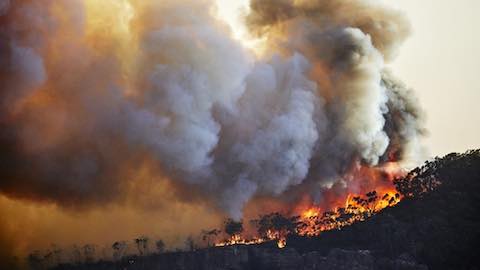
A Year After Fires, Australia Debates What Went Wrong
(Time.com)
Time.com - On Feb. 7, Australia will mark the one-year anniversary of the Black Saturday bushfires, the worst natural disaster in the continent's recorded history
Leaders Walk in the Shoes of a Refugee
(OneWorld.net)
OneWorld.net - WASHINGTON, Feb 8 (OneWorld.net) - Some of the world's influential
leaders had the chance to experience life as a refugee during an annual
economic summit last week -- for one hour they shared the suffering of 42 million people who have been forced to leave their homes by conflict or
natural disaster.
Yahoo! News: World News
World News
EU Commission members to be approved today
Members of the incoming EU Commission are to be formally ratified by the European Parliament today.
Malaysia court rejects opposition challenge to government
Malaysia's top court rejected a bid by the opposition to challenge the federal government's takeover of a key northern state.
23 dead in major road accident in India
At least 23 people were killed and 12 others injured when a vehicle overturned in northern India, police said.
Two suspected drug kingpins arrested in Mexico
Mexican federal police arrested two suspected gang leaders, delivering another big blow to a brutal drug cartel that terrorised the border city of Tijuana for several year
Cows outnumber people in New Zealand
New Zealanders who for decades have endured jokes about being outnumbered 20-to-one by sheep have a new farm animal majority to worry about: cows.
Activists and whalers clash in Antarctic
Anti-whaling activists and Japanese whalers exchanged water cannon fire in the Antarctic Ocean as two boats tailed the whaling fleet in an attempt to prevent the killing of any whales.
Suspected militants 'planned to attack hotel'
Authorities arrested six suspected Taliban militants with a suicide vest and hand grenades allegedly on their way to attack a five-star hotel and kill Americans in Pakistan's cultural capital, said police.
Former Sri Lankan army chief arrested
Sri Lanka's former army chief and presidential candidate was hauled away by military police today from his office, political allies said, after weeks of complaining of government harassment.
Body found in landing gear compartment of plane
Japanese authorities are trying to identify a body found inside one of the landing gear compartments on a Delta Airlines plane flight that arrived in Tokyo from New York.
International monitors hail 'transparent' Ukraine election
International election monitors have hailed Ukraine’s presidential elections as “professional, transparent and honest”.
World: BreakingNews.ie
Ireland's premier breaking news website providing up to the minute news and sports reports.
Paperwork Hinders Airlifts of Ill Haitian Children
Doctors and aid workers are wrestling with proving that they are not illegally transporting children, whose risk of dying is rising while the paperwork awaits.
U.N. Climate Panel and Chief Face Credibility Siege
Rajendra K. Pachauri and the U.N. Intergovernmental Panel on Climate Change face accusations of scientific sloppiness and potential financial conflicts of interest.
News Analysis: For Kremlin, an Election in Ukraine Cuts Two Ways
Russia’s preferred candidate is the apparent winner, but the starkly contested presidential race contrasts sharply with Russia’s recent history.
In Northern Iraq, a Vote Seems Likely to Split
In Nineveh Province, a parliamentary election considered crucial to Iraqi unity is highlighting conflicts among ethnic and religious groups.
Japanese Split on Exposing Secret Pacts With U.S.
Agreements on U.S. bases and allowing nuclear-armed ships in Japanese ports date from the 1960s and 1970s.
Toyota Details Recall of 2010 Prius for Brake Problems
The worldwide recall will affect about 437,000 units of the 2010 Prius and other hybrid models, according to the company’s filing.
Sri Lanka Arrests Defeated Candidate, Raising Fears for His Safety
The wife of former army commander General Sarath Fonseka said that she has not been able to find her husband since he was arrested on Monday, for what the army said were military offenses.
Iran Is Said to Begin Nuclear Enrichment
Brushing aside international threats of stricter sanctions, Iran reportedly began enriching its uranium on Tuesday.
Pakistani Military Retakes Key Town in Tribal Belt From Taliban
The military has retaken the town of Damadola, in the Bajaur area, where the army has been fighting militants for more than a year, officials said.
French ‘Identity’ Debate Leaves Public Forum
The prime minister moved a contentious debate over “national identity” to a group of experts, ending the debate in its public form.
Gates Voices Concern About Warship Sale to Russia
Robert M. Gates, the U.S. Defense Secretary, expressed concerns about a weapons deal that has raised alarm in the republic of Georgia.
China Announces Arrests in Hacking Crackdown
Police officers also seized money and equipment worth hundreds of thousands of dollars during the crackdown, which occurred in November, state media reported over the past two days.
Iran Nuclear Plans Start New Calls for Sanctions
After Iran notified the U.N. nuclear agency of plans to enrich its uranium, officials from the U.S., France and Russia called for stronger measures against Tehran.
Burmese-American Awaits Verdict in Myanmar Case
Nyi Nyi Aung, a naturalized American citizen, gave up a comfortable life near Washington to campaign for democracy for his native Myanmar.
Fake Food Coupons Spread in Haiti
The United Nations said Monday that counterfeiters have begun printing up fake vouchers, complicating giveaways that are meant for the hungriest Haitians.
Russia Names New Leader for Republic of Dagestan
President Dmitri A. Medvedev on Monday nominated Magomedsalam M. Magomedov to be the next president of the combustible southern republic.
China Lists $9.6 Billion in Shares of U.S. Companies
The China Investment Corporation bought more than $9 billion worth of shares in companies like Bank of America and Apple.
Costa Rica: Female Leader Elected
Costa Ricans elected a former vice president, Laura Chinchilla, as the country’s first female president, giving the ruling party a resounding victory.
Chinese Advocate of Quake Victims Sentenced Over E-Mails
A Chinese activist who sought to document shoddy construction that he contended had contributed to deaths in China’s devastating 2008 earthquake has been sentenced to five years in prison for subversion.
'The Cove' Breaks Into Japan
The filmmakers may have moved one step closer to their goal of stopping the dolphin slaughter that the documentary depicts.
Chávez Declares an ‘Electricity Emergency’ in Venezuela
Despite large reserves of crude oil, the country relies on hydroelectricity for 70 percent of its power needs.
Immigrants Claim Wal-Mart Fired Them to Provide Jobs for Local Residents
Ten West Africans have filed federal complaints accusing Wal-Mart stores in Colorado of discrimination.
K. Skubiszewski, Polish Minister, Dies at 83
Mr. Skubiszewski, Poland’s first foreign minister after Communism, helped the country chart a pro-Western course.
Gunmen Open Fire on Former Official in Pakistan
Sheikh Rashid Ahmed, who served as minister for information under Pervez Musharraf, survived the attack on Monday though four others were killed.
European Union Prepares for Economic Crisis Meeting
José Manuel Barroso’s economic agenda risks being overwhelmed by the debt crisis that has swept across the Continent.
Germany Is Chastised for Stance on Nuclear Arms
The German government’s effort to remove American nuclear weapons has been sharply criticized by a former leader of NATO, who said the move was driven more by populist sentiment than any long-term strategic goal.
World Briefing | The Americas: Canada: Air Force Official Charged
The commander of the largest air force base in eastern Canada has been charged with first-degree murder in the deaths of two women from eastern Ontario and with the sexual assault of two others.
World Briefing | Asia: Kashmir: Avalanche Kills Soldiers
At least 15 Indian soldiers were killed after an avalanche smashed into a military training camp near the country’s disputed border with Pakistan on Monday, the army said.
World Briefing | Middle East: Saudi Arabia: Rights Group Hires Lawyer in Child-Marriage Case
The state human rights body has hired a lawyer to review the case of a girl whose mother sought her divorce from an 80-year-old man.
World Briefing | Middle East: Yemen: Qaeda Affiliate Urges Joint Blockade of Red Sea
The Yemen-based wing of Al Qaeda called Monday for a regional holy war and a blockade of the Red Sea to cut off shipments to Israel.
World Briefing | Middle East: Egypt: Police Arrest 3 Top Figures of a Powerful Opposition Group
The police arrested three top figures of the Muslim Brotherhood, the country’s most powerful opposition group, as part of a continuing crackdown since the group recently chose new leadership.
World Briefing | Africa: International Judges Dismiss Charges Against a Sudanese Rebel
International judges said there was not enough evidence to try a Sudanese rebel leader on charges that he played a key role in the killing of 12 African Union peacekeepers in Darfur in 2007.
World Briefing | Europe: Vatican: Child Abuse Condemned
Pope Benedict XVI on Monday condemned the abuse of children by members of the clergy.
National Briefing | West: California: Engineer Is Sentenced for Espionage
Dongfan Chung, who was convicted of passing space shuttle secrets to China, was sentenced Monday to 15 years in prison.
World Briefing | Asia: Japan: Official Says He’ll Keep Job
Japan’s most influential political leader, Ichiro Ozawa, said that he would keep his formal job as the No. 2 leader of the governing Democratic Party after prosecutors decided not to charge him in a financing scandal.
Names of the Dead
The Department of Defense has identified 969 American service members who have died as a part of the Afghan war and related operations.
Will Americans Really Learn Chinese?
Is the boom in Mandarin classes a fad or a cultural turning point?
The Female Factor: Women’s Influence Grows in Bulgarian Public Life
Prime Minister Boiko M. Borisov has in recent months promoted several women, heralding what some see as a political sexual revolution in the Balkan country.
The Female Factor: Family Vaults Women to Leadership in Asia
More women have come to hold power in Asia recently than in any other part of the world.
Race to Avoid a 'Death by Red Tape' in Haiti
An informal media campaign tries to save a young Haitian girl from "death by red tape."
Video of the Shackleton Whisky Cache
Video from Antarctica on the team that dug up five crates of whisky and brandy left beneath a hut there in 1909 by the explorer Ernest Shackleton.
Ukraine's Voters Speak, in Two Voices
A presidential election in Ukraine shows a deep divide between the country's red and blue regions.
An 'Israeli Remix' of a Palestinian Scarf
A Jewish D.J. in Brooklyn finds himself defending his right to market what he calls an "Israeli remix of the keffiyeh," a symbol of Palestinian identity.
Politicus: Few Signs of Turnabout in Germany
Chancellor Angela Merkel is facing a record public debt of about $136 billion, projections of faint economic growth, and a report of sinking industrial productivity.
NYT > World