- MENU
- HOME
- SEARCH
- WORLD
- MAIN
- AFRICA
- ASIA
- BALKANS
- EUROPE
- LATIN AMERICA
- MIDDLE EAST
- United Kingdom
- United States
- Argentina
- Australia
- Austria
- Benelux
- Brazil
- Canada
- China
- France
- Germany
- Greece
- Hungary
- India
- Indonesia
- Ireland
- Israel
- Italy
- Japan
- Korea
- Mexico
- New Zealand
- Pakistan
- Philippines
- Poland
- Russia
- South Africa
- Spain
- Taiwan
- Turkey
- USA
- BUSINESS
- WEALTH
- STOCKS
- TECH
- HEALTH
- LIFESTYLE
- ENTERTAINMENT
- SPORTS
- RSS
- iHaveNet.com: Economy
Countries
Argentina | Australia | Austria | Benelux | Brazil | Canada | China | France | Germany | Greece | Hungary | India | Indonesia | Ireland | Israel | Italy | Japan | Korea | Mexico | New Zealand | Pakistan | Philippines | Poland | Russia | South Africa | Spain | Taiwan | Turkey | United Kingdom | United States
Cities
Atlanta | Baltimore | Bay Area | Boston | Chicago | Cleveland | DC Area | Dallas | Denver | Detroit | Houston | Los Angeles | Miami | New York | Philadelphia | Phoenix | Pittsburgh | Portland | San Diego | Seattle | Silicon Valley | Saint Louis | Tampa | Twin Cities
- Most & Least Competitive Countries
- NAFTA's Jobs Myth
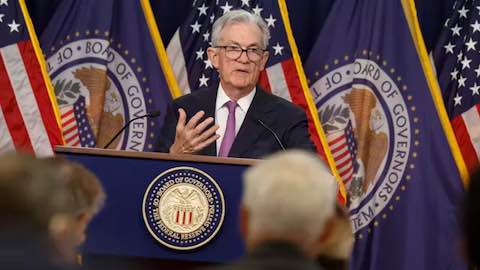
- Will Powell Be an Accidental Hawk?
- An Alliance Against China
- Reducing Inequality in the Trump Era
- A Bigger GDP Than California
- Global Political Economy
- Exploding Inequality Killing Democracy
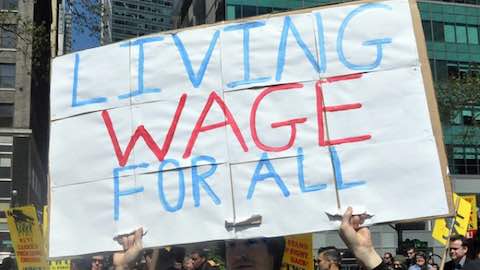
- Minimum Wage Industries
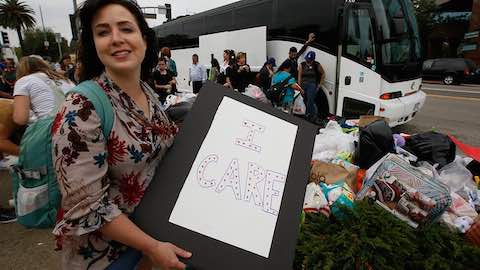
- The Cost of Coffee: Then & Now
- Cities Where Coffee Costs the Most
- Gagging on the Gig Economy
- States with the Lowest Unemployment
- The Highest Unemployment States
- Most Fuel Efficient Cars
- Global Capitalism's Latest Crisis
- Venture Capitalists Rule the World
- NYC Mayor for Pay at $13 an Hour
- Freedom Summer II
- The Biggest Lies About Inequality
- Trump's Trade Wars Hurt Us All
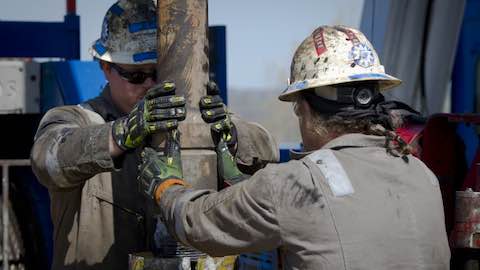
- Calling Working People of All Colors
- Standard of Living Perceptions
- The Missing Ingredients of Growth
- Plenty of Dough in Online Food Delivery
- The Most Expensive Metro Areas
- Most Expensive Metro Areas to Live In
- The Cost of a Beer: Then & Now
- The Economics of Brexit
- The Death of Ethics in Economics
- How the Cost of a Movie Has Changed
- Is GDP Over?
- Inequality Will Get Worse
- Cost Of a Car Since 1967
- Subsidizing the Idle Rich
- Gross National Happiness Catches On
- Wal-Mart Does Something Right
- National Debt Over $18 Trillion
- U.S. Banks Pass Stress Test
- Keeping CEO Pay in Check
- Trump Tactics are Squandering It
- Obama Legacy: Growth, Debt & Employment

- The Global Millionaire Club Is Changing
- The Global Economy in 2018
- Who Can We Trust To Measure Poverty?
- Why The Trade Balance (Still) Matters
- Cities With the Lowest Gas Prices
- Fertility Rate Spells Economic Doom
- Unaffordable Places for Single Parents
- The iPhone Price Index
- Pros & Cons of the Gig Economy
- Emergency Room Costs Since 1940
- Falling Oil Prices Change Economy
- Making China Great Again
- The Richest Banks
- Car Insurance Cost In Every State
- What Really Caused the Eurozone Crisis?
- The Cutting Edge of Waste
- Hard-Charging Capitalism
- Lending Dreams
- Vanguard's 2015 Economic Outlook
- Money & Morality
-
It was an angry book. Much of the response was angry, too. "The Grapes of Wrath" was published 75 years ago, a seminal masterpiece of American literature that seems freshly relevant to this era of wealth disparity, rapacious banks and growing poverty
-
Currency will become increasingly and overtly politicized in the coming years. This means that the international monetary and financial system will be yet another arena where the world's powers attempt to advance their geopolitical and security interests
-
Will the US Dollar lose its privileged status as the international reserve currency? Eric Helleiner doesn't think so. That's because the consequences of assuming reserve currency status are sufficiently uncertain that they might deter rival powers
-
Businesses hire more workers only when they have more customers. When they have fewer customers, they lay off workers. So the real job creators are consumers with enough money to buy. The real job killers in America are lousy jobs at lousy wages
-
A surprising new change agent has just emerged. Representative Dave Camp has proposed a tax reform package. The reform package includes a variety of other moves that progressive tax justice activists have been demanding for years
-
If you ever wonder what's fueling America's staggering inequality, ponder Facebook's acquisition of the mobile messaging company WhatsApp. Facebook is buying WhatsApp for $19 billion. That's the highest price paid for a startup in history
-
The State Department issued a much-awaited study on the Keystone XL pipeline. It found that there would be negligible effect on climate change -- the president's only expressed reservation, which would create thousands of jobs and generate billions in tax revenue
-
Everybody knows that women commonly get paid less than their male counterparts to do the same work. But does that hold true for highly educated women in the upper reaches of corporate management?
-
The concern should not be how much others make, but how much you can make if you apply yourself. Those who make what I once earned and think they can never earn more are being told a lie. Realizing this is the first step to improving one's income
-
Not all conservatives are opposed to raising the minimum wage. While Washington sounds gridlocked, the issue has produced productive alliances in various states and municipalities. Some conservatives sees it as an economic growth measure
-
After you heard President Obama's call for a hike in the minimum wage, you probably wondered the same thing I did: Was Obama sent from the future by Skynet to prepare humanity for its ultimate dominion by robots?
-
It didn't have to be like this. There were signs of Detroit's decline that began as early as the 1950s, but politicians don't like telling voters 'no' when it comes to government freebies and benefits. They want the votes
-
We have a national economic strategy being dictated by Wall Street. Not surprisingly, rather than increase jobs and wages, this strategy has been increasing profits and stock prices. So, what would a national strategy designed to increase jobs and wages look like?
-
In the wake of the Occupy Wall Street and public-worker protests, the issue of income inequality has a new urgency. A new generation of organizers is beginning to try something new. Instead of unionizing and then protesting, they're protesting first
-
The United States seems to be on the downside of history. Whether this assessment is accurate or not, the perception is powerful. Nevertheless, it is curious to note that Americans still possess an overwhelming advantage in one area: supplying ideas to the public sphere
-
The reality is we're still in the doldrums, and the most recent data gives cause for serious worry. Jobs are still scarce. The share of the working-age population in jobs remains the lowest in 35 years, before wives and mothers began streaming into paid work
-
Too many of our representatives in Washington refuse to acknowledge the trend. They profess to believe in 'family values.' But their indifference and inaction in the face of what has happened to working families poses a clear danger to the American family -- and the economy
-
Apple is criticized for shifting profits into Irish affiliates where its tax rate is under 2 percent, yet a growing chorus calls for lower corporate taxes in order to make the U.S. more competitive. Global capital is gaining enormous bargaining power over the nation state
-
Harvard economists Carmen Reinhart and Kenneth Rogoff wrote an economic paper that made champions of austerity happy. They did not discourage the austerians and basked in their global celebrity. Until a team of economists exposed their work as a sloppy scholarly fraud
-
America's big-time CEOs are making 354 times the pay of average U.S. workers. In 1982, American CEOs averaged just 42 times more than average U.S. workers; in 1992, 201 times; and in 2012, 281 times. The overall trend line couldn't be clearer. How can we reverse it?
-
The biggest problems we face are unemployment, stagnant wages, slow growth and widening inequality -- not deficits. The major goal must be to get jobs and wages back, not balance the budget
-
The proposed increase puts more money into the hands of families that desperately need it, allowing them to buy a bit more and thereby keep others working. A decent society should do no less. Some conservatives say decency has nothing to do with it
-
Critics claim that raising the minimum wage always results in job losses, but recent research doesn't bear that out. Modestly raising the federal minimum wage creates jobs by getting money to families who would spend it and stimulate the economy
-
United States power is threatened by the decline of the middle class and the potential creation of two Americas without a common interest
-
Whether or not we go over the fiscal cliff, around the fiscal curve, or down the fiscal slope remains to be seen but one thing is already certain: Our political debate has already gone over the cliff
-
Wages as a share of GDP are now at an all-time low, even as corporate profits are now at an all-time high. The implicit bargain that gave workers a steady share of the productivity gains has unraveled
-
The global economic recession? It is a misnomer. The new world is becoming wealthier as the old world declines amid greed, joblessness and rancour. This is the theme of Kishore Mahbubani's 'The Great Convergence' and Andrew Simms' 'Cancel The Apocalypse'
-
Four years into a so-called recovery and we're still below pre-recession levels. The recovery isn't just losing steam. It never had much steam to begin with. That's because so much of our debate over economic policy has been beside the point
-
What's a fair interest rate to pay on a loan? If you think 300 percent is no big deal, you can stop reading. But if you'd be outraged to learn that some of the biggest banks charge exorbitant interest on their most vulnerable customers, you might want to read on
-
I am not writing this to pile on two Harvard economists who put the Western world into economic mess. I am concerned about the policy professionals who accept such economic propositions even when they seem self-evidently too good to be true and defy common sense
-
As the economy twists downward for most of us -- as the politics of money tightens like a noose around everything we love -- I think about the disintegration of human values, which insane logic and the Republicans tells us we can no longer afford
-
Why are some people stuck in poverty? Dr. Ruby Payne wants to let you in on the secret. With a Ph.D. in educational leadership, she writes prescriptions for addressing the scourge of poverty
-
Without serious accountability, the rallying cry for more 'job creation' is likely to amount to nothing more than empty rhetoric
-
Here's a modest proposal I offer free of charge to President Obama and Mitt Romney: Every American should get a mandatory minimum of three weeks paid vacation a year
-
Paul Ryan exemplifies the social Darwinism at the core of today's Republican Party: Reward the rich, penalize the poor, let everyone else fend for themselves
-
It's time to close the tax loopholes that subsidize runaway executive compensation
-
Forget the debate over outsourcing. The real question is how to make Americans so competitive that all global companies -- whether or not headquartered in the United States -- will create good jobs in America
-
The world's super rich, according to a new report, are squirreling away phenomenal quantities of their cash in secret tax havens
-
Walmart's explosive growth has gutted two key pillars of the American middle class: small businesses and well-paid manufacturing jobs
-
There are two competing theories on how to pull us out of the economic slump we're in, but you'd hardly know it from the debate going on in Washington
-
Rarely in history has the cause of a major economic problem been so clear yet have so few been willing to see it
-
With the election behind us, I had hoped our politicians would get beyond games of chicken. No such luck
-
The greenwashed economy threatens our ability to pursue sustainable development
-
And now, for some happy talk -- by which I mean a non-corporate, 'little-d' democratic, and altogether pleasurable economic development that's spreading across our country. In a word: beer
-
We're facing an economy where serving rich people increasingly seems to offer the best future with real opportunity. We're well on the way to becoming a full-fledged 'servant economy,' as the economist Jeff Faux puts it
-
Joseph Stiglitz spoke with Global Viewpoint Network editor Nathan Gardels about his book, 'The Price of Inequality'
-
To the Americans unable to find work, to college graduates who can't get a job, to the underemployed, and to those who have given up looking for work altogether, a 7.8 percent unemployment rate is meaningless. The economy stinks
-
The slowdown of the Chinese economy is pushing the world towards a new crisis. A hard landing in China could expose a large number of countries to unforeseen consequences and dash hopes of a global recovery
-
We're closing in on Election Day, but the questions about what Mitt Romney and Paul Ryan would do if elected are only growing larger. Rarely before has a presidential ticket campaigned on such a blank slate
-
A national labor leader aims to expand the economic fairness debate
-
In countries that go soft on taxing the rich, top business executives have a huge incentive to game the system and to squeeze out every bit of personal profit their power enables
-
The worst economy since the Great Depression and you might think at least one of the candidates would come up with a few big ideas for how to get us out of it
-
A coalition of big corporations has lost a battle to nab a huge tax break
-
Too many top economic commentators are drawn from a pool of talking heads and economists who treat the welfare of corporations as a top priority
-
Over the last few decades, unions' influence has waned and workers' collective voice in the political process has weakened. Partly as a result, wages have stagnated and income inequality has increased
-
A recession in the world's third-largest economy (Europe) combined with the current slowdown in the world's second-largest (China), spells trouble for the world's largest -- the United States
-
There were high hopes that 2012 would be the year when the housing market, battered by the explosion of the real estate bubble, would finally begin to recover. But any good news on the housing front has quickly been followed by negative news
-
Given the rocky recovery, it may be easy to see sputtering job growth as a reason to fear the worst. Here are a few reasons to fret a little less about the slowdown
-
The 'job creators' that House Speaker John Boehner doesn't want to tax aren't creating many jobs
-
Luxury retailers are smiling. So are sellers of upscale cars and personal coaches. For them and their clients the recession is over. But the rest of America isn't enjoying an economic recovery
-
Young Americans are struggling to build wealth following the Great Recession
-
The 20-something founders of Instagram and Facebook are high-profile but don't make for a trend
-
Many economists predict 2012 will be the year the economy turns around and permanently ends the Great Recession. But does the closing chapter of the Great Recession also signal an end to the housing slump?
-
The improving economy is aiding the incumbent, President Barack Obama, rather than spelling his demise
-
Only 0.8 percent of the growth came from actual sales of goods and services. The other 2 percent came from businesses building up their inventories. What does that mean? Here are two possible interpretations
-
As the United States struggles to revive its stagnated economy, James Livingston defies conventional wisdom about saving and economic growth
-
Remember the old days when leaders of developed nations would hold summits to decide how to solve the plight of the world's poor? Now they ARE the world's poor
-
Finance should once again support the real economy of goods and services
-
Economists continue inveighing against austerity strategies. But none of them seem capable of explaining in plain, simple language why imposing austerity now is utterly foolhardy -- in fact, just plain stupid
-
The global economy is finally shifting away from the model that prevailed for the last three decades
-
Fairness isn't inconsistent with growth. It's essential to it. The only way the economy can grow and create more jobs is if prosperity is more widely shared
-
A work environment where relatively few people do astoundingly well while everyone else worries that their economic lifeline could be pulled away at the next downturn is not a solid foundation for long-term, broadly shared prosperity or human fulfillment
-
If America's distributional game continues to create a few big winners and many losers by comparison, the losers will try to stop the game -- not out of envy but out of a deep-seated sense of unfairness and a fear of unchecked power and privilege
-
American antitrust laws should prevent or bust up concentrations of economic power that not only harm consumers but also undermine our democracy -- such as Comcast's pending acquisition of Time Warner Cable
-
The minimum-wage number is decided on by politicians, not the free market. And since our politicians can raise the minimum wage as high as they wish, why stop at 10 bucks? Why not $100 an hour? That would make a lot of people happy
-
The 'paid what your worth' argument is fundamentally misleading because it ignores power, overlooks institutions and disregards politics. As such, it lures the unsuspecting into thinking that nothing whatsoever should be done to change what people are paid
-
Do you recall a time in America when the income of a single schoolteacher or baker or salesman or mechanic was enough to buy a home, have two cars and raise a family? I remember
-
We learned in the 30 years following World War II that broadly shared prosperity isn't just compatible with a healthy economy -- it's essential to it. So, why has America forgotten this important economic lesson we learned?
-
Middle incomes are sinking, the ranks of the poor are swelling, almost all the economic gains are going to the top, and big money is corrupting our democracy. So why isn't there more of a ruckus? The answer is complex, but three reasons stand out
-
America has been redistributing upward for some time, but we outdid ourselves this past year. At a time of record inequality and decreasing mobility, America conducted a Great Redistribution upward
-
The spill into West Virginia's Elk River illustrates another benefit to corporate interests of high unemployment and economic insecurity. Not only are employees eager to accept whatever job they can get, but they are also unwilling to demand safe environments
-
We are in the most anemic recovery in modern history. The president talks about boosting the economy and rebuilding the middle class, but Washington isn't doing squat. Apart from the Fed, the government is heading in exactly the wrong direction
-
I wish President Obama would explain to the nation that the federal budget deficit isn't the nation's major economic problem and deficit reduction shouldn't be our major goal. Our biggest problem is lack of good jobs and sufficient growth
-
We're officially into Christmas buying season -- when consumers determine the fate of retailers and, indirectly, the American economy. What's often forgotten is that consumers are also workers, and if their pay doesn't keep up, they can't keep the economy going
-
Whether you're unemployed, underemployed or self-employed you're probably feeling the effects of this economic downturn in one way or another. And yet the holidays are the holidays
-
Let's not pontificate about marriage or make false assumptions. Ordinary people in this country need to be able to find stable, legal employment that pays wages that make it possible to raise a family in a safe, nurturing environment
-
Once the price of Bitcoin started to soar at the beginning of the year, so did mainstream interest, raising the question: are we witnessing the birth of a new universal means of exchange -- a gold standard for the 21st century?
-
Capitalism is not facing any sort of crisis, but rather is just being subverted by socialists, Wall Street con artists and various anti-capitalist wishful thinkers who are corrupting the once-straightforward relationship between work and benefit
-
So far, the much-dreaded 'sequester' -- some $85 billion in federal spending cuts between March and September 30 -- hasn't been evident to most Americans. Take a closer look, though, and Americans are starting to feel the pain. They just don't know it yet
-
American workers remain in a bear market. The percent of working-age Americans holding jobs is the lowest it's been in decades. Wages, meanwhile, continue to fall behind inflation. Yet investors are experiencing one of the most bullish markets in recent memory
-
Not even the very wealthy can continue to succeed without a broader-based prosperity. That's because 70 percent of economic activity in America is consumer spending. When most Americans are becoming poorer, they're less able to spend
-
Building roads and schools is a big reason why God created Democrats in the first place. And identifying the Next Big Thing -- and taking credit for it -- is something of a vocation for many liberal policymakers. But are these really the drivers of economic growth?
-
The biggest Wall Street banks are now far bigger than they were four years ago when they were considered too big to fail. The five largest have almost 44 percent of all U.S. bank deposits. A decade ago they had just 28 percent
-
It has become accepted American economic wisdom that the only way to get control over America's looming budget deficits is to 'reform entitlements.' This accepted wisdom is wrong
-
Officials say hackers pose a threat to the nation's economy and accuse China of carrying out the most cyber-attacks. Some estimates put the cost to the U.S. economy at tens of billions of dollars each year
-
Opportunity for everyone is fast becoming Hollywood fiction. Ironically, Hollywood may be one of the few pockets where upward mobility is based on merit. Silicon Valley is another. But for the vast majority another story is emerging: a new plutocracy of the super-wealthy is cementing its hold on the top
-
Don't fall for the hype. The fiscal cliff is not a product of nature. Essentially, Congress is threatening to blow up the economy unless Congress agrees not to blow up the economy
-
You've no doubt heard about our widening gap between the rich and the poor. But did you know that the gap between the rich and America’s middle class is growing almost as fast?
-
America's security and prosperity depend on our children's ability to drive the economy of the future
-
In most states, working full-time in a minimum-wage job pays $7.25 per hour. That's just $15,000 a year for full-time work. It's not enough to live on
-
If we had actual competition for mobile phone services in America, AT&T's decision to charge you more for less would never fly
-
A major player in the debt crisis debate is a new corporate coalition called 'Fix the Debt.' They've recruited more than 80 CEOs of America's most powerful corporations and raised $60 million for a big media and lobbying blitz
-
For those on the economic ladder's lowest rungs, the middle rungs have almost completely disappeared
-
The deeper question is what should be done starting in January to boost a recovery that by anyone's measure is still anemic. In truth, not even the Jobs Act will be enough
-
Forget relying on politicians to determine your economic fate. Take charge of your own situation. Here's how
-
Every dime of a minimum-wage hike is spent by its recipients -- circulating upward in our local economies as they increase their purchases of such basics as food, kids' clothing, and health care
-
Income inequality is rising in most rich countries, and has been for many years. People are angry, especially in these tough times
-
The landing of the Rover Curiosity on Mars is a triumphant historic achievement, but the current state of curiosity-driven research may endanger America's capacity for future innovations
-
Looking at America's trillion-dollar student debt crisis, free-market purists have had a revelation. The crisis can be healed by getting government out of the student loan business. In other words, turn students into Wall Street commodities
-
There is the idea that political decisions are unpredictable, or less predictable than economic decisions. I would argue that political decisions are predictable
-
If the deficit disappears, our economic nightmare might finally come to an end
-
Why aren't more people furious about the Libor scandal? That's a question mostly being asked on the political left these days, and they're right to ask it.
-
Just when you thought Wall Street couldn't sink any lower, an even deeper level of public-be-damned greed and corruption is revealed
-
Here's a way to reduce the military budget without threatening national security
-
The global economic downturn is affecting national governments, companies, business, and ordinary citizens. It basically affects everything and everyone -- except the super-rich
-
This economy is in trouble. Jobs are scarce, wages are declining, health benefits are being reduced and basic services -- from teaching to policing to food safety inspection -- are being cut
-
One of my heroes, Irving Kristol, used to say that there's nothing wrong with the country a bad recession couldn't fix
-
Tough economic times are often met in Washington with calls for retrenchment. But for decades, long-term forward deployments of U.S. forces and robust alliances have guaranteed stability and uninterrupted trade, the very conditions the United States needs for economic prosperity. The Obama administration gets it
-
The Trans-Pacific Partnership could add billions of dollars to the U.S. economy and solidify Washington's commitment to the Pacific. But if the Obama administration fails to calm critics of the deal, there is a growing possibility that it could collapse
-
Founder Amadeo P. Giannini built a booming business while helping others improve their lot and their communities
-
The high-frequency trading that dominates the stock market could trigger another global financial crisis
-
China's GDP growth has fallen significantly. Here's why it matters in the U.S.
-
Even while we see jobs coming back, the tsunami created by the Great Recession is now hitting cities and counties with full force
-
Today's corporate elites should stop pushing for austerity for the many and prosperity for the few and embrace Henry Ford's strategy of shared prosperity
-
Some experts say an unseasonably warm winter could be skewing employment numbers
-
Despite a recent stream of encouraging economic news, more Americans are worried about their finances than a year ago. A lot of it has to do with Americans' record as savers
-
Even casual observers might point out that the 2012 jobs numbers could look an awful lot like 2011. Yet economists have plenty of reason to be more optimistic this time around
-
Suddenly, manufacturing is back -- at least on the campaign trail. But don't be fooled. The real issue isn't how to get manufacturing back. It's how to get good jobs and good wages back. They aren't at all the same thing
-
Richer rich people aren't hurting anyone, experts say even if it can be tougher to join them
-
The core problem behind inequality is an economy driven by hyper-consumption
-
Sometimes the skirts at the mall or the price of a Big Mac can say a lot about the economy's health. Here are a list of the unorthodox ways to track where the economy is and where it's going
-
It is a good day for working-stiff schadenfreude when top executives at Citigroup are told by company shareholders that they don't deserve millions of dollars in compensation. Hurray for the 99 percent
-
The vote against CEO Vikram Pandit's pay package is more about Citi's performance than outrageous executive pay
-
One of the most imminent threats to the economy is one that Americans experience each day. Gas prices, which had held steady in the last year, recently shot up
-
It's not just the increasing cost of crude oil that's pushing up prices at the pump. Card companies such as MasterCard and Visa also have a hand in skyrocketing fuel costs
-
Analysts say pent-up demand has primed the pump for a banner year in auto sales
-
Given that North America in general and the United States in particular might soon be completely autonomous in natural gas production and within a decade without much need of imported oil, life as we have known it for nearly the last half-century would change radically
-
The market economy model invented and practiced by the West is no longer working. China is the dominant country in the eastern camp in such discussions. So what has caused such anxiety in the West?
-
Tax reform, investment in infrastructure, and a deficit reduction plan along the lines of Bowles-Simpson would jumpstart the stunted recovery
-
Americans racked up $48 billion dollars in new credit card debt in 2011 according to a recent study
-
If the government is going to give anyone tax breaks, they should give them to people like me before I became an entrepreneur
© iHaveNet.com
HOME | WORLD | USA | BUSINESS | WEALTH | STOCKS | TECH | HEALTH | LIFESTYLE | ENTERTAINMENT | SPORTS
The Economy: Economic News & Economic Analysis
Stay up-to-date on the U.S. Economy
The American economy and economic trends in the United States
The American economy and economic trends in the United States
RSS Feeds | Shopping | Email Alerts | Site Map | Privacy