Online Breaking News and Headlines Single Source to Headlines, Breaking News, Current Events and Top Stories
 

iHaveNet.com: Your Single Source
Online News, Current Events & Articles
Food, Fine Dining, Wine & Wolfgang Puck Recipes

FOOD HOME | WORLD | USA | BUSINESS | WEALTH | STOCKS | TECH | HEALTH | LIFESTYLE | ENTERTAINMENT | SPORTS


Wolfgang Puck's Kitchen Recipes by Wolfgang Puck Sliced prosciutto ham makes a tasty addition to this panini sandwich

Wolfgang Puck Recipes

Subscribe to Gourmet Food Recipes from Wolfgang Pucks Kitchen  RSS     Gourmet Food Recipes from Wolfgang Pucks Kitchen   SHARE

Smoked Gouda & Prosciutto Panini
Recipes by Wolfgang Puck: Grilled Cheese for Kids & Grownups

Panini (the word means "little breads") are, in fact, nothing more than Italian-style grilled cheese sandwiches.

What's the difference?

Not much, really. But the small details open up a wealth of creative possibilities.

Wolfgang Puck Recipes

Grilled Lobster & Summer Vegetables with Spicy Herb Butter
A Final Summer Grilling Blowout Recipe by Wolfgang Puck

Even though many people nowadays love to grill year round, the Labor Day weekend has become the traditional official end of the summer grilling season. And that means that many outdoor grill fans are on the lookout for a recipe that will be the perfect grand finale for this year's adventures in the outdoor kitchen.

So now is the time to grill some lobster! Yes, I know lobster can be expensive. But once in a while we all want to splurge and reward ourselves a little. And now is just the right time to do it.

Sake-Marinated Tataki Beef Salad
Cool Beef for Hot Summer Days & Nights by Wolfgang Puck Sake-Marinated Tataki Beef Salad Recipe

Deep in the hottest days of summer, many people shy away from eating beef. It's just too heavy to eat, they think, when the heat and humidity are already slowing you down. My answer to that dilemma, however, is to eat good beef in the lightest, coolest way possible: quickly pan seared, chilled in a marinade full of lively flavors, thinly sliced, and served with a crisp, cold salad. Anyone who frequents Japanese restaurants probably knows a dish called tuna tataki, barely seared sushi-grade tuna marinated in a mixture of Japanese sake, the nation's popular wine-like beverage, rice vinegar, and finely grated ginger. That sort of treatment also works really well with beef.

Sauteed Halibut with Sweet Corn and Clam Ragout Recipe
Wolfgang Puck Recipes from Wolfgang Puck's Kitchen

Halibut is a perfect fish for letting your culinary fantasies run wild. Meaty yet very mild, moist, and tender, it goes well with so many different combinations of flavors. Make sure you purchase halibut that is wild-caught Pacific halibut from Alaska. (You can also try the recipe with long-line Pacific cod, striped bass, wild-caught red snapper from Hawaii, or almost any other sustainable fish you like.)

Summer Cantaloupe Salad with Prosciutto, Burrata and Ice Wine Dressing Recipe
Wolfgang Puck Recipes from Wolfgang Puck's Kitchen

Cool Off with Cantaloupe. Thanks to modern airfreight, you can find melons in stores year round. I think many Americans take cantaloupe for granted. The Italians have always seemed to have a better understanding of cantaloupe's potential.

Wolfgang Puck Recipes Grilled Tandoori Lamb Chops
Wolfgang Puck Recipes from Wolfgang Puck's Kitchen

Many popular ethnic cuisines -- Italian, Greek, North African, Middle Eastern -- all do wonderful things with lamb. But to me, the lamb recipes of the Indian kitchen really stand out, featuring wonderfully fragrant spices that harmonize beautifully with the meat's sweet, rich flavor. My favorite Indian way of cooking lamb is in the style of tandoori.

Wolfgang Puck Recipes Grilled Prosciutto Wrapped Shrimp with Apricot Mustard Sauce
Wolfgang Puck Recipes from Wolfgang Puck's Kitchen

Shrimp are such an excellent choice to start a summer grill party. Almost everyone loves them, and the hint of smoky flavor they get from the fire goes well with their naturally sweet taste. They're easy to prepare and cook quickly on the grill, so very little extra work yields a rapid, positive payoff.

Tomato, Mozzarella and Basil Salad Wolfgang Puck Recipe
Wolfgang Puck Recipes from Wolfgang Puck's Kitchen

In cooking, as in life, sometimes the simplest things can be the hardest to get absolutely right. For proof, look no further than one of the most popular appetizers in restaurants everywhere at this time of year: Tomato, Mozzarella, and Basil Salad. But how you select each main ingredient can impact the final results. Make the wrong choices, and you might wonder why everyone raves about the salad. Do it the right way, and everyone you serve it to will say you're the best cook ever.

Wolfgang Puck Recipe Grilled Tuna with Tomato-Mint Vinaigrette
Wolfgang Puck Recipes from Wolfgang Puck's Kitchen

Grilled Fish as good as steak. We're beginning to reach that point in summer when I regularly start telling people they ought to be grilling fish. Fish fillets are another matter. And meat lovers need not feel like they're missing out when fish stars on the menu.

Wolfgang Puck Recipes Asian Coleslaw and Smashed Red-Skinned Potato Salad
Wolfgang Puck Recipes from Wolfgang Puck's Kitchen

Side dishes such as Asian Coleslaw and Smashed Red-Skinned Potato Salad are an important part of backyard entertaining. Made in advance and fairly easy to prepare, these are the recipes that let creative home cooks excel in the open air. After all, anyone can sprinkle salt and pepper on a hamburger. Not everyone, however, can produce a side that has people coming back for seconds and thirds.

Vanilla Panna Cotta with Strawberries
Wolfgang Puck Recipes from Wolfgang Puck's Kitchen

Refreshingly cool, smooth, and silken, panna cotta is one of the best desserts for summer or at any time. And it's so easy. Flavored with a touch of vanilla, it's a perfect complement to fresh summer berries.

Stuffed Zucchini Flowers Tempura
Wolfgang Puck Recipes from Wolfgang Puck's Kitchen

One of the best reasons for going to the farmers' market is the chance it offers to find fresh seasonal items not ordinarily sold in supermarkets. Zucchini flowers are a perfect example.

Fresh Cherries Jubilee
Wolfgang Puck Recipes from Wolfgang Puck's Kitchen

Usually, just rinsing cherries with cool water and putting it in a bowl does nicely. Sometimes, though, it's fun to do a little bit more, like putting it into a fruit salad, cobbler, or pie. Or you can take a page out of the book of the great French chef Auguste Escoffier and make Cherries Jubilee.

Chicken Kabobs with Lemon & Thyme
Wolfgang Puck Recipes from Wolfgang Puck's Kitchen

An Easy Grill Favorite. Grilling season is in full force! I know this all too well, because people are already asking me for easy ideas that will help them create something new, different, delicious, and impressive when they cook outdoors. One excellent strategy is to make kabobs.

Mediterranean Shrimp & Pasta Salad
Wolfgang Puck Recipes from Wolfgang Puck's Kitchen

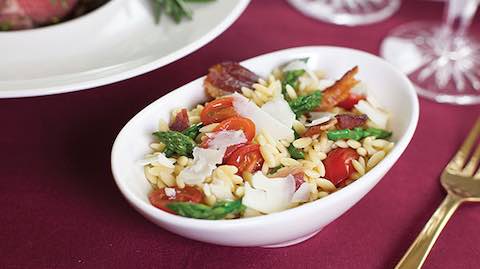
In the 1980s, pasta salads were all the rage. Today, pasta salads can seem like a bit of an afterthought. Well, I'm here to tell you, without hesitation, that I still love pasta salads.

Grilled Salmon Sandwich
Wolfgang Puck Recipes from Wolfgang Puck's Kitchen

When it comes to grilling, most people still think of quickly cooked burgers, sausages, steaks, or chicken breasts, or more slowly, gently cooked ribs, brisket, or turkey breasts. But I'd like to suggest expanding your horizons with something that's quick and easy to grill: salmon fish fillets.

Lamb Chops with Shallot Cream Sauce
Wolfgang Puck Recipes from Wolfgang Puck's Kitchen

Since the early days of Spago, one of my favorite ways to offer lamb chops has been to saute them and then prepare a quick pan sauce with chopped shallots, vinegar, white wine and cream, a recipe I first learned back in the early 1970s at Oustau de Baumaniere in the south of France.

Vanilla Pound Cake with Raspberry Compote
Wolfgang Puck Recipes from Wolfgang Puck's Kitchen

One of the ways you know that you've given the perfect gift is when the person who receives it wants to enjoy it again and again. By that definition, pound cake is an ideal treat for you to prepare for your mom, or your children's mom, this Mother's Day.

Three-Cheese Quesadillas and Classic Guacamole
Wolfgang Puck Recipes from Wolfgang Puck's Kitchen

I like to make my own cheese quesadilla by sandwiching three different kinds of cheese between two tortillas and then frying it in a little olive oil. The result is a uniformly golden-brown quesadilla that delivers the full nutlike flavor and crunchy texture of the tortillas. I serve it with a classic version of guacamole, the popular Mexican dip of mashed avocado and seasonings. Add some fresh tomato salsa and you've got the perfect combination of Mexican flavors and colors, an ideal treat for celebrating Cinco de Mayo

Carrot and Ginger Soup
Wolfgang Puck Recipes from Wolfgang Puck's Kitchen

Next Tuesday, April 22, is Earth Day, an annual international event that, since 1970, has promoted awareness of our environment and the positive impact each of us can have on it if we try. That's certainly true for those of us who love to cook and eat good food. In all of my restaurants, I'm committed to using fresh, natural, organic ingredients, produced through sustainable and humane farming and fishing practices. No other approach better safeguards our planet or sustains our health and our quality of life

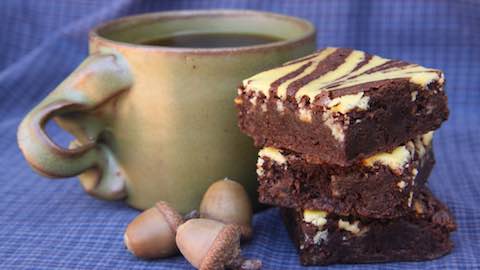
Crustless Caramel Flan Cheesecake
Wolfgang Puck Recipes from Wolfgang Puck's Kitchen

Cheesecake is an all-American favorite, not to mention a classic in Italy and other countries where mild, creamy cheeses are mixed with eggs, sugar, and flavorings, then baked. Nowhere else but here in the U.S., however, does cheesecake continue to be adapted into a multitude of different creative treats.

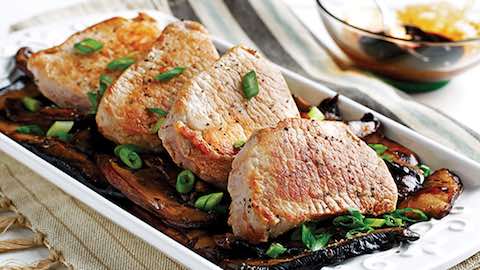
Thai Flavors Wolfgang Puck's Pork Loin with Thai Sauce and Papaya Salad Recipe
Wolfgang Puck Recipes from Wolfgang Puck's Kitchen

One of my favorite surprises as a chef, and also as someone who loves delicious, beautifully cooked food, has been the growing popularity of Asian cuisine. I quickly fell in love with Thai cuisine and its combinations of seasonings offering dishes like Pork Loin with Thai Sauce and Papaya Salad on the menu at Spago.

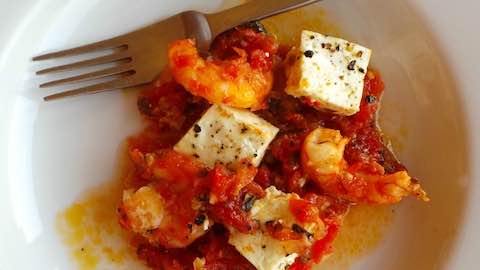
Wolfgang Puck's Greek Salad with Shrimp Recipe
Wolfgang Puck Recipes from Wolfgang Puck's Kitchen

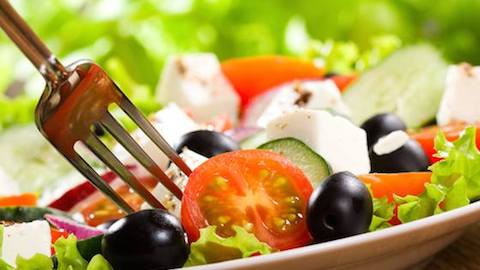
Many chefs invent new recipes by playing around with the classics. I like to take a dish with which everyone is familiar and look for ways to modify it for today's tastes.   This is the strategies I used, for example, to come up with one of the most popular lunchtime salads at my Spago restaurants: the Greek Salad with Shrimp.

Wolfgang Puck's New York Steak with Wasabe Sauce Recipe
Wolfgang Puck Recipes from Wolfgang Puck's Kitchen

When it comes to cooking at home steak seems more seasonal. People wait until the weather is warm enough for them to throw steaks on the outdoor grill. And that's a shame, because steaks are actually easy to cook indoors.

Wolfgang Puck's Pizza with Scrambled Eggs & Smoked Salmon
Wolfgang Puck Recipes from Wolfgang Puck's Kitchen

If you're trying to think of something different but perfect to serve for Easter brunch this year, or for brunch any time you want to surprise your guests, let me suggest pizza. Pizza? But I'm not talking here about the usual pizza with tomato sauce, cheese, and maybe pepperoni. I mean a pizza that is really ideal for a weekend morning meal.

Wolfgang Puck's Pan-Roasted Chicken with Whole-Grain Mustard and Port Recipe
Wolfgang Puck Recipes from Wolfgang Puck's Kitchen

Step-by-step Instructions for preparing one of Wolfgang Puck's favorite chicken recipes.

You know a recipe you've cooked is a classic when people remember it and crave it years, or even decades, after they first ate it. That's what happened with me recently when an old friend, a business mogul who had lived in London for many years and just moved back to California, stopped by for dinner at Spago in Beverly Hills.

Wolfgang Puck's SPAETZLE WITH GRUYERE AND CARAMELIZED ONIONS Recipe
Wolfgang Puck Recipes from Wolfgang Puck's Kitchen

Step-by-step Instructions for preparing Wolfgang Puck's SPAETZLE WITH GRUYERE AND CARAMELIZED ONIONS recipe.

So many people still seem to believe that pasta is strictly Italian. Yes, they know that central Europeans and Asians eat all kinds of noodles. But noodles are noodles, they think, and pasta is pasta.

Wolfgang Puck's Fettuccine with Clams Recipe
Wolfgang Puck Recipes from Wolfgang Puck's Kitchen

Step-by-step Instructions for preparing one of Wolfgang Puck's favorite seafood pasta recipes.

Fortunately for me, we lived in southern Austria, not far from Italy. So, when I did eat shellfish, I got to know one of the world's best ways to prepare them: as the Italians do, quickly cooked with olive oil and butter, white wine, lots of garlic, and a pinch of hot pepper flakes, then tossed with pasta.

Wolfgang Puck's Chunky Chicken Pot Pie Soup Recipe
Wolfgang Puck Recipes from Wolfgang Puck's Kitchen

Step-by-step Instructions for preparing one of Wolfgang Puck's Chicken Pot Pie recipe.

Yes, I call it a soup, mainly because I like to serve it in a soup bowl. But the soup is so chockfull of chicken and vegetables, all coated in a thick and creamy broth, that if you ladled it into shallower bowls or plates you could be forgiven for swearing it was a delicious stew.


Wolfgang Puck Recipes

Subscribe to Gourmet Food Recipes from Wolfgang Pucks Kitchen  RSS     Gourmet Food Recipes from Wolfgang Pucks Kitchen   SHARE

City Room: Will the Cupcake Craze Fizzle Out?
The rapid expansion of a New York City cupcake shop brings to mind the Krispy Kreme doughnut chain, whose rapid expansion was plagued with problems.

Freakonomics: Food Magazine Typo Poisons Sweden
Tens of thousands of copies of a Swedish food magazine have been recalled this week after an error in a recipe sent four of its readers to the hospital.

Even Chefs Have to Wait for a Table
A look at restaurant openings in New York this season, which are beginning to require the kind of planning that went into the Beijing Olympics.

Move Aside, Frozen Custard, and Make Room for Gelato
Gelato, that smooth Italian ice cream, seems to be catching on in the U.S. And small-business owners are taking notice.

As Belts Tighten, Lobsters Shrink and Bar Menus Grow
Many New York restaurants aren’t taking their success, or for that matter their survival, for granted.

The Minimalist: The Old Chickpea Learns a New Trick
If you’re not a fan of chickpeas already, this more-or-less North African treatment will do it.

A Good Appetite: Stretching the Corn Season
Can one ever eat enough succulent summer corn? Why resist when the season’s nearly over?

Wines of The Times: Meticulous, Modern and Very French
Few wines can match Côtes du Rhône in exemplifying the myriad changes that have transformed the French wine industry in the last 20 years.

A Slow Food Festival Reaches Out to the Uncommitted
A gathering in San Francisco last weekend was a sort of coming-out party for Slow Food U.S.A., a 10-year-old group that links the pleasures of food with community and environmental activism.

Restaurants: A Playroom in the Dining Room
Just four months old, the new restaurant Elizabeth has already changed plenty, and it still doesn’t seem entirely sure of what it wants to be.

$25 and Under: Fresh Takes on a Familiar Pleasure
At three relatively new places, the basics of the burger come together in satisfying bites.

For Discriminating Brunchers, Some Hash and a Bacon List
The chef Colin Alevras will open Permanent Brunch, a forthcoming East Village spot that will serve staples of morning eating all day, and all night on weekends.

From the Pig Directly to the Fish
For the coming months April Bloomfield, the chef at the Spotted Pig in Greenwich Village, will focus on the John Dory, her newest venture.

From the North, He Brings Secrets of China, and Some of His Own
Susur Lee, the face of high-end culinary dazzle in Toronto for more than 20 years, will open Shang, his first restaurant outside his adopted Canadian hometown.

This Pizza-Maker Is Obsessed With Ingredients
Jim Lahey sums up his vision for Co., the pizzeria in Chelsea that he will open later this month if all goes well, with five words: Pizza Hut meets Blue Hill.

Food Stuff: New Chef at Barbounia Offers Temptations to Go
Some of the specialties at Barbounia in the Flatiron district are being packaged to see at retail.

Food Stuff: For a Bigger Chill
The Museum of Modern Art Web site is selling a plastic mold from Japan that forms ice balls two inches in diameter.

Demand and Price Are Falling for Lobster
This year fewer people are ordering lobster, driving down prices and making times harder for lobster fishermen already reeling from the high cost of fuel and bait.

Recipes for Health: Grilled Eggplant Panini
A panini grill is an easy way to prepare eggplant slices, whether or not you use them in a grilled sandwich.

Recipes for Health: The Misunderstood Eggplant
Roasting an eggplant brings out its fragrance and delicate flavors. It is also the first step in many eggplant recipes.

NYT > Dining & Wine


Minogawa Shuzo "Koshino Omachi" Daiginjo, Niigata Prefecture

minogawa_koshi_no_omachi.jpgIn the wine world, the grapes matter. Move past the varietal surface of wine consumption, and you'll quickly descend into a world where the qualities of a given wine (say, Russian River Pinot Noir) are discussed in terms of how Dijon clone 667 grapes do on Riparia Gloire rootstock.

In the world of sake, a lot of things matter, from the water, to the yeast, to the Koji mold -- and of course, the rice. To say that rice is to sake as grapes are to wine is not entirely accurate. For instance, the primary differences in how two different sakes taste is rarely attributable to the strain of rice used (holding all other variables in sake making constant, but changing the type of rice will result in a subtly different flavor profile -- though this is rarely done). Those readers with more sake familiarity know that the majority of all sake, and almost the entirety of ginjo and daiginjo grade sake is made with just a single strain of rice known as Yamadanishiki.

So generally when discussing the differences between sakes, or even regional styles of sake, rice is not the first thing to enter the conversation. Having said that, there are some regional variations in the rice that brewers tend to use, and there are those breweries that go out of their way to make sake with specific varieties of rice in order to achieve specific flavor profiles.

If there is another rice strain that ever tends to cross the lips of even the more novice sake aficionados, it is the Omachi rice variety. Omachi is particularly interesting, not just because it is used by less than 30% of the breweries in Japan according to some sources, but because it is the oldest known "pure" strain of rice in Japan. While all the other rice varieties for sake have been hybridized over the years, Omachi has been cultivated without hybridization since it was discovered in 1859 in the small village deep in Okayama Prefecture whose name it now bears.

For some reason, most likely the accident of natural selection, Omachi rice does not hybridize well. Many have tried and failed over the years, so Omachi remains a bit of a spinster in the world of rice -- a strong personality with virtually no offspring (there are only three successful hybrids, and those took a lot of work). Nineteenth century Japanese farmers had no need to hybridize it, however, so it didn't bother them a bit -- indeed, at one point it was apparently one of the most popular varieties of table rice in the country.

But when mechanical harvesting replaced hand harvesting of rice, Omachi fell out of favor because its long, thick stalks and irregular clusters of grains made it difficult for the early harvesting machines.

Today it remains a bit of a novelty in the sake making world, though some select brewers have begun to take it quite seriously as a source for top grade sake.

One of those breweries is Minogawa Shuzo, based in Niigata prefecture. Founded in 1827 this brewery produces a number of artisan sakes, all made proudly with water from the underground currents of the Shinano River. Pulled from the brewery's well at a depth of 295 feet below the surface of the earth, this water is unusually soft in character which leads, or so master brewer Masayuki Tanaka claims, to the particularly smooth quality of its sake.

Though some breweries use the Omachi rice for sake, very few use it to make a daiginjo class sake, so this particular sake is quite unusual and special for that fact alone. Per the standards for daiginjo class, a full 60% of the mass of each rice kernel has been polished away.

While Minogawa Shuzo produces a number of sakes, only a couple of their products are imported to the US. This sake comes in both 720ml and 180ml bottles, and the 180ml is particularly attractive with its light blue, hand blown glass


Tasting Notes:
Colorless in the glass this sake has a nose of pastry cream and the smell of good quality jasmine rice just as you lift the lid off the rice cooker. In the mouth it has excellent balance with a nice acidity, and very clean flavors of rainwater, floral essences, and a deeper, earthy and mineral quality which lingers powerfully into a remarkably long finish for a sake. Perhaps most strikingly this sake has a texture that makes me swoon, deeply silky and horribly sexy.

Food Pairing:
I recommend this sake with fish, noodle and egg dishes. It can stand up to sturdier and fattier foods quite well.

Overall Score: between 9.5 and 10

How Much?: $80 for 720ml, $18 for 180ml

This sake is available for purchase on the Internet.


Are EU Lawmakers Going to Destroy the Italian Wine Industry?

France, you get a free pass today. The European Common Market Organization is my newest punching bag when it comes to idiotic wine regulations.

I can hardly believe it, but new wine industry reforms proposed by this body apparently will result in the elimination of Italy's DOC and IGT designations for wine.

WHAT!?!?

If that doesn't make your blood boil, then you're not paying attention.

These reforms, which would go into effect in 2009 if adopted, seem to suggest the equivalent action to taking all of the individual Bordeaux appellations and replacing them with just two: "Left Bank" and "Right Bank." For instance, according to Decanter Magazine, one of the proposed new designations would merge all of the surrounding areas (currently designated Barbera and Dolcetto) with Barolo -- making no distinction between those "village" wines and what is certainly one of Italy's most historical and prestigious wine regions. In all, Italy's 316 DOCs, 38 DOCGs and 118 IGT appellations would apparently be collapsed to a mere 182 designations.

Now, I'm not in favor of the mass proliferation of wine appellations. I think beyond a certain point there are diminishing returns to the slicing and dicing of terroir into ever finer designations and regulations.

But how could anyone in their right mind think that reducing the number of Italian wine appellations by 75% could possibly be a good thing?

Would one of my European readers explain to me how on earth this travesty of legislation even got out of committee?

Read the full story. And then if you're an EU passport holder, please, write your parliamentarian, or whatever it is you do when you're pissed off at the government.

Wine Criticism According to W.H. Auden

At the risk of betraying my political leanings and reinforcing recent suggestions that my home city is filled with cocktail party elitists, I have to admit that (apart from wine) by far the best $14 I spend every year is my subscription to Harper's Magazine.

One of my great pleasures in life is sitting down for an uninterrupted session with the "Readings" section of the magazine, which, for those who might be unfamiliar with the publication, is a collection of excerpts, snippits, essays, transcripts, declassified memos, poetry, and all manner of brief things that never fail to delight, inspire, and provoke me, not to mention make me laugh out loud.

I was reading the December 2007 issue this afternoon on the plane (yes, I'm drastically behind due to business demands and fatherhood) when I came across an interesting essay by W.H. Auden, taken from the 1952 French monthly publication "Preuves." Auden covered several topics in his essay "De Droit et de Gauche" but in this segment chiefly discussed the criticism of art.

As I was reading it, I was struck not only by the clarity of his arguments on the subject but also the degree to which they seemed to address the issues of wine criticism.

So if you'll excuse me for going a little highbrow on you, and if the estate of Auden will forgive me lifting his words for my own nefarious purposes, I give you Wine Criticism According to W.H. Auden:

Wine criticism is tradition defending itself against the three armies of the Goddess Stupidity: the army of amateurs who are ignorant of tradition; the army of conceited eccentrics who believe tradition should be suppressed by a stroke of the pen in order that the definition of what is truly great wine may begin with them; and the army of academicians who believe they maintain tradition by a servile imitation of the past.

The desire to link art to life, beauty to truth, justice to goodness almost infallibly leads critics to utter a host of stupidities; a critic who ignores or represses this concern, and contents himself with being no more than an amateur taster or an historian of wine avoids covering himself ridicule, but at what cost. No one reads him.

Judging a wine is virtually the same mental operation as judging human beings, and requires the same aptitudes: first a real love of wine, and inclination to praise rather than to blame, and regret when a complete rejection is required; second a vast experience of all manner of wines and winemaking; and last, an awareness, openly and happily accepted , of ones own prejudices. Some critics fail because they are pedants whose idea of perfection is always offended by a concrete realization. Others fail because they are insular and hostile to what is alien to them; these critics, yielding to their prejudices without knowing they have them and sincerely offering judgments they believe to be objective are more excusable than those, who aware of their prejudices, lack the courage to enter the lists to defend their personal tastes.

The best wine critic is not the one whose judgments are always right but the one whose essays compel you to taste and taste again the wine he discusses; even when he is hostile, you feel that the wine attacked is important enough to be worth the effort. There are other critics who, even when they praise a wine, cancel any desire you might have to drink it.

A Real Nigerian Wine Scam

Anyone who has an e-mail account and has checked it at least once in the last 10 years has probably received an e-mail that begins:

DEAR SIR,

CONFIDENTIAL BUSINESS PROPOSAL

HAVING CONSULTED WITH MY COLLEAGUES AND BASED ON THE INFORMATION GATHERED FROM THE NIGERIAN CHAMBERS OF COMMERCE AND INDUSTRY, I HAVE THE PRIVILEGE TO REQUEST FOR YOUR ASSISTANCE TO TRANSFER THE SUM OF $47,500,000.00 (FORTY SEVEN MILLION, FIVE HUNDRED THOUSAND UNITED STATES DOLLARS) INTO YOUR ACCOUNTS.

Known as the Nigerian Scam, or more properly an Advanced Fee scam, this sort of fraud has been incredibly successful, despite what may seem to some as its completely over-the-top implausibility. Apparently a lot of compassionate (and in particular elderly) Internet users have lost a lot of money to the scammers, many of whom are actually from Nigeria.

In jest, inspired by an e-mail from my friend Jack, I created little post about a year ago entitled The Nigerian Wine Scam as a joke. Maybe not a very well executed one, but some people got a chuckle out of it.

But now, reality has again trumped my own vain efforts at humor.

There really is a Nigerian Wine Scam. Not of the e-mail variety, of course, but of the much more dangerous bottled variety.

Nigeria is home to some excellent sounding wines, with names like "Bacchus Tonic Wines," "Eva Wines," and "Blue Cocktail Wines." Unfortunately while these are legitimate brands of alcoholic beverages, someone in Abuja, Nigeria has been re-using the bottles, corks, and labels of these brands to produce fakes that are not only not as tasty, they are downright dangerous.

Reportedly concocted of "caramel, vanilla flavour, red and blue colouring substance, alum grains, gum Arabic, among others" according to The Punch, a Nigerian Online Newspaper, these "wines" also contained sachet water -- water from small, often hand tied, plastic sachets that have become popular sources for drinking water in Africa in recent years.

These sachets are widely regarded by the scientific and medical communities as being extremely unreliable in their manufacture (not to mention completely unregulated), and tests have shown that sachets can contain everything from extremely high levels of toxic heavy metals to all manner of water borne pathogens and microbiological contaminents (can you say faecal coliforms?).

To wit: the dangers to anyone who might opt for a glass or two of Bacchus Tonic apparently include entero-gastritis, diarrhea, dysentery, typhoid, cholera, and organ damage. Not to mention a pretty disgusting taste in your mouth.

So next time you get an e-mail offering you the chance to receive a one time shipment of Grand Cru Nigerian wine, just hit delete.

Read the full story.

Freeman Vineyard and Winery, Sebastopol, CA: Current Releases

freeman_logo.jpgSay what you want about the state of America, I know of no other place where it remains so imminently possible to realize your dreams. These days it takes a lot of money to do it, but this country is still one of the easiest places to decide that you want to achieve something, and then set out to do it.

This is especially true in the wine business which, despite being a far cry from the pull-yourself-up-by-your-bootstraps success stories that typify the American Dream, continues to support those who decide to take their strongest passions and turn them into a reality.

The cynical might say that it is easy for rich people to live out their fantasies, but if you know anything about making wine, you know that there's a lot of hard work involved, and especially so if you're going to produce something good, rather than just a bottle with your name on it.

In fact, it's hard enough to do that when people who simply dive in because they love wine manage to make something fantastic, it's quite a surprise. Sort of like deciding you're going to open a restaurant because you love food and getting a Michelin star or two. But while not commonplace, it certainly is a possibility in the wine world. Just ask Ken and Akiko Freeman.

Freeman Vineyard and Winery was born of Ken and Akiko's mutual love of food and wine. The two met at a fateful garden party when the boat that Ken was crewing on was driven to port by a looming hurricane, and their love at first sight was soon cemented by their discovery that great Burgundy numbered in both their lists of the best things in life.

Their life together over the next 10 years revolved around three things: school (Ken would return for his MBA, while Akiko went back for a Masters in Art History), wine travel (to as many wine producing regions as they could manage), and business (all this while Ken brought the Discovery channel to Asia).

Returning to California in 1997 for Ken to take a job at CNET, the two decided that they wanted to set down roots in all senses of the word. As the Internet bubble swelled, Ken and Akiko began the hunt for a place to call home and a place to make their own wine. In 2001 they purchased a small winery in the town of Sebastopol in the heart of the Russian River Valley. Their goal was to simply make the best damn Pinot Noir they could.

And after having watched (and tasted) their efforts for the last few years since their initial vintage, I'd have to say they're getting close. Close enough for it to not make much difference if they ever really meet their final goal, because the wines are consistently excellent.

Freeman Vineyards and Winery is a classic example of what I call an "estate-less winery," a model that was popularized in the old world by the negociants of France, and which is gradually proving incredibly successful here in California. The Freemans own no vineyards (yet), only a winemaking facility and cellar. They purchase long term contracts for grapes with growers that let them be extremely hands-on with the vineyard management. Together with a contract winemaker, assistant winemaker, vineyard manager, and a small team of friends and family, they make small quantities of wine that bear the unmistakable signature of diligent and tender care just as they do the flavors of the soil they come from.

Freeman makes around 5,400 cases of mostly Pinot Noir from a couple of single vineyard sites around the Russian River valley, as well as a top cuvee named after Akiko that is their flagship wine each year. They also produce a Sonoma Coast designated Pinot Noir, and more recently a Chardonnay.

The winemaking regimen at Freeman, handled by winemaker Ed Kurtzmann (formerly of Chalone, Testarossa, and currently his own label, August West), is what you might expect from an artisan Pinot Noir producer. The grapes are babied in from the vineyard by hand, de-stemmed and fermented without crushing in small lots, and then mixed with the fermenting juice ("punched down") several times per day by hand as the fermentation proceeds. The wines spend at least 11 months in French oak before spending another six in bottle before release.

The crown jewel of the Freeman portfolio for me has always been Akiko's cuvee, which is a blend of "best-barrel" fruit from many vineyard sites and always embodies the best qualities of Sonoma Coast Pinot Noir.

Full disclosure: I received these wines as press samples.

TASTING NOTES:

2006 Freeman Vineyards and Winery Pinot Noir, Russian River Valley
Medium garnet in the glass, this wine has a bright, horsey nose that combines cranberry, plum, and faint barnyard aromas into a pleasing whole. In the mouth it is soft and velvety with pleasant but not resonant flavors of cranberry and cherry. Soft, even plush tannins guide the wine to a decent finish with hints of herbs. Good acidity plus tannins says to me that this wine will age well. Score: between 8.5 and 9. Cost: $40. Where to buy?

2006 Freeman Vineyards and Winery Pinot Noir, Sonoma Coast
Light garnet in color, this wine smells of cranberries, herbs, and wet tree bark. In the mouth it has a beautiful texture and a dark loamy quality that is arresting even as bright acids dance on the palate. The primary flavors of cranberry and herbs are nicely balanced with this earthy quality, and remain so through a nice finish. Score: around 9. Cost: $45. Where to buy?

2006 Freeman Vineyards and Winery "Ryo-fu" Chadonnay, Russian River Valley
Light to medium gold in the glass, this wine smells of buttered popcorn in the best possible way. In the mouth that same bright buttered, almost savory flavor persists with a silky texture, only to be cut, slashed, and dazzled by a tempest of citrus zest and lemon curd that bounce on through a long, intense finish. Ryo-fu means "cold wind" in Japanese. Score: around 9. Cost: $40. Where to buy?

2006 Freeman Vineyards and Winery "Keefer Ranch" Pinot Noir, Russian River Valley
Light to medium garnet in color, this wine has a rich plum and pomegranate set of aromas that creep out of the glass to take hold of your senses with a velvet vise grip. In the mouth its initial impression is of intensity -- smooth, silky and bursting with tart cherry and pomegranate flavors that are beautifully balanced with acidity and fine grained tannins. Hints of sandalwood and crabapple emerge on the long finish. Score: between 9 and 9.5. Cost: $40. Where to buy?

2006 Freeman "Akiko's Cuvee" Pinot Noir, Sonoma Coast
Light garnet in the glass, this wine has a pungent nose that, with the right memory, might instantly transport you to a misty ridge above the pacific with aromas of cedar and sea air mixed with redcurrant and cranberry. In the mouth it is soft -- baby bottom soft -- with bright, juicy flavors of cranberry, cherry, and amidst the nicely balanced acids and tannins, the faint traces of exotic spices that linger for a while, quietly. Score: between 9 and 9.5. Cost: $60. Where to buy?

Church Attendance Down? Try Installing a Wine Bar.

At one point in the glorified history of Western civilization, people were beaten or berated if they failed to show up for religious services. You didn't simply put money in the collection box, it was taken from you. But we're in the 21st century, and the church must rely less on force and more on marketing if it wants to hold onto its market share in an increasingly competitive marketplace.

In a move that may have been inspired by scripture itself ("Wine was created from the beginning to make men joyful, and not to make men drunk. Wine drunk with moderation is the joy of soul and the heart. Ecclesiastes 10:19") The Church of England recently suggested that there might be a very easy way to get people to visit one of its cathedrals more often: install a wine bar.

Of course, this wasn't some stuffy bishop suggesting that a glass of Chardonnay under the light of stained glass windows might be good for the soul. Rather, this was the "director of hospitality and welcome," whose job, it seems, is to "rejuvenate a the brand" of the Church, which has seen a gradually dwindling stream of visitors to its Cathedral in Birmingham.

I'm all for this sort of approach. The world would be a better place if we all sat down and had a glass of wine with each other more often, and I can think of a lot worse places to do it than some of England's beautiful cathedrals.

In fact, this could be a whole new frontier for converting England's beer drinkers into faithful followers of the grape. France, with its dismally dropping population of younger wine drinkers would be wise to consider such a move as well. Even the Catholic church could find an angle in here, and the the process they could significantly increase the quality of that communion wine.

Presumably there will be some limit to the amount of drinking one can do in such an establishment, however. Dancing on the pews does not seem like it would go over very well.
Read the full story.


1997 Staglin Family Vineyards Cabernet Sauvignon, Rutherford

97_staglin_cabernet.jpgFrom the late 1800's to the first half of the twentieth century California represented a land of opportunity for many. In Northern California, this potential seems to have been realized in particular by Italian immigrants who settled North of San Francisco in great numbers, founding small towns up the coast and in the inland valleys. Drive Highway 1, Highway 12, Highway 116, and the Bohemian Highway North of the city and you'll pass old barns and homesteads, country stores, and several Italian restaurants that have been operating continuously since at least the Thirties.

That these fiercely determined immigrants met with success here is evidenced by not only by the preponderance of these small towns and farming communities, but also that these same towns are, after several generations, still populated with Dinuccis and Gonnellas.

Garen Staglin grew up the son of one of those early Twentieth Century immigrants. His father, Pasquale Stagliano, later naturalized as Ramon Staglin, emigrated at the age of two with his family from Calabria, Italy and settled first in New York and later California. Like so many other immigrants, the Staglianos brought with them their love of food and wine and the central role they both play in family life.

It's no wonder then that when Garen met with considerable success, going from UCLA to Stanford Business School to the corporate world, and then to boardrooms and the halls of Silicon Valley venture capital, he and his wife Sharalyn dreamed of owning a vineyard. Carefully biding their time, they finally found just what they were looking for.

In 1985 the Staglins purchased a very old, very large estate in Rutherford that for many years had been under the management of André Tchelistcheff, known by some as the "Godfather of California Cabernet." Tchelistcheff managed this vineyard for Beaulieu Vineyards under the ownership of the La Tour family, and it was this 50-acre parcel that he selected for producing the vaunted BV Georges De La Tour Cabernet.

The Staglins took this vineyard and the adjoining ranch and literally transformed it, carefully replanting the vineyards with direction from Tchelistcheff and building an underground winery and a home for themselves in the style of an Italian villa.

Today, and for nearly the past twenty-five years, Staglin Family Vineyards has been winning praise for the small quantity of estate wine that it produces each year: 350 cases of Sangiovese and 2,000 cases of Chardonnay in addition to the slightly more than 6,000 cases of this Cabernet. They are certainly my favorite producer in Rutherford, and in my opinion, one of the top three producers in the appellation.

Winemaking is currently done by Fredrik Johansson, but I believe this vintage was made by then winemaker Celia Masyczek, who spent almost a decade making some of the most celebrated of Staglin's wines before continuing her career as one of Napa's superstar winemakers.

The wine is made from 100% Cabernet Sauvignon grown organically on the Staglin Family estate in the shadow of Mt. St. John in the Mayacamus Range in an area known as the Rutherford Bench. After destemming and crushing, the berries cold soak before a fermentation that lasts anywhere from 14 to 28 days. After secondary fermentation is complete the wine is aged for 26 months in 100% French oak barrels, (65% of which are new).

Tasting Notes:
Medium ruby in color and showing little sign of its age, this wine has a nose of leather, cherry, and wet cedar bark aromas -- distinctively an older California Cabernet. In the mouth it offers flavors of fresh and dried cherries, cinnamon, and what can only be described as both the flavor and texture of the softest suede. A long finish completes a very satisfying experience that, if tinged with anything other than pleasure, might be said to involve a little regret at drinking this wine now, as it clearly has a good decade ahead of it.

Food Pairing:
I drank this wine with a nicely grilled filet mignon and fresh vegetables, which is certainly a classic pairing.

Overall Score: between 9 and 9.5

How Much?: This vintage can be had at auction or select retailers for around $120

This wine can be purchased online.

Still Seats Left for the Sake Dinner at Manresa

SakeDinner_logo.jpgSome of the best meals of my life have been from the kitchen of chef David Kinch at Manresa Restaurant in Los Gatos. I'd take half a tasting menu from him over anything at the French Laundry, any day of the week. Which is why I'm humbled at his continued interest in collaborating with me to provide an unparalleled dining and drinking experience for a few adventurous diners every once in a while.

David and I both have an enduring love for Japanese cuisine. If you've ever eaten at Manresa you may have noticed this influence in Chef Kinch's cooking. It's one of my favorite aspects of his cooking -- the guy knows how to deal with raw seafood better than almost any (non-Japanese) chef in this country.

All of which is why he and I are both giddy with excitement at the prospect of the Sake Dinner: an eight course meal that will be a little heavier on the Japanese influence than normal for David, accompanied by some of the best sakes I've ever tasted. The early drafts of the menu that I've seen make me extremely hungry (I'm currently traveling on business in upstate New York, and pretty much every restaurant in town is Italian -- I'd kill for a decent plate of sushi).

Working with Jeff Barielles, the wine director at the restaurant, we've managed to get our hands on some sakes that are almost never seen in the United States (as well as some others that are also phenomenal, but easier to find in the event you fall in love with them).

The food and the sake will be accompanied as usual by stories from me about how and where they are made.

This will be a fantastic evening if you care to join us. There are still seats available, so call the restaurant to make reservations.

Manresa and Vinography present: The Sake Dinner
Wednesday, September 10th, 2008
Seating begins at 6:30 PM
Manresa Restaurant
320 Village Lane (just off North Santa Cruz Avenue)
Los Gatos, CA 95030
408-354-4330

$325 per person gets you an eight course meal with sake pairings. You pay tax and gratuity.

JC Cellars, Oakland: Current Releases

In the Silicon Valley, business incubation is quite common -- larger companies often provide financial, operations, and moral support to smaller companies that they themselves have started, or outside start-ups that they believe have a good potential for success. This practice has become so normal that some companies have established jccellars_logo.gifentire business models based on incubation.

Incubation has also become common in the wine industry, where the costs of all the equipment and supplies required to make wine can be an extreme barrier to entry, and a source of extremely high overhead for those who do take the plunge. Just like a larger company might rent out some cubes and offer guidance to a smaller company, so to do wineries offer the use of their equipment to smaller producers using the fees from such services to defray the costs of their capital investments.

But incubation in the wine industry does not only happen as a matter of economic convenience, it often happens simply because, frankly, most folks in the wine industry can't help themselves -- they love making wine.

Jeff Cohn comes to winemaking from the world of food and hospitality. He fell in love with eating and drinking in his twenties and decided that he was going to make them his career, heading off for a degree in culinary arts, which was followed by a degree in hospitality management.

His early career saw him as the food and beverage director for Windjammer Barefoot Cruises and then later the manager of a Washington, D.C gourmet store.

During the ten years of his hospitality career, Cohn fell deeper and deeper in love with wine, and by 1993 he couldn't take it any longer. Enrolling in a masters program in agricultural chemistry, Cohn emerged with a degree emphasizing enology, and was promptly hired by Rosenblum Cellars as its staff enologist.

That same year, Kent Rosenblum allowed Cohn to make a little of his own wine on the side -- around 70 cases of Zinfandel -- and JC Cellars was born.

You'd think that winemakers would be pretty busy folks -- lots to worry about as grapes come piling into the winery by the truckload, dozens of fermentation tanks, hundreds of barrels -- and that they wouldn't exactly have time for dabbling here and there. But I don't know a single winemaker that doesn't have some small side project going, whether it's a little experiment with a new cooperage, a new source of grapes, a consulting project for a little extra cash, or their own private label.

Such activities make for a lot of late nights for winemakers around harvest time, but somehow they manage to pull it off, and Cohn was no exception. He gradually built up a small business on the side, thanks to Rosenblum's help, and Rosenblum customers got used to shopping at J.C. Cellars after they arrived to pick up their wines at Rosenblum.

By 2000, Jeff was Rosenblum's winemaker and he had convinced owner Kent Rosenblum to add Rhone style wines (Syrah, Viognier, and Marsanne) to the portfolio, and J.C. Cellars was a steadily growing success. In 2004 Cohn was named vice president of winemaking and production, but in 2006, the time had come to focus all his efforts on J.C. Cellars.

Managed by himself and his wife Alexandra, the winery now produces about 5000 cases of wine and is the poster child for "in-winery" incubation of a new brand. The fledgling winery got its start in the protective shadow of Rosenblum but is now a completely independent entity, and one of America's most highly regarded small wineries, with an unusual amount of critical acclaim for the wines.

The J.C. Cellars portfolio consists of mostly single vineyard wines, with an emphasis on the Rhone varietals -- Syrah, Petite Sirah, and Viognier -- plus some Zinfandel thrown in for good measure. Cohn sources grapes from small producers throughout Northern California with long term contracts that allow him to work closely with growers to tailor the fruit to his specific liking.

The wines are made in small batches that are carefully crafted to showcase each specific grape source, from the yeasts to the barrels, to the durations of time that the wines spend in contact with the skins.

Cohn's wines have a reputation for power and brawn, richness and opulence. They have conjured the adjective "hedonistic" from many. These are accurate characterizations, but I find the wines somewhat more restrained on the whole than other producers that elicit similar descriptions. Cohn's wines are nothing if not carefully and lovingly made, and this is easy to taste.

Full disclosure: I received these wines as press samples.

TASTING NOTES:

2007 JC Cellars Rockpile Vineyard Rose, Rockpile, Sonoma
Pale ruby in color, this rose of Syrah smells of alpine strawberries and rosehips. On the palate it is bright and silky with bouncy flavors of strawberry and cherry that remain firmly (thank god) in the territory of dryness, making this an excellent, refreshing wine of which to drink many glasses. Score: between 9 and 9.5. Cost: $18. Where to buy?


2005 JC Cellars "Rockpile Vineyard" Syrah, Rockpile, Sonoma
Nearly opaque garnet in the glass this wine has a rich sultry nose of earth and black cherry aromas. In the mouth it is silky and thick with flavors of black cherry, leather, earth, and black currant. Dusty tannins emerge as the wine heads to a long finish. Big and brawny, this wine will please lovers of big Syrahs to no end. Score: between 9 and 9.5. Cost: $45. Not yet released.


2005 JC Cellars "Ventana Vineyard" Syrah, Monterey
A cloudy medium ruby in the glass, this wine has a nose of white pepper, cassis, and black cherry. In the mouth it comes across as spicy, with continued flavors of white pepper, blackberry, and mixed spices. Lean and less bombastic than some of the other wines from this producer, but no less pleasant for it. Score: between 8.5 and 9. Cost: $45. Not yet released.


2006 J.C. Cellars "California Cuvee" Syrah, California
Medium to dark garnet in color, this wine smells of homemade blackberry jam and rose petals. In the mouth it offers flavors of cassis, blackberry, cola, and caramel notes, that head towards a finish with some heat on it. Decent acid, and imperceptible tannins, but the wine doesn't quite hold together as much as you might like. Feels a bit disjointed. Score: between 8 and 8.5. Cost: $25. Where to buy?


2005 J.C. Cellars "Caldwell Vineyards" Syrah, Napa
Inky garnet in the glass, this wine smells of well oiled leather, black cherry, and earth. In the mouth it offers black cherry, blackberry, and deeper woodier flavors. Good acidity and silky texture make for a very pleasant feeling in the mouth and a long finish. Score: around 9. Cost: $45. Where to buy?

Slow Food Nation Wine and Food Event: Aug 29 - Sept 1, San Francisco

slow_food_nation.jpgIt's a pretty good time to be alive. I don't find myself often wishing that I had lived in earlier times. However, there are events in the past that I would give my right arm to have been able to experience first hand. One of my top choices for time-travel destinations would certainly be the 1893 Worlds Fair in Chicago. I'd love a week to explore the wares of the world amidst Olmstead's gardens.

There may not ever be another event so grand as that, but when it comes to American food and wine, Slow Food Nation may very well be the equivalent for those who enjoy the pleasures of the palate. There's so much stuff going on over the weekend of August 29th to September 1st all I can really do is point you to the web site and offer you good luck in drooling your way through artisan bread tastings, cooking demonstrations, speakers, films, farmer's market, concerts, tours and field trips, hikes, and more.

What I will tell you is that the part of the weekend known as the Taste Pavilions will be a wonderland for bay area wine lovers, especially those interested in sustainable, organic, and Biodynamic wines. More than 450 wines will be available for tasting, and perhaps a hundred of them will be from exotic places like Illinois, Michigan, Ohio, New York, and Texas. There will be hundreds more from well known places like California, Oregon, and Washington. All told it will likely be the single largest tasting of sustainable wines yet held in the U.S. Here's a full list (PDF) of the producers who will be pouring and their wines.

The Taste Pavilions, which have both mid-day and afternoon sessions on Saturday August 30th and Sunday August 31st will also offer a huge variety of other foodstuffs and drinks, all from Slow Food friendly purveyors and producers.

Tickets for the mid-day sessions are already sold out, so if this smorgasbord of amazing food and drink appeals to you, you'd better plan on freeing up Saturday or Sunday evening over labor day to go check it out.

Slow Food Nation
August 29th - Sept 1st
Fort Mason Center (and other locations)
San Francisco

Tickets for the taste pavilions are $65 (or $45 if you're under 21) and they must be purchased in advance online. This event will likely sell out in the next week or so.

Kamoizumi "Summer Snow" Nigori Ginjo, Hiroshima Prefecture

Review By W. Blake Gray

Stop the presses -- no, wait, this isn't printed. OK, stop the Internet -- I found an excellent nigori sake!

Nigori is the White Zinfandel of sake. It's tremendously popular, particularly with people just discovering sake. It tends to be very sweet. And experts turn up their noses at it, usually with good reason.

Nigori sakes are white and cloudy because they contain bits of rice that didn't complete fermentation. They have an interesting, chewy texture. What turns off sake aficionados, more than their sweetness, is their lack of complexity -- you don't get the fruity, floral flavors and aromas that are the hallmark of quality sakes. Nigori sake reminds me of amazake, a warm, sweet, nonalcoholic rice drink sold at winter festivals in Japan. Imagine saying that a wine reminds you of cocoa.

John Gauntner wrote in 2005 on his authoritative sake-world site, "I have not had a full glass of nigori-zake in at least umpteen years, maybe more."

I'm generally in the ABN (anything but nigori) crowd myself. Just as with White Zin, I think nigori sakes are great for the industry because they introduce new drinkers who can move up later. But I don't order White Zin off the wine list either, even the reserve list.

Here's an example of the U.S. market affecting Japanese sake production: enough people here like nigori sakes, and are willing to spend money for them, that a few companies make upscale versions. (There's a difference from white Zin; the most expensive white Zin I could find online was $14.99.)

For Kamoizumi brewery in Hiroshima prefecture, making a premium nigori falls in line with company history.

The Maekake family who run Kamoizumi committed to unfiltered junmai production in 1971 when most of Japan insisted on charcoal filtering. Where most breweries saw impurities, Kamoizumi tasted complexities. But Kamoizumi junmais had a touch of color at a time when all sakes were expected to be clear. That decision had to be a lot more difficult than the decision to take Nigori upscale.

Kamoizumi "Summer Snow" Nigori Ginjo is good enough to seduce an ABN drinker. In fact, my bottle emptied with surprising alacrity.

Hiroshima is known for its soft water, a good base to start from. This sake is not chunky; instead it has a viscous mouthfeel. Yet it also rings with acidity and is not at all like the sweet, stewy nigoris that dominate the market.

Tasting Notes:
There's a strong olive-oil note in aroma and flavor, something I don't usually detect in sake. You also taste notes of white peach, cream (of course), lemon zest and clay. The medium-long finish never cloys. It's only very slightly sweet; with an SMV of +1, it's akin to a German halbtrocken Riesling. I have tasted many expensive non-white Zinfandels that have more residual sugar than this.

It's the best nigori sake I've ever had. Is that damning with faint praise? No, but at the same time I'm not sure it's convincing to the typical nigori drinker, since I'm openly ABN. Yet I really liked this sake; my bottle emptied rapidly. If nigori is the White Zinfandel of sake, this one's the dry Pinot Noir-based rose.

Food Pairing:
Appropriately for an American-targeted product, this sake would work with American-style sushi, like spicy tuna roll, which overwhelms the delicate flavors of daiginjos, for example. The viscous mouthfeel makes it an interesting partner for rich-tasting fish, like salmon sashimi or steamed sablefish. I actually had it with slightly spicy Chinese food (salt and pepper squid, pea sprouts with garlic) and it was outstanding.

Overall Score: around 9

How much?: $28

This sake is available for purchase on the Internet.

Tasting the Wines of San Francisco's East Bay Wineries

Wine country is now 15 minutes from downtown San Francisco, thanks to the surge in wine producers that are popping up all over the East Bay (and in San Francisco proper, too!). Oakland, Alameda, and Berkeley are now home to more than a dozen wineries that range in size from a couple of people and a couple of barrels, to some of California's most lauded wineries.

A couple of years ago, these wineries got together and formed a marketing association that would help them all gain more visibility. This organization, known as the East Bay Vintners Alliance, has begun to put on yearly tastings to showcase the wines of its eastbay.jpgmembers and make good on the promise of an urban wine country in the East Bay.

I had a chance to sneak off to Oakland a couple of weeks ago on a picture perfect sunny day and hang out with the hundreds of Bay Area wine lovers that showed up to sample wines and special food pairings from some great restaurants in the area.

The event was, as far as I can tell, a smashing success. The weather alone would have made it a pleasant enough experience, but the food was quite good, including a huge cheese spread that I made several passes on once I had finished tasting all the wines.

This was my first opportunity to sample wines from all the members of the Vintners Alliance, and I'm happy to report that there's some truly great wine being made in the East Bay's urban wineries, and not just by the established names like J.C. Cellars, Dashe, and Rosenblum. There were a number of wines that were not to my taste, but the bulk of the wines were competently made and if they weren't all spectacular, they certainly all showed both the hard work as well as promise of several new small producers.

My scores from my tasting follow below. Prices quoted are the suggested retail price for purchase direct from the winery.

Photo courtesy of John Joh.


Scores for the 3rd Annual Urban Wine Experience

WINES SCORING BETWEEN 9 AND 9.5
2007 Dashe Cellars Zinfandel L'Enfant Terrible McFadden Farms, Potter Valley. $24.00
2006 Dashe Cellars Zinfandel Todd Brothers Ranch, Alexander Valley. $32.00
2006 JC Cellars Marsanne Preston Vineyard, Dry Creek Valley. $32.00
2007 Rosenblum Cellars Viognier Kathy's Cuvee.Winery only.
2006 Rosenblum Cellars Zinfandel Kontrabecki. Winery only.

WINES WITH A SCORE AROUND 9
2006 Aubin Cellars Verve French Colombard Domaine de Mirail, Cotes de Gascone. $12.00
2007 Dashe Cellars Dry Riesling McFadden Farms, Potter Valley. $20.00
2006 Eno Wines Grenache "Yes, Dear..." Eagle Point Ranch, Mendocino. $28.00
2007 JC Cellars Rose Stagecoach Vineyard, Napa Valley. $18.00
2007 Prospect 772 Rosé "Babydoll" Sierra Foothills. $15.00
2006 Rosenblum Cellars Petite Sirah Pickett Road. Winery only.

WINES SCORING BETWEEN 8.5 AND 9
2006 Andrew Lane Gamay Noir, Napa Valley. $19.00
2005 Andrew Lane Cabernet Sauvignon, Napa Valley. $28.00
2006 Dashe Cellars Zinfandel Dry Creek Valley. $24.00
2006 Eno Wines Pinot Noir "Never Say Never" Santa Lucia Highlands. $32.00
2006 Eno Wines Zinfandel "Acres of Happiness" Teldeschi Vyds Dry Creek Valley. $28.00
2005 Eno Wines Syrah "S05" Las Madres Vineyard, Carneros. $35.00
2006 JC Cellars Syrah California Cuveé . $25.00
2006 Lost Canyon Winery Pinot Noir Morelli Lane, Russian River Valley. $42.00
2006 Lost Canyon Winery Pinot Noir Saralee, Russian River Valley. $42.00
2006 Prospect 772 Grenache/Syrah "The Brawler" Sierra Foothills. $36.00
2006 Rosenblum Cellars Rosie Rabbit Late Harvest Zinfandel Winery only.
2007 Two Mile Wines Viognier Bloomfield Vineyards , Central Coast . $23.00
NV Adam's Point White After Dinner Wine. $16.00

WINES WITH A SCORE AROUND 8.5
2005 Andrew Lane Cabernet Franc, Oakville. $35.00
2005 Andrew Lane Merlot, Napa Valley. $17.00
2006 A Donkey And Goat Three Thirteen (Southern Rhône style blend). $37.00
2006 A Donkey And Goat Syrah The Recluse, Anderson Valley. $37.00
2006 Lost Canyon Winery Reserve Syrah Trenton Station, Russian River Valley. $35.00
2006 Prospect 772 Syrah "The Brat" Sierra Foothills. $36.00
2006 Tayerle Wines Carneros Pinot Noir . $30.00
2007 Urbano Cellars Vin Rose Solano County Green Valley. $14.00
2006 Urbano Cellars Syrah Dry Creek Valley. $19.00
NV Adam's Point Mango Dessert Wine. $16.00
NV Adam's Point Persimmon Dessert Wine. $16.00

WINES SCORING BETWEEN 8 AND 8.5
2006 Irish Monkey Cabernet Franc, Lodi. $29.00
2006 Aubin Cellars Verve Pinot Noir Sonoma Coast. $28.00
2005 Aubin Cellars Verve Syrah Columbia Valley. $26.00
2006 Aubin Cellars Verve Sauvignon Blanc Paso Robles. $14.00
2006 Tayerle Wines Savignon Blanc Villa San Julliette . $12.00
2006 Two Mile Wines Petite Sirah Rosciano Vineyards, Dry Creek Valley. $34.00

WINES WITH A SCORE AROUND 8
2006 Lost Canyon Winery Syrah Alegria, Russian River Valley. $35.00
2006 Periscope Cellars Deep 6, California(6 Grape Red Blend). $24.00
2006 Urbano Cellars Petit Verdot Lodi. $16.00

WINES SCORING BETWEEN 7.5 AND 8
2006 Irish Monkey Syrah Lovall - Borneman Lavender Farm. $26.00
2006 Periscope Cellars Sangiovese, Alexander Valley. $22.00
2006 Two Mile Wines Sangiovese Polesky-Lentz Vineyards, Dry Creek Valley. $42.00
2005 Urbano Cellars Old Vine Zinfandel Solano County Green Valley. $18.00

WINES WITH A SCORE AROUND 7.5
2006 Periscope Cellars Petite Verdot, Lodi. $18.00

WINES SCORING BETWEEN 7 AND 7.5
2006 Irish Monkey Cabernet Sauvignon, "MEF". $35.00

WINES WITH A SCORE AROUND 7
2006 Irish Monkey Primitivo Lovall Valley, Napa Valley. $30.00

WINES WITH A SCORE BELOW 7
2006 Periscope Cellars Zinfandel, Sonoma County. $20.00
NV Adam's Point Chocolate Dessert Wine. $16.50

Wine Spectator Restaurant Awards Exposed as a Total Farce

My colleague Jim Gordon who currently edits Wines & Vines magazine just pointed me to an article on their web site that made my jaw hit the table.

Reporting from the recent meeting of the American Society for Wine Economists, writer Peter Mitham describes a presentation by researcher Robin Goldstein, who seems to have performed a sting operation on the Wine Spectator Restaurant Awards and exposed them as a total farce, as part of his ongoing investigations on the perceptions of value and quality in wine.

In summary:

1. Researcher invents fake restaurant in Italy.
2. Researcher builds web site for fake restaurant.
3. Researcher constructs wine list of the lowest scoring Italian wines from Wine Spectator in the last decade.
4. Researcher enters Wine Spectator Restaurant Awards.
5. Fake restaurant wins Wine Spectator Award of Excellence.

I haven't laughed so hard at a piece of wine news in years. It's truly unbelievable.

Read the article at Wines & Vines, and then go read the the researcher's own blog post on the subject, which includes text from the Spectator's reviews of the wines on his list. It's hysterical.

If this is true, it completely destroys any shred of credibility that these awards might have.

Sonoma Wine Country Weekend: Aug 29-31, 2008

swcwLogo.pngMost people, when they come visit me in San Francisco and ask to be taken to wine country, assume that they're going to Napa, but at least half the time, that's definitely not where we end up.

These well meaning tourists aren't the only ones who seem to forget that Northern California has many different "wine countries." Napa casts a long shadow, as it were.

I've got lots of love for every piece of wine country we've got, and a special place in my heart for Sonoma County, both because it is the place of my birth, but also because I think sometimes it gets short shrift compared to its more famous neighbor.

Sonoma County is several different wine regions rolled up into one -- from the chilly fog of the Sonoma Coast and Carneros, to the cool Green Valley and Russian River Valley, to the warmer climes of Dry Creek Valley, Sonoma Mountain, Alexander Valley, and the Sonoma Valley -- there's something for everyone in Sonoma.

The main problem however, is that all these regions are spread out over a wide area, much wider than the relatively (in comparison) compact Napa Valley. So experiencing the breadth of Sonoma can be time consuming, no matter how fulfilling it ends up being.

So while it's a good idea for wine lovers to pay more attention to Sonoma in general, there is one weekend this year when any self respecting wine lover shouldn't be thinking of anything else: The Sonoma Wine Country Weekend.

The first event of its kind, this weekend celebration of Sonoma County wine is a combination of what have been two separate annual events up until now: The Sonoma County Showcase of Wine and Food and the Sonoma Valley Harvest Wine Auction. These two events have been combined into a single weekend that is the single best opportunity in existence for anyone to learn a thing or two about Sonoma wine.

The weekend starts on Friday August 29th, with winemaker lunches at various wineries around the valley. On Saturday the 30th, the grand tasting will take place from 11 AM to 4 PM, where more than a hundred Sonoma County wineries will offer their wines for tasting along with food from more than 60 of the regions top chefs and artisan food purveyors. Sommeliers (apparently some of them famous) will be conducting wine seminars, and almost every wine that you might taste is available for sale (or shipping back home) with the help of the event staff.

The evening of Friday the 29th and Saturday the 30th will also involve winemaker dinners at some of Sonoma's most spectacular wineries, including Pride Mountain Vineyards at the top of the Mayacamas mountains.

And if that weren't enough, on Sunday the live Harvest Wine Auction, whose proceeds go to local charities, offers chances at bragging rights and some amazing prizes (and wines) for those who can afford to be generous, as well as a blockbuster meal cooked by some serious Sonoma culinary heavyweights. Rumor has it that there will be just a tad of wine poured at this event as well.

While attendance at the auction and dinner on Sunday is a somewhat pricey proposition ($650 a head) the rest of the weekend's events are a relative steal at between $75 and $150 bucks.

This is a huge opportunity to soak in the breadth and depth of Sonoma County wine without spending 4 days and 8 hours in the car zipping all over the place. It comes highly recommended by yours truly.

Find out everything you need to know on the event web site.

Sonoma Wine Country Weekend
August 29-31, 2008
MacMurray Ranch, Cline Cellars, (and individual wineries)
MacMurray Ranch
9015 Westside Road, Healdsburg, CA 95448

Tickets, which can be purchased online, are priced as follows:

Friday Winemaker Lunches: $75
Friday Winemaker Dinners: $160
Grand Tasting: $150
Saturday Winemaker Dinners: $160
Sunday Auction: $650

Additional VIP packages are available.

This event will almost certainly sell out, so purchase your tickets now. September just before harvest is one of the most beautiful times to be in Sonoma County.

When is The Right Time to Establish Wine Appellations?

The birth of a wine region is a fascinating thing to watch, and I'm sure an even more fascinating process to be a part of. Much of the wine that we drink comes from regions that have been established anywhere from decades to centuries ago, but the quest for great wine and great places to grow it (not to mention the changing whims of the global climate) means that there are always new frontiers when it comes to wine growing.

All new wine regions begin the same -- with a pioneering spirit and a hell of a lot of determination. Someone decides that a certain place is the right spot to grow wine grapes, and they stake a lot of sweat and money on whatever knowledge they've got backing up that decision, whether it be a hunch, or a GIS enabled geologic survey.

Eventually, the initial prospector may be joined by others, especially if he or she manages to survive and produce a product that doesn't suck.

For a time, these early farmers and winemakers operate out of sheer passion and determination. They need no more organization than their own collegiality or happenstance might offer. It is enough that they are growing and making wine in the place they dream of doing so.

But with enough success, and enough producers, questions of legitimacy and marketability inevitably arise. That is to say, eventually, it seems to make sense to make the wine region "official" and to use its name as a way of distinguishing the wine grown in that region, from wine grown elsewhere. At the very least, it makes sense to agree on a name for this place that everyone can use. At the most, it may make sense to establish rules and regulations that determine the quality and nature of the wine made in the region.

But when exactly does it make sense to do this? In the case of new regions emerging within or alongside existing ones, there are legislative answers to this question already.

But when the region is entirely new, this question gets very interesting. The winemakers of Guadalupe Valley and the Mexican government are currently wrestling with the issues surrounding this question at this very moment.

The Government of the State of Baja has suggested that the fledgling wine region adopt regional appellations and a set of regulations along the lines of the Denomination of Origin laws in Spain, Italy, or France.

It's easy to see how the region could benefit from such laws. They add credibility to any wines that carry the designation on the label, and the wines can be marketed to the world under specific regional names, with guarantees of quality. In short, such regulations could help increase prices and demand for Guadalupe Valley wines.

On the other hand, say many of the vintners, no one has any idea what the boundaries of the region should be, what the wine regulations ought to require or forbid, or how to measure the quality of this new region's wines.

And frankly, they have a point. We wine lovers are so used to the codified traditions of our global wine regions. We know that Brunello is required to be 100% Sangiovese, and that Burgundy must be 100% Pinot Noir, but at some point people had to decide that this was so. Of course, those decision makers had many decades (or more) of winemaking traditions to back up their regulations.

Who is going to decide what the permitted grape varieties are in the Guadalupe Valley? And more importantly how on earth could someone decide that so early in the region's evolution as a wine locality? And what is the definition of quality in a region where only in the last couple of years have global critics even suggested that there might be high quality grapes being grown there? These are tough questions, and scary ones to contemplate a bureaucrat or some other ministry official forcing on a burgeoning wine region.

For now it may be best to simply make the geographic region more official, and wait for the perspective of some history to guide more definite judgments about what will make for great Mexican wine.

Read the full story.

Vinography: A Wine Blog
Wine and food adventures in San Francisco and around the world


Food for learning
OK, moms and dads. It's the start of the school year for you, too, and that means you've got homework.

Vintabla chef Yim creates flavorful dish of pork loin
When Bruce Yim cooks, he has four things in mind:

Her brisket is a must for family gatherings
Sandie Bolze is known for her holiday brisket.

Rabbi inspects food processing centers
FRESNO, Calif. — When Rabbi Levy Zirkind isn't leading his Orthodox Jewish congregation in prayer, he often can be found inspecting factories, doing everything from watching a 500-gallon container boil over with water to scouring product ingredient lists.

RSVP for Oktoberfest at Roma Imports
La Taverna at Roma Imports is presenting its first German Oktoberfest on Oct. 4.

Angelina's hasn't found its niche yet
Angelina's Ristorante, the Tucson area's newest tapas restaurant, is a study in contrasts.

Share favorite soup for chance to win a cookbook
We've got enough suggestions for tasty cakes to keep us going for quite some time.

Flavor and texture of seared tuna is hard to beat
Here's a cool meal for a hot evening. The wonderful flavor and texture of fresh tuna tops a refreshing salad of lettuce, sugar snap peas, corn and grape tomatoes.

Passion for meat runs pretty deep
Some meaty facts to chew on:

Try healthy, refreshing gazpacho
On summer days when temperatures skyrocket, many people aren't hungry for a hot dinner.

Food
Food headlines from the Arizona Daily Star


Forget the cut, bring the whole cow
The Vancouver Steak Club began as a dinner for eight at The Keg. Now it's a quarterly event with a membership strong enough to take over an entire restaurant for the night

1,100 entries, 110 blue ribbons and one cheese rises to the top
Ever bragged about how much cheese you can eat? Try facing 30 to 40 cheeses in one day

Avonlea Clothbound Cheddar
A terroir of 'fresh unwashed potatoes' yields an award winner

The dirt on cleaning wine glasses
I hate to be a downer, but drinking and dishwashing do not mix

David Lee: Grilled goat cheese panini with tomato consommé
As this year's heirloom tomatoes reach their peak of ripeness, Chef David Lee shows you how to capture their flavour

How to eat fried worms
Popularity of 'bug bistro' cooking demonstrations at Halifax musuem reflects newfound appreciation of bugs as food

Sticking to its roots
La Quercia stays authentic with regional dishes from the north of Italy - you won't find buffalo mozzarella on this menu

South African crash course
Can I bring you a vino with a leopard's appetite, or are you in a honey badger mood tonight?

Panic in the lunch box
The listeriosis crisis has put salami sandwiches on the endangered list. But as the new school year begins, many parents are wondering how to replace cold cuts in the brown bag

Go wild
Think wild blueberries are exotic? How about cattail shoots, milkweed pods or wild ginger?

The Globe and Mail - Food & Wine News
Lifestyle articles from Canada’s best source for news continuously updated by The Globe and Mail


Other Recipes

Give Your Fiesta a Juicy Twist
Wolfgang Puck Recipes from Wolfgang Puck's Kitchen

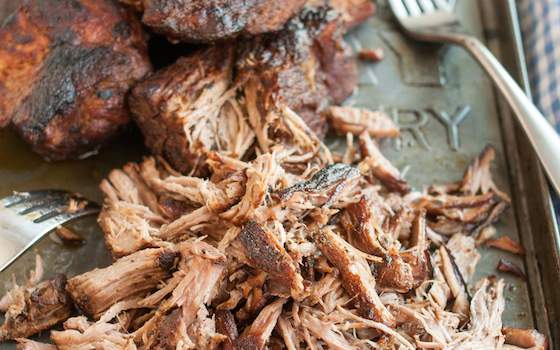
Lightened-Up Pulled Pork With California Raisins
Servings: 8 to 10   Prep Time: 20 minutes   Cook Time: 5 - 10 hours

Grilled Ratatouille Soup
Wolfgang Puck Recipes from Wolfgang Puck's Kitchen

Try this hearty soup as a lunch or dinner appetizer.
Servings: 6   Prep Time: 10 minutes   Cook Time: 40 minutes

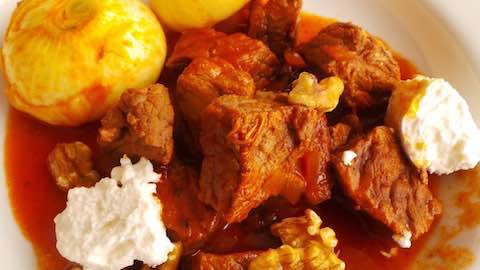
Tomato Moroccan Stew
Wolfgang Puck Recipes from Wolfgang Puck's Kitchen
A hearty beef stew, also perfect for reheating as a healthy lunch.
Servings: 6   Prep Time: 20 minutes   Cook Time: 1 hour

Omelets Are a Simple Meal Solution (Cherry Tomato and Portobello Omelet)
Wolfgang Puck Recipes from Wolfgang Puck's Kitchen
You can prepare each family member an omelet filled with his or her favorite foods in a matter of minutes for a morning, mid-day or evening meal.

Serve a Simple, Satisfying Meal: Poached Eggs on Roasted Veggies
Wolfgang Puck Recipes from Wolfgang Puck's Kitchen
Pristine poached eggs - served in cups, on toast, or dressed up in a Benedict variation - are a favorite day-starter for dieters, treat-seekers and everyone in between.

Speed Cook With an International Flair (Huevos Revueltos a la Mexicana)
Wolfgang Puck Recipes from Wolfgang Puck's Kitchen
Mexican scrambled eggs (or Huevos Revueltos a la Mexicana) are flavored to suit local tastes. All variations start with a mixture of fresh tomato and chilies

Entertain Easily with a Strata (Ham and Asparagus Strata)
Wolfgang Puck Recipes from Wolfgang Puck's Kitchen
Serve a strata (or two or three) with the appetite appeal of ham and eggs and the colorful addition of asparagus, or flavor the strata with foods your guests especially like or you have on hand.

Not Your Grandma's Chicken Soup
Wolfgang Puck Recipes from Wolfgang Puck's Kitchen
A new twist to the age-old chicken soup-combining the healing power of tea and chicken soup-a must-have in your recipe repertoire.

<