REGIONS: COUNTRIES:
Freed Journalists
(c) M. Ryder
Relief Over Freed U.S. Journalists Tempered by Long-Term Implications
Henry A. Kissinger
Amidst the widespread relief that the two American journalists have avoided the brutal fate meted out to them by a North Korean court, it may seem captious to consider the long-term implications. The impulse to save two young women from 12 years of hard labor in a North Korean gulag is powerful. Yet now that this goal has been achieved, we need to balance the emotions of the moment against the precedent for the future.
'Never Again' in North Korea? Think Again
Jonah Goldberg
For decades now, we've known that what's going on in North Korea is too terrible to contemplate. Even so, what once haunted us as an ill-defined and foreboding suspicion has clarified into the secure knowledge of broad and systemic evil.
Today, North Korea; Tomorrow, Iran - Nuclear Weapons
By Paul Greenberg
North Korea has been playing around with nuclear weapons again, this time setting off an even bigger underground explosion. To which the five veto-wielding powers at the United Nations have responded much as they did the first couple of times the North Korean regime defied the UN by setting off nukes: with oh-so-serious, oh-so-official statements.
Time to Test North Korea - Nuclear Weapons
Global Viewpoint
John Bolton, a leading neo-conservative official during the Bush administration, is a former U.S. undersecretary of state for arms control and international security affairs and former U.S. ambassador to the United Nations. In this interview Bolton provides his opinion on North Korea's nuclear weapons testing and what the United States and the World needs to do in response
North Korea's Nuclear Weapon Challenge
Henry A. Kissinger
The Obama administration has so far dealt publicly with the North Korean challenge in an understated, almost leisurely, manner. The challenge goes far beyond the regional security issue. For the United States, it involves relations with an emerging superpower (China); relations with a re-emerging Russia; relations with key U.S. allies (Japan and South Korea); and a major escalation in the threat of proliferation to non-state parties.
10th Seoul International Financial Forum Kicks Off
Campaigning Begins for By-elections
Large Retailers Adopt Carbon Emission Report Cards
College Entrance Exam Scores Reveal Regional Gap
Accident Insurance to Be Available for Bicycle Riders
S.Korea Ready to Launch Own Satellite
SK Telecom to Provide WiBro Service in Jordan
Korea-EU FTA an 'Opportunity to Beat Crisis'
Korean Economy Regaining Foreign Confidence
N.Korea to Be Discussed in S.Korea-Japan Meeting
Assistance Should Focus on Low-Income Earners
Feeling Guilty for Eating Rice
Kim Ji-soo Promotes Ceramics Expo
Kosdaq Sees Record Trading Volume
Reduced Taxes for Apartment Buyers to Be Expanded
Fleet Sales Could Damage Hyundai in U.S.
New Iranian Proposal Aims to End Nuclear Dispute
Suicide Bomber Kills 10 in Iraq
Housing Market Sees Slight Recovery
Swiss Bank Cuts Jobs as Global Unemployment Soars
Thai Gov't Cancels Ex-Prime Minister's Passport
Survey Reveals Teens' Porn-Browsing Habits
N.Korea Celebrates Founder's Birth
Korea to Get First Domed Ballpark
U.S. Economy Shrinks a Bit More Slowly
N.Korea Expelling U.S. Monitors from Reactor Site
Will England Resort to IMF Assistance?
Asia's 'Leading Economic Indicator' in Economic Shock
To fry croquettes without breaking them
Obama Promotes Tax Policies, Thousands Protest
Rising Golf Star Danny Lee Turns Pro
U.S. Treasury Says China Not Manipulating Currency
Chewing Gum Relieves Stomach Pain
Clinton Announces U.S. Anti-Piracy Measures
White House Condemns N.Korea Over Nuclear Talks
Seoul Delays Decision on WMD Initiative
More Botox Uses 'Spell Bright Prospects for Manufacturer'
China Outpaces Its Rivals on Road to Recovery
Study: Illegal Immigrants Having More Children in U.S.
Somali Pirates Attack Another U.S. Ship
Lessons from the Roh Moo-hyun Investigation
Obamas Welcome New 'First Dog' to White House
Why Americans Respect Their Ex-Presidents
Crackdown on Neglected Cars Starts
Gyeonggi Gives Green Light to Express Train Lines
More Than 2 Million Visit Korea in Q1
Prices of Imported Raw Materials Lowest since July 2005
10 Major Industries Face Restructuring
Michelle Wie Pulls Out of Pro-Am Event
english.chosun.com : Total
english.chosun.com RSS Service | Total
Eye on South Korea
CNN takes an in-depth look at South Korea, including how the nation is working to become a brand leader on an international scale and on how the nation is recovering from the global economic recession.
Beyond the barbed wire: the accidental paradise of the DMZ
While the world remembers the fall of the Berlin Wall 20 years ago, one frontier of the Cold War remains intact; the demilitarized zone that separates North and South Korea.
U.S. broadband lags Asian nations
South Korea leads the world in providing broadband services, according to a study released on Thursday. The United States did not make the top 10.
Long-separated Korean families have reunion
Some families long separated by the Korean War saw their loved ones Saturday for the first time in years near the border between North and South Korea.
Border traffic normalized between two Koreas
Cross-border traffic between North and South Korea returned to normal Tuesday, ending eight months of restrictions imposed by the North, South Korea's Yonhap news agency reported.
Koreas reach deal to reunite families
North and South Korea reached an agreement Friday on reunions for families separated for decades by the Korean War, South Korea's Yonhap news agency reported.
South Korean rocket fails to reach full orbit
South Korea's space program suffered a blow Tuesday after a satellite launched from its first space rocket failed to reach proper orbit, a science official said.
Two Koreas to discuss reunions for split families
North and South Korea will hold three days of talks on reunions for families torn apart by the Korean War and divisions between the two countries, South Korea's Unification Ministry said Tuesday.
S. Korean leader gets message from Kim Jong Il
South Korean President Lee Myung-bak on Sunday met with a visiting North Korean delegation, and received a message from the North's reclusive leader Kim Jong Il, according South Korea's state media.
South Korea delays first rocket launch
South Korea's first rocket launch has been delayed because of a technical glitch, the country's official news agency reported.
Former South Korean leader, Nobel winner on respirator
A former South Korea president who won the Nobel Peace Prize for fostering better relations between North and South Korea has been placed on a respirator in a hospital, a news agency reported Thursday.
N. Korea gives S. Korea ultimatum over industrial complex
North Korea Friday unilaterally informed South Korea that all contracts relating to a jointly-run industrial complex along their border are null and void, according to South Korean officials.
North and South Korea talks last only 22 minutes
Details emerged Wednesday from the first government-to-government talks between the two Koreas in more than a year.
S. Korea reroutes flights, cites 'threat'
South Korean commercial airlines have rerouted their planes after North Korea said it could not guarantee the safety of flights near its airspace.
Clinton in South Korea as missile controversy brews
U.S. Secretary of State Hillary Clinton arrived in South Korea on Thursday on the third leg of her four-nation tour of Asia.
N. Korea preps for satellite launch amid 'space development' claim
Denying recent intelligence suggesting it is preparing to test a long-range missile, North Korea signaled Monday it is gearing up to launch a satellite, according to South Korea's Yonhap news agency.
N. Korea ups ante in standoff with S. Korea
North Korea said Friday it has nullified all political and military agreements with South Korea, an extreme move that could raise tensions between the neighbors and lead to a military clash, South Korean state-run media reported.
S. Korea looks to buy North's nuclear fuel
South Korea has said it will send a delegation of nuclear experts to North Korea this week to survey its unused nuclear fuel rods and possibly buy them.
SKorea: Kim Jong Il's Health Has Improved
North Korean leader Kim Jong Il appears to have recovered enough from a stroke to run the country without difficulty, South Korea's spy chief told lawmakers Tuesday.
2 Koreas Hold Military Talks Amid Tension
Working-level military officers from North Korea and South Korea met Monday to discuss improving their lines of communication amid strained ties between the divided nations, officials said.
Six dead in South Korea fish knife frenzy
A financially strapped South Korean man went on an arson and stabbing rampage in Seoul on Monday, leaving six people dead and seven others wounded, police said.
South Korea Sees Nothing Unusual in North Korea
South Korea's government and private analysts questioned media reports Sunday that North Korea was poised to make an important announcement possibly concerning the health of its leader, Kim Jong Il
South Koreans Are Shaken by a Celebrity Suicide
The "Nation's Actress" is found dead in her apartment after being attacked by aggressive online rumors
Blind masseurs jump from bridge
Police in South Korea have arrested 26 blind masseurs who were threatening to jump from a bridge to protest a government decision they say will rob them of their livelihood.
Boarding house fire kills 6 in S. Korea
A fire at a boarding house early Friday killed five men and one woman, injuring 11 other people, South Korea's Yonhap news service reported.
US Allowed Korean Mass Executions
The American colonel tried to stall, but the declassified record shows he finally told his South Korean counterpart it "would be permitted" to machine-gun 3,500 political prisoners, to keep them from joining approaching enemy forces during the Korean War
Scores hurt in S. Korea beef protests
Thousands of protesters battled riot police in downtown Seoul early Sunday morning after a rally opposing South Korea's decision to import U.S. beef turned violent. More than 100 were wounded, the state news agency reported.
S. Korea to resume U.S. beef imports
South Korea's government said Wednesday it would resume imports of American beef this week, hoping to move on from a crisis that battered the pro-U.S. administration with weeks of anti-government protests over food safety.
S. Korea, US Agree on Beef Imports
All U.S. beef exported to South Korea will come from cattle less than 30 months old, officials said Saturday, in a deal made to placate South Korean protesters
S. Korean beef protests force government shake-up
South Korean President Lee Myung-bak plans to shake up his cabinet this week after massive protests, triggered by a deal his government reached to resume U.S. beef imports, the state news agency reported Monday.
South Korea backs off importing U.S. beef
No U.S. beef will exported to South Korea until the countries agree on limiting shipments to meat from cattle of a certain age, South Korea's agriculture minister said Tuesday.
South Korea to resume U.S. beef imports
South Korea will open its market to most U.S. beef, a senior government official said Thursday, according to state media.
S. Korea leader 'baffled' by mad cow fears
South Korea's president has apologized on national television for failing to take on board concerns in his country about mad cow disease.
North Korean officer defects to South Korea
A North Korean soldier defected across the demilitarized zone and sought asylum in South Korea on Sunday, according to a South Korean Defense Ministry spokesman.
South Korea to Resume U.S. Beef Imports
South Korea agreed to resume U.S. beef imports that had been halted over mad cow disease, clearing a key hurdle to a broader trade deal with Washington
Report: S. Korea, U.S. reach beef deal
Hours before a U.S.-South Korean summit, the two nations have reached an agreement that could clear the way for South Korea to resume imports of U.S. beef, a South Korean news agency reported Friday.
North Korea: South Korea driving relationship to 'catastrophe'
North Korea cut off dialogue with South Korea on Thursday, claiming the peninsula was on the brink of another war.
What is telematics?
In South Korea, telematics is big business. If it sounds like a buzzword to advertise the latest purveyor of high-tech must-have gadgets, its etymology is no less firmly rooted: "tele" means remote; "matics" means information. Cruising right alongside wireless broadband and DMB (Digital Media Broadcast) cell phones, telematics refers more specifically to automobiles receiving remote information from commercial service providers. These services could include Global Positioning System (GPS), on-demand entertainment, Internet and Web access, or weather and traffic conditions.
'Wired' South Korea is underexposed
South Korean Chang Won-kim was always a writer and a tech-head, so he quite naturally entered the blogosphere in 2005. His English-language, technology-themed, Seoul-based blog Web 2.0 Asia was inspired by both the need and the personal ambition to convey the evolving state of South Korea's all-too-domestic online industry to the rest of the world.
Can South Korea's President Deliver?
While he was mayor of Seoul, Lee Myung Bak was known for thinking big. He'll need his ambition more than ever as President
Question of the Week: Energy sources
With oil peaking at $100 a barrel, the world energy crisis continues to push countries to develop alternatives to handle depleting fossil fuel sources.
Warehouse blaze claims 40 lives
A massive fire swept through a newly constructed warehouse in Icheon, South Korea Monday, burning for several hours and setting off a series of explosions that killed 40 workers inside, fire officials have told CNN.
Internet groups forging a community of charity
South Korea has long enjoyed some of the fastest and most widely available broadband Internet access on the planet. Top online gamers are bona-fide TV celebrities, and long before MySpace, there was South Korea's Cyworld, a social networking site launched back in 1999.
Report: 14 sailors missing
Fourteen seamen were missing Tuesday after a ship carrying nitric acid sank off the coast of South Korea in rough seas, maritime police said, according to South Korea's Yonhap news agency.
South Korea straddles the politics of change
South Korea's last presidential election, in December, 2002, took place against a backdrop of escalating tension on the Korean peninsula over North Korea's nuclear program and the Bush administration's refusal to negotiate with Pyongyang.
A Win for South Korea's 'Bulldozer'
Lee Myung Bak sweeps to victory in South Korea's presidential election on promises to revitalize the economy
Koreans Struggle to Clean Oil Spill
Thousands of people used shovels and buckets in a massive operation Sunday to clean up the South Korea's largest oil spill, which blackened beaches along the country's western coast.
South Korea's Cloudy Campaign
The front-runner in the country's presidential race is cleared of fraud allegations, thus averting a setback that could have cost him the upcoming election
South Korean cinema struggles with High Definition
As South Korea's Pusan International Film Festival -- widely recognized as Asia's most important film showcase and market -- wraps up its 12th year, one thing has become apparent, at least for the domestic industry: High Definition filmmaking hasn't quite reached the omnipresent proportions many believed it would have by now.
Eye on South Korea: Your e-mails
South Korea is reputed to be the most wired country in the world. CNN has asked readers to weigh in on the topic. How is technology affecting daily life in South Korea, and influencing the rest of the world? Below is a selection of responses, some of which have been edited for length and clarity:
South Korea: CNN video coverage
South Korea is reputed to be the most wired country in the world -- broadband Internet in almost every household and every primary, junior and high school; free television broadcasts on cell phones; professional online gamers with rock-star status; humanoids replacing hosts, clerks, nannies and sentries; 17 million members on Cyworld; and a robot in every home by 2020.
Future tech and puppy love in South Korea
With its anonymous skyline and mind-numbing traffic, Seoul may not seem like a sci-fi city. And yet it's blazing one very high-tech trail.
S. Korea scandalized by fake degrees
South Korea's top universities said this week they will set up a system to detect academic fraud after a disc jockey, a revered Buddhist monk and an aging actress were swept up in a fake-degree scandal.
U.S., South Korea pledge relief to North
North Korea's neighbors and international aid agencies sought Thursday to help the impoverished country cope with floods that have decimated large swaths of farmland, endangering citizens already struggling with food shortages.
S. Korea-U.S. summit comes at critical moment
South Korea's President Roh Moo-hyun sits down for a summit meeting with President George W. Bush on Thursday at a time when the security alliance between the two countries that has helped maintain stability in Northeast Asia for more than half a century faces unprecedented challenges.
S. Korea to pull troops from Iraq
South Korea -- a major supporter of President Bush's Iraq policy -- has announced plans to pull a third of its troops out of Iraq in 2006, a National Security Council spokesman said Thursday.
8 troops die in S. Korea rampage
A South Korean soldier stationed along the Korean demilitarized zone has gone on a shooting rampage, killing 8 of his colleagues, the nation's defense ministry has reported.
N. Korean ship docks near Seoul
For the first time in over two decades, a North Korean ship docked in a South Korean port Sunday, the start of a series of voyages to pick up fertilizer donated to North Korea by the South Korean government.
Cloning success hailed, feared
A breakthrough in human embryonic stem cell research by scientists in South Korea has been hailed as ground-breaking, with the potential to fight a host of ailments, but some people have raised ethical concerns.
S. Korea asks North to return boat
South Korea's military will ask North Korea to return a small boat that ignored warning shots and crossed into Northern waters.
Superstar gamers hot property
It's a cold Tuesday night in South Korea and tens of thousands of people are staying indoors to watch online gaming matches on television.
Dialing up to do business
Big money is changing hands every day in South Korea, and a large percentage of it is happening at the touch of a cellphone button.
Buck the falling dollar
In late February when South Korea's central bank said that it was planning to shift some assets out of U.S. Treasuries and into other currencies, the disclosure set off a day of panic selling in th...
U.S. helicopter down in S. Korea
A U.S. soldier died and a second was wounded when a military helicopter crashed on Saturday while conducting a training exercise in South Korea, officials said.
Dollar tumbles, bonds slide
News that a number of central banks indicated they would diversify their reserves out of Treasuries and into other investments such as the euro sent the dollar tumbling Tuesday, and pressured bonds as well.
S. Korea selects new capital site
South Korea has confirmed it will move its future seat of government to a rural site south of its capital Seoul.
Mystery as more defectors land
A second wave of defectors believed to be North Koreans has arrived in the South in a secretive mass defection that has seen the refugees flown in from an unidentified Southeast Asian nation.
S. Korea: No changes to troop plan
South Korea says it will go ahead with its plan to deploy thousands of troops to Iraq despite a televised threat from militants to kill a South Korean hostage.
S. Korea outlines Iraq dispatch
South Korea will begin deploying more than 3,600 troops to the Erbil region of northern Iraq in August.
Koreas agree to military hotline
North and South Korea have agreed to set up a military hotline in a step towards easing tensions along their heavily fortified border.
U.S. confirms S. Korea troop cut
The United States has notified South Korea and Japan it plans to move about 3,600 troops from South Korea to Iraq, senior Pentagon officials confirmed to CNN.
S. Korea eyes political stability
South Korea's government has pledged economic and political stability Friday, a day after parliamentary elections which saw the pro-government Uri Party win a slim majority.
S. Korea backs pro-president party
South Korea's main opposition Grand National Party conceded defeat in the country's parliamentary election Thursday to the pro-government Uri Party, which is allied with impeached President Roh Moo-hyun.
Koreas cancel economic talks
The impeachment of South Korea's president has prompted the cancellation of economic talks planned Monday, after South Korea refused a request by North Korea to hold them in Pyongyang.
Roh prepares defense amid protests
South Korea's President Roh Moo-hyun has began forming his legal defense team amid huge protests against his impeachment.
Korea's interim leader urges calm
South Korea's Prime Minister Goh Kun has urged citizens to remain calm after taking over as interim head of state following an unprecedented impeachment vote against President Roh Moo-hyun.
S. Korea votes to impeach Roh
SEOUL, South Korea -- South Korea's National Assembly has voted overwhelmingly to impeach President Roh Moo-hyun by 193-2, amid dramatic scenes as rival politicians physically battled on the floor of parliament.
Two Koreas talk to 'ease tension'
North and South Korea have agreed to hold high-level military talks on the North's nuclear weapons program and "ease" military tension.
S. Korea FM quits amid policy flap
South Korea's Foreign Minister Yoon Young-kwan has resigned from his post amid a flap over President Roh Moo-hyun's foreign policy.
SAUDIS TO CUT OUT MIDDLEMEN
^ With Saddam Hussein to worry about, you might expect the Saudis to shelve any foreign forays of their own. Not a bit. State-owned Saudi Arabian Oil has announced a $1.4 billion joint venture that...
PERILS OF GETTING TOUGH ON KOREA They really have opened markets more than most Americans think. Heavy U.S. pressure now could t
''To use a crass analogy, we're saying to the South Koreans: 'If you settle out of court with us, you can plea-bargain for a lesser term, but if you take us to court, just remember that we'll be th...
MONEY magazine contents page September 1988 Volume 17 Number 9
MONEY FLASH
NEWS ABOUT YOU AND YOUR MONEY Going for the gold
South Korea is proving to be a canny marketer of gold coins. The first edition of its minting for the 1988 Summer Olympics, to be held in Seoul, was introduced in March and has already drawn strong...
LET DOWN BY THE DROOPING DOLLAR U.S. industrialists haven't found paradise in the plunge they sought. Some companies have regain
THE DOLLAR'S steeper-than-expected drop should be eliciting hallelujahs in American boardrooms. Instead it is barely evoking sighs of relief. True, many U.S. companies are seeing their foreign subs...
South Korea: News & Videos about South Korea - CNN.com
Find stories, videos, and photos about South Korea from CNN.com.
South Koreans Struggle With Race
South Koreans were taught to take pride in their nation’s “ethnic homogeneity,” but in the past seven years the number of foreign residents has doubled.
South Korea Says It Plans Afghanistan Deployment
The government in Seoul announced that it wanted to send troops and police officers, reported to number 300, to help protect its aid workers in the country.
Samsung Posts Strongest Ever Quarterly Profit
The world’s top maker of memory chips and L.C.D. screens forecast a robust 2010 but warned that profit could suffer as the South Korean currency strengthens against the dollar.
Japanese Destroyer Hits South Korean Ship
A Japanese navy destroyer collided with a South Korean freighter in the waters off southern Japan, setting off fires on both boats and injuring three crew members.
Disgraced Cloning Expert Convicted in South Korea
A disgraced cloning expert who falsely claimed major breakthroughs in stem cell research was convicted Monday of embezzlement and other charges connected to the scandal, but he will not serve time in prison.
Growth Beats Expectations in South Korea
The quarterly, seasonally adjusted rate of 2.9 percent was the highest since 2002.
South Korea Offers Food Aid to North
The offer to ship 10,000 tons of corn to North Korea in what would be the first government-funded humanitarian aid for the North in nearly two years.
Amid Soldiers and Mines in the Korean DMZ, School Is in Session
In the Korean Demilitarized Zone, Taesung Elementary has managed to flourish, despite the nearly 2 million heavily armed troops who face off in an uneasy truce.
Asian Leaders Focus on Freer Trade
Leaders expressed cautious optimism about increasing trade within the region, lowering tariffs and plans for a wider Asian free-trade zone.
South Korea Rising
Seoul now has the confidence and money to make its mark in Southeast Asia.
State-Run South Korean Oil Company Buys Canadian Producer
Korea National Oil Corp., the state-owned oil and gas company of South Korea, said it would buy Harvest Energy Trust in a deal worth $3.9 billion.
North Korea Accuses South of Naval Intrusion
The North Koreans said that such a violation could raise tensions even as its government reaches out for talks with the United States and South Korea.
Europe and South Korea Sign Trade Pact
Under the agreement, the two sides will remove virtually all tariffs between their economies, as well as many nontariff barriers.
At Time of Change for Rev. Moon Church, a Return to Tradition
Couples traveled from more than 100 countries to tie the knot on Wednesday, in what may be the last mass wedding officiated by the Rev. Sun Myung Moon.
North Korea Expresses Regret Over Floods in South
The rare gesture from North Korea came after six South Koreans were killed when water released from a dam in the North swept down a river.
NYT > South Korea
By Su-Hyun Lee and Sang-Hun Choe
Korea's old name, Chosun, means "the land of morning calm." But the nation has had a turbulent modern history. After 35 years of Japanese colonial rule, it was liberated by the Allied forces at the end of World War II - only to be divided into the Communist North and the pro-Western South. The two sides, the North aided by the Chinese and the South by the Americans, fought the Korean War from 1950 to 1953. The war ended in a cease-fire, not with a peace treaty, leaving the peninsula technically still in a state of war.
Korea Today
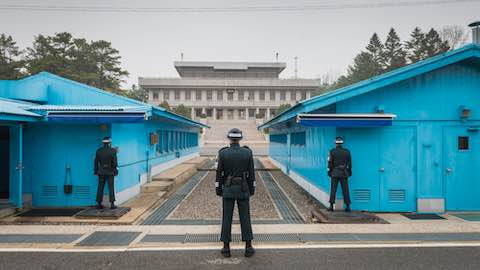
Today, the inter-Korean border remains the world's most heavily fortified frontier, guarded on both sides by nearly two million battle-ready troops. To the north, North Koreans live under a totalitarian dictatorship that keeps its people in isolation and hunger. To the south, people live in the freedom of one of the world's largest economies - although the country's once fast-growing export economy has been hammered by the global downturn. Former white-collar workers, for instance, have been forced to go into more physically demanding work or traditional kinds of manual labor that are relatively well paid in South Korea - from farming and fishing to the professional back-scrubbers who clean patrons at the nation's numerous public bathhouses.
South Korea has suffered its worst unemployment since the 1997 Asian currency crisis. According to the National Statistical Office, the unemployment rate had risen to 3.8 percent as of July 2009 - low by American standards, but high for this Asian economic powerhouse. (Since then, economic difficulties have eased somewhat.)
Nonetheless, in South Korea, most households are fitted with high-speed Internet. Players at the "e-sport" professional leagues - dragon slayers in cyber space - have a bigger fan club than traditional pop stars. Cell phone text- and image-messaging has replaced voice calls and e-mails as the primacy tool of communication among the nation's youngsters.
The government of President Lee Myung Bak, a conservative elected in 2007, has upended many of the policies of his immediate predecessor, Roh Moo Hyun, a liberal who had focused on developing ties with North Korea and sent it significant amounts of aid. Mr. Lee has taken a much tougher stance toward the North, pushing hard for it to give up its nuclear program. Many South Koreans had expressed frustration with the North even before its latest nuclear test, on May 25, 2009, and missile tests that followed in early July.
After the death in August 2009 of former president Kim Dae-jung, whose "Sunshine Policy" had led to the two Koreas breaching their border to connect roads and railways, ties seemed to improve slightly. The North Korean leader, Kim Jong Il, sent a message of improving ties with South Korea, through a high-level delegation to Mr. Kim's funeral. The delegation met with Mr. Lee in Seoul in the first major political meeting between the two Koreas in nearly two years. North Korea also restored regular traffic for South Korean companies that have operations in a joint industrial park in the North Korean border city of Kaesong. In late August, agreement was reached to resume reunions, begun under Mr. Kim, of families divided north and south.
The Post-Korean War Era
Unlike many other dictators in the third world, the military leaders of South Korea, ruling over a country devastated by the war, had a vision for economic development. They marshaled the country into rapid industrialization. But people wanted more. When people rose up in the southern city of Kwangju in 1980 to demand democracy, the junta dispatched paratroops and tanks to kill hundreds. Student and labor movements rocked campuses and factories throughout the 1980s and into the 1990s. In 1993, military generals relinquished power to Kim Young Sam, the nation's first civilian leader in three decades. One thing that didn't change was a prevalent anti-communist sentiment.
South Koreans were shocked and humiliated when their country had to beg a $45 billion international bailout amid the region-wide financial meltdown in the late 1990s. They elected Kim Dae-jung, a long-time opposition leader, as president in 1998. He flung the door open for foreign investors, who bought distressed South Korean firms at fire-sale prices, restructured them and exited, often with staggering profits. Many of the people who had rolled out the red carpet for foreign capital felt bitter.
Mr. Kim's election brought long-persecuted liberal forces into power. They focused on engaging North Korea - an approach that resulted in the first-ever summit meeting between the two Koreas in 2000. In its wake, two million South Koreans visited a North Korean mountain resort. And in a scene televised worldwide, aging Koreans separated by the war a half century ago tearfully hugged one another in temporary family reunions.
The Presidency of Roh Moo Hyun
Mr. Kim tried to reshape South Korea's alliance with the United States. Friction with Washington over how to deal with North Korea - with sticks or with carrots - increased under Mr. Roh, who came to power in 2003, vowing not to "kowtow to the Americans" - an election-year slogan hugely popular among the postwar generations of nationalistic and often anti-American South Koreans. But in the second half of his term, Mr. Roh also took major steps toward expanding the Korea-U.S. alliance by completing a free trade agreement with the United States; he also dispatched non-combat troops to Iraq as a partner in the American-led coalition forces.
After a decade of liberal rule, however, South Koreans grew concerned about what many perceived as a growing rift between Seoul and Washington. They also felt "sandwiched" between high-tech Japan and low-cost China. They worried about rising housing prices and unemployment among the young. They thought Mr. Roh was bungling the economy.
Lee Myung Bak in Power
The sentiments translated into a landslide victory for Mr. Lee in the presidential election in 2007. His election put conservatives back in power. He promised to strengthen ties with Washington and run the country like an efficient business. A former construction C.E.O., Mr. Lee is South Korea's first president with a business background.
Mr. Roh jumped off a cliff on May 23, 2009, as prosecutors were aggressively pursuing allegations of corruption against him and his family. He had long insisted that in a country where all the recent presidents were touched by scandal, his government was clean. His death set off a weeklong period of grief and mourning unrivaled in recent South Korean history.
In September 2009, President Lee replaced his prime minister in a cabinet reshuffle that also removed the country's defense minister, who had clashed with Mr. Lee over military spending. Mr. Lee appointed Chung Un-chan, 61, an American-educated economist and a former president of Seoul National University, to replace Prime Minister Han Seung-soo. Mr. Chung, who earned his doctorate from Princeton University, is frequently described in the South Korean news media as a possible presidential candidate.
Mr. Lee had been under pressure from his ruling Grand National Party to revamp his cabinet since the party, amid economic difficulties, suffered a crushing defeat in parliamentary by-elections in April.
A Changing Society
Korean society is changing rapidly. Learning English is a national obsession. South Koreans supply the third largest group of foreign students in the United States after the Indians and the Chinese. They were immensely proud when their former foreign minister, Ban Ki-moon, became the secretary general of the United Nations in 2006.
Dynamic, emotionally rich and descriptive of modernized yet deeply Asian ways, South Korean pop culture - or "K-pop" - has proved widely popular in the rest of Asia. From Japan to Myanmar, people tune into South Korea drama shows and movies. Thanks partly to the "Korean wave," foreign brides from poorer Asian countries like Vietnam flock to marry Korean men in the countryside, where there is a shortage of young women of marriageable age. Asian migrant workers toil in farms and factories in South Korea, doing the menial work many South Koreans shun. Only a few years ago, school textbooks used to declare proudly that Korea is a "homogeneous nation." No more. The country is rapidly turning into a multiethnic society.
N. Korea Says It Has More Bomb-Grade Plutonium
North Korea put further pressure on the U.S. to start bilateral talks by declaring that it had completed reprocessing its spent nuclear fuel for use in a bomb.
North Korea Presses U.S. to Agree to Bilateral Talks
It remained unclear whether the North offered enough of a commitment to nuclear inspections and resumption of six-nation talks to persuade Washington to agree to one-on-one talks.
North Korea Calls for Talks With U.S.
The comments were the strongest yet on the North’s desire for resuming direct dialogue, first broached last month by Kim Jong-il.
South Korea Offers Food Aid to North
The offer to ship 10,000 tons of corn to North Korea in what would be the first government-funded humanitarian aid for the North in nearly two years.
Amid Soldiers and Mines in the Korean DMZ, School Is in Session
In the Korean Demilitarized Zone, Taesung Elementary has managed to flourish, despite the nearly 2 million heavily armed troops who face off in an uneasy truce.
Picnic in North Korea
A careful spread of authenticity, with suspicion all around.
This Time, Ban the Test
Ten years after rejecting the nuclear test ban treaty, the U.S. has every reason to ratify it.
Clinton Says Iran and North Korea Must Curb Nuclear Ambitions
In a wide-ranging speech on nuclear nonproliferation, the secretary of state hinted at broad changes in Washington’s thinking about its nuclear arsenal.
North Korea Accuses South of Naval Intrusion
The North Koreans said that such a violation could raise tensions even as its government reaches out for talks with the United States and South Korea.
North Korea Expresses Regret Over Floods in South
The rare gesture from North Korea came after six South Koreans were killed when water released from a dam in the North swept down a river.
Two Koreas to Talk About Nonmilitary Issues
North Korea agreed to hold talks with South Korea later this week, officials in Seoul said Tuesday, even as the North was reportedly preparing to test more missiles.
Changing North Korea
The only way to beat the regime is through a persistent, low-profile information campaign.
Amid Missile Tests, North Korea Agrees to Talks
North Korea agreed to hold talks with South Korea later this week, officials in Seoul said Tuesday, even as the North was reportedly preparing to test more missiles.
N. Korea Tests 5 Short-Range Missiles
The tests were the first in three months, and an apparent provocation, as the United States weighs whether to start bilateral talks with the North, South Korean news media reported.
China Aims to Steady North Korea
China wants to ward off an implosion by North Korea, which would endanger the stability of its own border area.
NYT > North Korea
OVERVIEW
North Korea is the last Stalinist state on earth, and in October 2006 it became the latest country to join the nuclear club. Over the past two decades it has swung between confrontation and inch-by-inch conciliation with its neighbors and the United States, in an oscillation that seems to be driven both by its hard-to-fathom internal political strains and by an apparent belief in brinksmanship as the most effective form of diplomacy.
After setting off its first atomic device, the secretive, isolated, heavily militarized and desperately poor country slowly moved away from confrontation. In February 2007 it agreed to eventually dismantle its nuclear program. In June 2008, the Bush administration removed North Korea from its list of state sponsors of terrorism after Pyongyang submitted a 60-page report on its nuclear program. But the progress collapsed in December of that year when Pyongyang refused to accept terms proposed by the United States for verification.
In April 2009 North Korea test-fired a ballistic missile despite widespread international opposition, and reacted to a tightening of sanctions by the United Nations Security Council by expelling international nuclear inspectors and declaring its intention to revive its atomic weapons program.
On May 25, 2009, North Korea announced that it had successfully conducted its second nuclear test, again defying international warnings. The United Nations Security Council unanimously passed a resolution on June 12 to tighten sanctions targeting North Korea's nuclear and missile development programs, including encouraging United Nations members to inspect cargo vessels and airplanes suspected of carrying weapons and other military materiel. The United States and allies like Japan and South Korea have brought back measures, such as freezing Pyongyang's overseas bank accounts, that seemed most painful to the regime in the past.
In August 2009, former President Bill Clinton paid a dramatic 20-hour visit to North Korea, in which he won the freedom of two American journalists, opened a diplomatic channel to North Korea's reclusive government and dined with the North's ailing leader, Kim Jong-il.
The North Korean government, which in June sentenced the Current TV journalists, Laura Ling and Euna Lee, to 12 years of hard labor for illegally entering North Korean territory, announced that it had pardoned the women after Mr. Clinton apologized to Mr. Kim for their actions, according to the North Korean state media.
Secretary of State Hillary Rodham Clinton denied that Mr. Clinton had apologized.
Mr. Clinton's mission to Pyongyang was the most visible by an American in nearly a decade. It came at a time when the United States' relationship with North Korea had become especially chilled, after North Korea's test of its second nuclear device in May and a series of missile launchings.
Mr. Clinton's trip came just two weeks after North Korea issued a harsh personal attack on Mrs. Clinton, in response to comments she made comparing its nuclear test and missile launchings to the behavior of an attention-seeking teenager.
North Korea took steps in the 1990s toward warmer relations with South Korea, before questions about its nuclear ambitions plunged it back into isolation in 2002. But more broadly, North Korea has taken a consistent anti-Washington line since its creation in 1948, denouncing both the United States and South Korea as a puppet of the U.S. Since the end of the Korean War in 1953 the North has not attacked its neighbor, but to this day keeps large concentrations of troops and artillery focused on Seoul, and has regularly engaged in provocations like kidnappings, submarine incursions and missile tests over the Sea of Japan.
The country's founder, the so-called Great Leader, Kim Il-sung, was succeeded at his death in 1994 by his son, the "Dear Leader," Kim Jong-il, an eccentric playboy invariably seen (in his few public appearances) in platform shoes and a khaki jumpsuit. In 2008, Mr. Kim disappeared from sight for several months, and it was later revealed that he had suffered a stroke. American diplomats and intelligence officials have attributed the swing back to a harder line as evidence both of Mr. Kim's need to assert control over the military that is the heart of the state and a calculation that provocation might lead to concessions from the Obama administration.
A HISTORY OF BRINKMANSHIP
The United States came close to military action against North Korea in 1994, as President Clinton weighed the idea of air strikes against its nuclear sites. Instead, in a last-minute deal, North Korea agreed to shelve its nuclear program. In 2002, President Bush included Pyongyang in the "axis of evil," and American officials charged later that year that North Korea had violated the earlier agreement. Pyongyang declared the agreement void and expelled international nuclear inspectors. China joined with the United States, South Korea, Japan and Russia for what became known as the six-party talks. In 2005, an agreement was reached and then scuttled by North Korea, angered by an American-led crackdown on banks doing business with it.
On Oct. 9, 2006, North Korea set off a nuclear device -- a small one, which apparently did not detonate completely, according to experts on seismic recordings. Governments around the world condemned the blast, including China, which has been Pyongyang's chief protector for decades. In a policy shift, American officials agreed to meet with North Korea for one-on-one talks concerning the financial crackdown.
In February 2007, an agreement was reached under which North Korea would shut down its plant at Yongbyon, at which it had manufactured nuclear bomb fuel, in return for shipments of fuel oil. Early deadlines for action under the agreement came and went, with North Korea charging that funds from frozen bank accounts had not been returned. But after the funds made their way back to Pyongyang after a complicated series of transactions, the government announced in June 2007 that it was allowing international inspectors to return.
In the fall of 2007 North Korea missed another series of deadlines under the agreement, but still seemed to be following a path of relative openness, announcing plans for a visit by the New York Philharmonic in early 2008.
The report released in June 2008 left many questions unanswered about North Korea's nuclear program, like the extent of North Korea's nuclear proliferation activities around the globe and its suspected efforts to enrich uranium. But it was hailed by President Bush as worth rewarding by dropping the designation of Pyongyang as a sponsor of terrorism.
THE SECOND NUCLEAR TEST
On April 5, 2009, North Korea failed in a highly vaunted effort to fire a satellite into orbit, military and private experts said after reviewing detailed tracking data that showed the missile and payload fell into the sea. Some said the failure undercut the North Korean campaign to come across as a fearsome adversary able to hurl deadly warheads halfway around the globe.
Defying world opinion, the country in previous weeks had moved steadily and fairly openly toward launching a long-range rocket that Western experts saw as a major step toward a military weapon. The launching itself of the three-stage rocket, which the North Korean government portrayed as a success -- even bragging that the supposed satellite payload was broadcasting patriotic tunes from space -- outraged Japan and South Korea, led to widespread rebuke by President Obama and other leaders, and prompted the United Nations Security Council to go into an emergency session. The council voted to tighten economic sanctions on Pyongyang, though China and Russia blocked tougher measures sought by the United States.
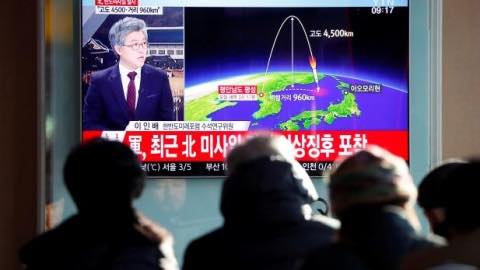
Officials and analysts in Seoul said the North's rocket, identified by American officials as a Taepodong-2, flew at least 2,000 miles, doubling the range of an earlier rocket it tested in 1998 and boosting its potential to fire a long-range missile. When North Korea first flight-tested the Taepodong-2, in July 2006, it blew apart 40 seconds after take-off. The rocket is designed to fly at least 6,700 kilometers, or 4,200 miles, according the South Korean Defense Ministry.
The impoverished country may be years away from building a truly intercontinental ballistic missile and tipping it with a nuclear warhead. But to governments grown increasingly concerned by the North's military might, the launch was a sign that it was doggedly moving in that direction.
Initial seismic readings of the May 25 blast in the mountains of Kilju, not far from the Chinese border - exactly where North Korea conducted its 2006 test - was "a several kiloton event," according to one senior Obama administration official. If that judgment is correct, the test yielded a somewhat bigger explosion than the 2006 test, which was later judged a partial fizzle.
THE INTERNATIONAL RESPONSE
Facing the first direct challenge to his administration by an emerging nuclear weapons state, President Obama declared on May 25 that the United States and its allies would "stand up" to North Korea.
Acutely aware that their response to the explosion would be seen as an early test of a new administration, Mr. Obama's aides said they were determined to organize a significantly stronger response than the Bush administration had managed after the North's first nuclear test, in October 2006. Speaking in the Rose Garden, Mr. Obama vowed to "take action" in response to what he called "a blatant violation of international law" and the North's declaration that it was repudiating past commitments to dismantle its nuclear program.
North Korea's renewed nuclear challenges to the West are seen by many observers as the result of an internal struggle to replace Mr. Kim, who had only recently began appearing in public again after recuperating from what South Korean and Western intelligence officials have said was a stroke.
Defense Secretary Robert M. Gates said the Obama administration considered the latest tests aggressive but not a crisis. Nonetheless, he echoed other senior officials by saying that North Korea's export of its nuclear technology to other countries was a major concern.
The Security Council unanimously passed a resolution on June 12 to tighten sanctions targeting North Korea's nuclear and missile development programs, including encouraging United Nations members to inspect cargo vessels and airplanes suspected of carrying weapons and other military materiel. The Obama administration said it will order the Navy to hail and request permission to inspect such ships, but will not board them by force, stopping just short of what North Korea has said it would regard as an act of war.
China and Russia, key North Korean allies, were heavily involved in drafting the resolution during the nearly three weeks since the second nuclear test, but they resisted making the inspections and some other measures mandatory, so it remains unclear what impact the sanctions will have.
Pyongyang has shown itself able to withstand the pressure of sanctions in the past. But in trying to cut off all financial transactions related to the military, as well as imposing a complete arms export ban and almost total import ban, the Council is hoping to push North Korea to return to talks about dismantling its nuclear and missile development programs.
Eye on South Korea
CNN takes an in-depth look at South Korea, including how the nation is working to become a brand leader on an international scale and on how the nation is recovering from the global economic recession.
Beyond the barbed wire: the accidental paradise of the DMZ
While the world remembers the fall of the Berlin Wall 20 years ago, one frontier of the Cold War remains intact; the demilitarized zone that separates North and South Korea.
U.S. broadband lags Asian nations
South Korea leads the world in providing broadband services, according to a study released on Thursday. The United States did not make the top 10.
Long-separated Korean families have reunion
Some families long separated by the Korean War saw their loved ones Saturday for the first time in years near the border between North and South Korea.
Border traffic normalized between two Koreas
Cross-border traffic between North and South Korea returned to normal Tuesday, ending eight months of restrictions imposed by the North, South Korea's Yonhap news agency reported.
Koreas reach deal to reunite families
North and South Korea reached an agreement Friday on reunions for families separated for decades by the Korean War, South Korea's Yonhap news agency reported.
South Korean rocket fails to reach full orbit
South Korea's space program suffered a blow Tuesday after a satellite launched from its first space rocket failed to reach proper orbit, a science official said.
Two Koreas to discuss reunions for split families
North and South Korea will hold three days of talks on reunions for families torn apart by the Korean War and divisions between the two countries, South Korea's Unification Ministry said Tuesday.
S. Korean leader gets message from Kim Jong Il
South Korean President Lee Myung-bak on Sunday met with a visiting North Korean delegation, and received a message from the North's reclusive leader Kim Jong Il, according South Korea's state media.
South Korea delays first rocket launch
South Korea's first rocket launch has been delayed because of a technical glitch, the country's official news agency reported.
Former South Korean leader, Nobel winner on respirator
A former South Korea president who won the Nobel Peace Prize for fostering better relations between North and South Korea has been placed on a respirator in a hospital, a news agency reported Thursday.
N. Korea gives S. Korea ultimatum over industrial complex
North Korea Friday unilaterally informed South Korea that all contracts relating to a jointly-run industrial complex along their border are null and void, according to South Korean officials.
North and South Korea talks last only 22 minutes
Details emerged Wednesday from the first government-to-government talks between the two Koreas in more than a year.
S. Korea reroutes flights, cites 'threat'
South Korean commercial airlines have rerouted their planes after North Korea said it could not guarantee the safety of flights near its airspace.
Clinton in South Korea as missile controversy brews
U.S. Secretary of State Hillary Clinton arrived in South Korea on Thursday on the third leg of her four-nation tour of Asia.
N. Korea preps for satellite launch amid 'space development' claim
Denying recent intelligence suggesting it is preparing to test a long-range missile, North Korea signaled Monday it is gearing up to launch a satellite, according to South Korea's Yonhap news agency.
N. Korea ups ante in standoff with S. Korea
North Korea said Friday it has nullified all political and military agreements with South Korea, an extreme move that could raise tensions between the neighbors and lead to a military clash, South Korean state-run media reported.
S. Korea looks to buy North's nuclear fuel
South Korea has said it will send a delegation of nuclear experts to North Korea this week to survey its unused nuclear fuel rods and possibly buy them.
SKorea: Kim Jong Il's Health Has Improved
North Korean leader Kim Jong Il appears to have recovered enough from a stroke to run the country without difficulty, South Korea's spy chief told lawmakers Tuesday.
2 Koreas Hold Military Talks Amid Tension
Working-level military officers from North Korea and South Korea met Monday to discuss improving their lines of communication amid strained ties between the divided nations, officials said.
Six dead in South Korea fish knife frenzy
A financially strapped South Korean man went on an arson and stabbing rampage in Seoul on Monday, leaving six people dead and seven others wounded, police said.
South Korea Sees Nothing Unusual in North Korea
South Korea's government and private analysts questioned media reports Sunday that North Korea was poised to make an important announcement possibly concerning the health of its leader, Kim Jong Il
South Koreans Are Shaken by a Celebrity Suicide
The "Nation's Actress" is found dead in her apartment after being attacked by aggressive online rumors
Blind masseurs jump from bridge
Police in South Korea have arrested 26 blind masseurs who were threatening to jump from a bridge to protest a government decision they say will rob them of their livelihood.
Boarding house fire kills 6 in S. Korea
A fire at a boarding house early Friday killed five men and one woman, injuring 11 other people, South Korea's Yonhap news service reported.
US Allowed Korean Mass Executions
The American colonel tried to stall, but the declassified record shows he finally told his South Korean counterpart it "would be permitted" to machine-gun 3,500 political prisoners, to keep them from joining approaching enemy forces during the Korean War
Scores hurt in S. Korea beef protests
Thousands of protesters battled riot police in downtown Seoul early Sunday morning after a rally opposing South Korea's decision to import U.S. beef turned violent. More than 100 were wounded, the state news agency reported.
S. Korea to resume U.S. beef imports
South Korea's government said Wednesday it would resume imports of American beef this week, hoping to move on from a crisis that battered the pro-U.S. administration with weeks of anti-government protests over food safety.
S. Korea, US Agree on Beef Imports
All U.S. beef exported to South Korea will come from cattle less than 30 months old, officials said Saturday, in a deal made to placate South Korean protesters
S. Korean beef protests force government shake-up
South Korean President Lee Myung-bak plans to shake up his cabinet this week after massive protests, triggered by a deal his government reached to resume U.S. beef imports, the state news agency reported Monday.
South Korea backs off importing U.S. beef
No U.S. beef will exported to South Korea until the countries agree on limiting shipments to meat from cattle of a certain age, South Korea's agriculture minister said Tuesday.
South Korea to resume U.S. beef imports
South Korea will open its market to most U.S. beef, a senior government official said Thursday, according to state media.
S. Korea leader 'baffled' by mad cow fears
South Korea's president has apologized on national television for failing to take on board concerns in his country about mad cow disease.
North Korean officer defects to South Korea
A North Korean soldier defected across the demilitarized zone and sought asylum in South Korea on Sunday, according to a South Korean Defense Ministry spokesman.
South Korea to Resume U.S. Beef Imports
South Korea agreed to resume U.S. beef imports that had been halted over mad cow disease, clearing a key hurdle to a broader trade deal with Washington
Report: S. Korea, U.S. reach beef deal
Hours before a U.S.-South Korean summit, the two nations have reached an agreement that could clear the way for South Korea to resume imports of U.S. beef, a South Korean news agency reported Friday.
North Korea: South Korea driving relationship to 'catastrophe'
North Korea cut off dialogue with South Korea on Thursday, claiming the peninsula was on the brink of another war.
What is telematics?
In South Korea, telematics is big business. If it sounds like a buzzword to advertise the latest purveyor of high-tech must-have gadgets, its etymology is no less firmly rooted: "tele" means remote; "matics" means information. Cruising right alongside wireless broadband and DMB (Digital Media Broadcast) cell phones, telematics refers more specifically to automobiles receiving remote information from commercial service providers. These services could include Global Positioning System (GPS), on-demand entertainment, Internet and Web access, or weather and traffic conditions.
'Wired' South Korea is underexposed
South Korean Chang Won-kim was always a writer and a tech-head, so he quite naturally entered the blogosphere in 2005. His English-language, technology-themed, Seoul-based blog Web 2.0 Asia was inspired by both the need and the personal ambition to convey the evolving state of South Korea's all-too-domestic online industry to the rest of the world.
Can South Korea's President Deliver?
While he was mayor of Seoul, Lee Myung Bak was known for thinking big. He'll need his ambition more than ever as President
Question of the Week: Energy sources
With oil peaking at $100 a barrel, the world energy crisis continues to push countries to develop alternatives to handle depleting fossil fuel sources.
Warehouse blaze claims 40 lives
A massive fire swept through a newly constructed warehouse in Icheon, South Korea Monday, burning for several hours and setting off a series of explosions that killed 40 workers inside, fire officials have told CNN.
Internet groups forging a community of charity
South Korea has long enjoyed some of the fastest and most widely available broadband Internet access on the planet. Top online gamers are bona-fide TV celebrities, and long before MySpace, there was South Korea's Cyworld, a social networking site launched back in 1999.
Report: 14 sailors missing
Fourteen seamen were missing Tuesday after a ship carrying nitric acid sank off the coast of South Korea in rough seas, maritime police said, according to South Korea's Yonhap news agency.
South Korea straddles the politics of change
South Korea's last presidential election, in December, 2002, took place against a backdrop of escalating tension on the Korean peninsula over North Korea's nuclear program and the Bush administration's refusal to negotiate with Pyongyang.
A Win for South Korea's 'Bulldozer'
Lee Myung Bak sweeps to victory in South Korea's presidential election on promises to revitalize the economy
Koreans Struggle to Clean Oil Spill
Thousands of people used shovels and buckets in a massive operation Sunday to clean up the South Korea's largest oil spill, which blackened beaches along the country's western coast.
South Korea's Cloudy Campaign
The front-runner in the country's presidential race is cleared of fraud allegations, thus averting a setback that could have cost him the upcoming election
South Korean cinema struggles with High Definition
As South Korea's Pusan International Film Festival -- widely recognized as Asia's most important film showcase and market -- wraps up its 12th year, one thing has become apparent, at least for the domestic industry: High Definition filmmaking hasn't quite reached the omnipresent proportions many believed it would have by now.
Eye on South Korea: Your e-mails
South Korea is reputed to be the most wired country in the world. CNN has asked readers to weigh in on the topic. How is technology affecting daily life in South Korea, and influencing the rest of the world? Below is a selection of responses, some of which have been edited for length and clarity:
South Korea: CNN video coverage
South Korea is reputed to be the most wired country in the world -- broadband Internet in almost every household and every primary, junior and high school; free television broadcasts on cell phones; professional online gamers with rock-star status; humanoids replacing hosts, clerks, nannies and sentries; 17 million members on Cyworld; and a robot in every home by 2020.
Future tech and puppy love in South Korea
With its anonymous skyline and mind-numbing traffic, Seoul may not seem like a sci-fi city. And yet it's blazing one very high-tech trail.
S. Korea scandalized by fake degrees
South Korea's top universities said this week they will set up a system to detect academic fraud after a disc jockey, a revered Buddhist monk and an aging actress were swept up in a fake-degree scandal.
U.S., South Korea pledge relief to North
North Korea's neighbors and international aid agencies sought Thursday to help the impoverished country cope with floods that have decimated large swaths of farmland, endangering citizens already struggling with food shortages.
S. Korea-U.S. summit comes at critical moment
South Korea's President Roh Moo-hyun sits down for a summit meeting with President George W. Bush on Thursday at a time when the security alliance between the two countries that has helped maintain stability in Northeast Asia for more than half a century faces unprecedented challenges.
S. Korea to pull troops from Iraq
South Korea -- a major supporter of President Bush's Iraq policy -- has announced plans to pull a third of its troops out of Iraq in 2006, a National Security Council spokesman said Thursday.
8 troops die in S. Korea rampage
A South Korean soldier stationed along the Korean demilitarized zone has gone on a shooting rampage, killing 8 of his colleagues, the nation's defense ministry has reported.
N. Korean ship docks near Seoul
For the first time in over two decades, a North Korean ship docked in a South Korean port Sunday, the start of a series of voyages to pick up fertilizer donated to North Korea by the South Korean government.
Cloning success hailed, feared
A breakthrough in human embryonic stem cell research by scientists in South Korea has been hailed as ground-breaking, with the potential to fight a host of ailments, but some people have raised ethical concerns.
S. Korea asks North to return boat
South Korea's military will ask North Korea to return a small boat that ignored warning shots and crossed into Northern waters.
Superstar gamers hot property
It's a cold Tuesday night in South Korea and tens of thousands of people are staying indoors to watch online gaming matches on television.
Dialing up to do business
Big money is changing hands every day in South Korea, and a large percentage of it is happening at the touch of a cellphone button.
Buck the falling dollar
In late February when South Korea's central bank said that it was planning to shift some assets out of U.S. Treasuries and into other currencies, the disclosure set off a day of panic selling in th...
U.S. helicopter down in S. Korea
A U.S. soldier died and a second was wounded when a military helicopter crashed on Saturday while conducting a training exercise in South Korea, officials said.
Dollar tumbles, bonds slide
News that a number of central banks indicated they would diversify their reserves out of Treasuries and into other investments such as the euro sent the dollar tumbling Tuesday, and pressured bonds as well.
S. Korea selects new capital site
South Korea has confirmed it will move its future seat of government to a rural site south of its capital Seoul.
Mystery as more defectors land
A second wave of defectors believed to be North Koreans has arrived in the South in a secretive mass defection that has seen the refugees flown in from an unidentified Southeast Asian nation.
S. Korea: No changes to troop plan
South Korea says it will go ahead with its plan to deploy thousands of troops to Iraq despite a televised threat from militants to kill a South Korean hostage.
S. Korea outlines Iraq dispatch
South Korea will begin deploying more than 3,600 troops to the Erbil region of northern Iraq in August.
Koreas agree to military hotline
North and South Korea have agreed to set up a military hotline in a step towards easing tensions along their heavily fortified border.
U.S. confirms S. Korea troop cut
The United States has notified South Korea and Japan it plans to move about 3,600 troops from South Korea to Iraq, senior Pentagon officials confirmed to CNN.
S. Korea eyes political stability
South Korea's government has pledged economic and political stability Friday, a day after parliamentary elections which saw the pro-government Uri Party win a slim majority.
S. Korea backs pro-president party
South Korea's main opposition Grand National Party conceded defeat in the country's parliamentary election Thursday to the pro-government Uri Party, which is allied with impeached President Roh Moo-hyun.
Koreas cancel economic talks
The impeachment of South Korea's president has prompted the cancellation of economic talks planned Monday, after South Korea refused a request by North Korea to hold them in Pyongyang.
Roh prepares defense amid protests
South Korea's President Roh Moo-hyun has began forming his legal defense team amid huge protests against his impeachment.
Korea's interim leader urges calm
South Korea's Prime Minister Goh Kun has urged citizens to remain calm after taking over as interim head of state following an unprecedented impeachment vote against President Roh Moo-hyun.
S. Korea votes to impeach Roh
SEOUL, South Korea -- South Korea's National Assembly has voted overwhelmingly to impeach President Roh Moo-hyun by 193-2, amid dramatic scenes as rival politicians physically battled on the floor of parliament.
Two Koreas talk to 'ease tension'
North and South Korea have agreed to hold high-level military talks on the North's nuclear weapons program and "ease" military tension.
S. Korea FM quits amid policy flap
South Korea's Foreign Minister Yoon Young-kwan has resigned from his post amid a flap over President Roh Moo-hyun's foreign policy.
SAUDIS TO CUT OUT MIDDLEMEN
^ With Saddam Hussein to worry about, you might expect the Saudis to shelve any foreign forays of their own. Not a bit. State-owned Saudi Arabian Oil has announced a $1.4 billion joint venture that...
PERILS OF GETTING TOUGH ON KOREA They really have opened markets more than most Americans think. Heavy U.S. pressure now could t
''To use a crass analogy, we're saying to the South Koreans: 'If you settle out of court with us, you can plea-bargain for a lesser term, but if you take us to court, just remember that we'll be th...
MONEY magazine contents page September 1988 Volume 17 Number 9
MONEY FLASH
NEWS ABOUT YOU AND YOUR MONEY Going for the gold
South Korea is proving to be a canny marketer of gold coins. The first edition of its minting for the 1988 Summer Olympics, to be held in Seoul, was introduced in March and has already drawn strong...
LET DOWN BY THE DROOPING DOLLAR U.S. industrialists haven't found paradise in the plunge they sought. Some companies have regain
THE DOLLAR'S steeper-than-expected drop should be eliciting hallelujahs in American boardrooms. Instead it is barely evoking sighs of relief. True, many U.S. companies are seeing their foreign subs...
South Korea: News & Videos about South Korea - CNN.com
Find stories, videos, and photos about South Korea from CNN.com.
All Headline News - Breaking News
The latest top breaking news, U.S., world, business, politics, entertainment, celebrities, sports, technology, and more.
(AHN) Update: Hurricane Bill Strengthens Further; Now Category 4 Storm
(AHN) - Hurricane Bill continues to intensify in the waters above South America. With sustained wind speeds of 100 miles per hour (160 km/hr), Bill has become a Category 2 storm and is expected to grow stronger over the next two days.
(AHN) Obama Thanks Bill Clinton For North Korea Trip To Gain Journalists' Release
(AHN) - President Barack Obama on Tuesday personally thanked former President Bill Clinton for traveling to Pyongyang early this month to secure the release of two American journalists sentenced to prison for "hostile acts." The meeting also served as a briefing by Clinton about the his talks with North Korean leader Kim Jong Il, who has defied international sanctions against his nation's nuclear activities.
(AHN) Bill Strengthens To Cat 4; NOAA Sends Hurricane Plane To Have A Look
(AHN) - Hurricane Bill strengthened to a category 4 storm with maximum sustained winds of 135 miles per hour Wednesday morning, forecasters say they expect further strengthening over the next 24 hours and have sent a specially equipped aircraft to investigate Bill.
(AHN) Oklahoma Abortion Law On Ultrasounds Overturned
(AHN) - An Oklahoma district judge has overturned a law requiring women seeking an abortion to undergo an ultrasound and have their doctors describe to them the image of their unborn child. The 2008 law was approved by a bipartisan vote from state lawmakers, who later reiterated their support by overriding a veto by Gov. Brad Henry.
(AHN) Housing Market Impacting People's Mental Health
(AHN) - A study by University of Pennsylvania School of Medicine researchers suggests the housing crisis is causing more people to experience symptoms of major depression.
(AHN) Black Bear To Be Put Down After Entering Home, Clawing Aspen Woman
(AHN) - Colorado's Division of Wildlife is hunting down Tuesday a black bear that broke into an Aspen home and clawed a resident to prevent it from attacking other people in the area.
(AHN) Lutheran Delegates Edgy About Vote On Gay Clergy
(AHN) - A vote on whether to allow homosexuals to serve as clergy in the Lutheran Church is scheduled at a national assembly of delegates in Minneapolis Friday, but a technical move to make approval more difficult has already been turned back.
News and Content Feeds
Get instant access to affordable and easy to use news, weather and other content for your website. News, Sports, Celebrity Gossip, Entertainment content and more... delivered automatically.
(AHN) Veteran Conservative Columnist Bob Novak Dies At 78
(AHN) - Veteran conservative journalist Bob Novak died on Tuesday, a year after retiring due to a brain tumor. He was 78. Novak penned the nation's longest-running syndicated political column together with Rowland Evans, the Evans-Novak Political Report; and wrote the 2003 column that identified Valerie Plame as a CIA operative.
(AHN) Christie's Anti-Crime Image In Question; Watchdog Files Complaint Over Hatch Act
(AHN) - Former U.S. Attorney Chris Christie's bid to succeed New Jersey Gov. Jon Corzine is under siege for the first time as his record as a tough crime-fighter is cast in doubt. Critics are questioning the legality of Christie's discussions with former White House Deputy Chief of Staff Karl Rove about a campaign, and his failure to disclose a $46,000 personal loan to an aide while he was a prosecutor.
(AHN) Obama Renews Veto Threat Against Presidential Chopper, Other "Wasteful" Defense Spending
(AHN) - President Barack Obama on Monday renewed his threat to veto a 2010 defense budget that includes funding for new presidential helicopters and an alternate engine for the F-35. The House last month passed a budget providing money for defense programs Obama opposes.
Journalism Jobs
Jobs for news and media pros. Search and Find Journalism Jobs.
AHN - Breaking united-states news and headlines
united-states news and headlines. FOR PERSONAL, PRIVATE AND NON-COMMERCIAL USE ONLY
All Headline News - Breaking News
The latest top breaking news, U.S., world, business, politics, entertainment, celebrities, sports, technology, and more.
(AHN) Update: Hurricane Bill Strengthens Further; Now Category 4 Storm
(AHN) - Hurricane Bill continues to intensify in the waters above South America. With sustained wind speeds of 100 miles per hour (160 km/hr), Bill has become a Category 2 storm and is expected to grow stronger over the next two days.
(AHN) Obama Thanks Bill Clinton For North Korea Trip To Gain Journalists' Release
(AHN) - President Barack Obama on Tuesday personally thanked former President Bill Clinton for traveling to Pyongyang early this month to secure the release of two American journalists sentenced to prison for "hostile acts." The meeting also served as a briefing by Clinton about the his talks with North Korean leader Kim Jong Il, who has defied international sanctions against his nation's nuclear activities.
News and Content Feeds
Get instant access to affordable and easy to use news, weather and other content for your website. News, Sports, Celebrity Gossip, Entertainment content and more... delivered automatically.
(AHN) Bill Strengthens To Cat 4; NOAA Sends Hurricane Plane To Have A Look
(AHN) - Hurricane Bill strengthened to a category 4 storm with maximum sustained winds of 135 miles per hour Wednesday morning, forecasters say they expect further strengthening over the next 24 hours and have sent a specially equipped aircraft to investigate Bill.
(AHN) Oklahoma Abortion Law On Ultrasounds Overturned
(AHN) - An Oklahoma district judge has overturned a law requiring women seeking an abortion to undergo an ultrasound and have their doctors describe to them the image of their unborn child. The 2008 law was approved by a bipartisan vote from state lawmakers, who later reiterated their support by overriding a veto by Gov. Brad Henry.
(AHN) Housing Market Impacting People's Mental Health
(AHN) - A study by University of Pennsylvania School of Medicine researchers suggests the housing crisis is causing more people to experience symptoms of major depression.
(AHN) Black Bear To Be Put Down After Entering Home, Clawing Aspen Woman
(AHN) - Colorado's Division of Wildlife is hunting down Tuesday a black bear that broke into an Aspen home and clawed a resident to prevent it from attacking other people in the area.
(AHN) Lutheran Delegates Edgy About Vote On Gay Clergy
(AHN) - A vote on whether to allow homosexuals to serve as clergy in the Lutheran Church is scheduled at a national assembly of delegates in Minneapolis Friday, but a technical move to make approval more difficult has already been turned back.
(AHN) Veteran Conservative Columnist Bob Novak Dies At 78
(AHN) - Veteran conservative journalist Bob Novak died on Tuesday, a year after retiring due to a brain tumor. He was 78. Novak penned the nation's longest-running syndicated political column together with Rowland Evans, the Evans-Novak Political Report; and wrote the 2003 column that identified Valerie Plame as a CIA operative.
(AHN) Christie's Anti-Crime Image In Question; Watchdog Files Complaint Over Hatch Act
(AHN) - Former U.S. Attorney Chris Christie's bid to succeed New Jersey Gov. Jon Corzine is under siege for the first time as his record as a tough crime-fighter is cast in doubt. Critics are questioning the legality of Christie's discussions with former White House Deputy Chief of Staff Karl Rove about a campaign, and his failure to disclose a $46,000 personal loan to an aide while he was a prosecutor.
(AHN) Obama Renews Veto Threat Against Presidential Chopper, Other "Wasteful" Defense Spending
(AHN) - President Barack Obama on Monday renewed his threat to veto a 2010 defense budget that includes funding for new presidential helicopters and an alternate engine for the F-35. The House last month passed a budget providing money for defense programs Obama opposes.
Journalism Jobs
Jobs for news and media pros. Search and Find Journalism Jobs.
AHN - Breaking united-states news and headlines
united-states news and headlines. FOR PERSONAL, PRIVATE AND NON-COMMERCIAL USE ONLY
North Korea Helping Burma Develop Nuclear Weapons
North Korea Launches Missiles on U.S. Independence Day
Defiant Pyongyang taunts America.
The Unthinkable Will Happen!
Nuclear proliferation leading to nuclear annihilation—the once unthinkable becomes the greatest fear of the experts.
Why China Won't Stop North Korea
North Korea has nukes, and China isn’t really worried. Something’s not right.
Happy Memorial Day. I Have a Nuclear Bomb.
An update on the “post-American world” courtesy of Kim Jong Il
Response to North Korean Missile Launch Stalled in UN
Tensions Mount in Asia
An update on North Korea
North Korea Raises Its Ugly Head
Once again, North Korea is clamoring for attention.
North Korea Ramps Up Its Threats
It says it will “shatter” South Korea and continues to move forward in its nuclear program.
North Korea to Be Removed From Terror List
As an unpredictable power grows stronger, U.S. response grows weaker.
Greenback Under Attack
A less-heard-of threat to the dollar
North Korea, Syria May Be Working Together on Nuclear Facility
Preliminary reports say Pyongyang may be ceding its program only to provide it to a terror-sponsoring state.
N Korea Diplomatically Outmaneuvers U.S.
North Korea Shenanigans Outfox White House
Yet Another United Nations Scandal
The departing head of the UN leaves one last scandal on his way out: Cash for Kim.
Skittish About EU, Russia Looks East for Energy Customers
More evidence of Russia joining forces with its Asian neighbors
U.S. Seeks to Get Out of South Korea
U.S. Weakness: Perception and Reality
North Korea is not the only nation that perceives the U.S. to be weak. With upcoming congressional elections likely to weaken President Bush, we can expect America’s global leverage to decline.
What North Korea's Nuclear Test Exposed About Our World
The second of two articles exploring the ramifications of Kim Jong Il’s introduction into the nuclear club
What North Korea's Nuclear Test Exposed About Our World
The first of two articles exploring the ramifications of Kim Jong Il’s introduction into the nuclear club
North Korea Sets Off Fireworks
America’s skyline wasn’t the only stretch of atmosphere lit up by rockets on July 4. Across the Pacific, the skies of East Asia were also pierced by a volley of rockets.
North Korea Reshaping Asia
The very idea of a Stalinist regime going ballistic is enough to transform the politics of a continent.
America's Influence in Asia Declines
Asian nations are growing less supportive of American interests and policies in the region. Replacing the U.S. as the nucleus around which smaller Asian states revolve is China.
EU Seeking to Build Reputation
World politics can be extremely confusing. Correctly judging the motivation behind a nation’s foreign policy is a particularly challenging exercise. So what’s behind the EU’s interest in the North Korean nuclear crisis?
What Will America Do?
President Bush and his government were not able to bask in the success of the recent Iraqi elections for too long. Within days of the elections, North Korea, the third member of the “axis of evil”, loudly and proudly declared that it had manufactured nuclear weapons.
theTrumpet.com: Korea
theTrumpet.com -- Understand your world.
China Looks Forward to Hosting President Obama
Beijing says US president's visit will help push bilateral relations to 'new historical starting point'
Thailand-Cambodia Tensions Rise Over Appointment of Fugitive Thai Official
Regional political analysts say Bangkok, Phnom Penh relations are the worst they have been in several years
Afghan Police: 2 Missing NATO Soldiers Drowned
Both soldiers reportedly swept away into river while trying to save supply boxes that fell into water after being air-dropped
India Buys Gold from International Monetary Fund to Diversify Foreign Exchange Reserves
Deal means that South Asian country's Central bank now has tenth largest gold holdings in world
British PM Calls for Halt to Afghan Corruption
Gordon Brown warns Afghan government to take action against corruption, saying he would not risk more British lives there unless it reforms
UNHCR Steps up Aid to Displaced Pakistanis
Fighting between army and Taliban militants in South Waziristan hit peak in mid-October when army launched air, ground offensive to dislodge Islamic militants from their sanctuary
Afghanistan Rejects UN Criticism of Karzai
Top UN official in Afghanistan warned President Hamid Karzai to combat corruption or risk losing international support
Afghanistan: NATO Strike Kills 7 Afghan Security Members
Defense Ministry says four Afghan soldiers, three policemen were killed in air strike Friday in Badghis province, some security personnel wounded
Pakistan Army: 12 Militants Killed in Recent Fighting
Accounts of Pakistan army's offensive in tribal region near Afghan border are difficult to verify, as journalists, aid workers are not allowed into battle zone
China's Premier Visits Cairo Ahead of China-Africa Summit
Mr. Wen, Mr. Mubarak discussed ways to improve bilateral relations
VOA News: Asia
Up to the minute news from Voice of America
Financial scandals in Thailand: Getting their man
Market panics, old and new IT TOOK 13 years for Thai justice to catch up with Rakesh Saxena, an Indian-born banker who fled to Canada in 1996. Once there, Mr Saxena (pictured left) dug in his heels during what became Canada’s longest-ever extradition case. Eventually, on October 30th, all his appeals exhausted, Mr Saxena arrived back in Thailand to face criminal charges over his role in the insolvency of Bangkok Bank of Commerce (BBC) in 1996. The sorry tale of BBC, which was milked by bank executives and politicians under the nose of regulators, was, in retrospect, a dry run for the 1997-98 Asian financial crisis that began in Bangkok. For Thailand, putting Mr Saxena on trial provides a bookend of sorts to the crisis. It also threatens to ensnare several politicians aligned to the present government who had dealings with BBC and may prefer Mr Saxena’s silence. Prison officials have made a show of securing his cell to prevent anyone getting to him. Regulators hope to tie up loose ends from BBC’s collapse under the weight of $3 billion in bad loans. Its president was jailed in 2005 for fraud. But many others escaped censure. ...
Indonesia's anti-corruption commission: The gecko bites back
Yudhoyono: second term, first crisis THIS was to have been Susilo Bambang Yudhoyono’s second honeymoon. Inaugurated for a second presidential term last month after a landslide election victory in July, he should have been basking in his recent international popularity and preparing for a regional summit in Singapore. Instead, he has been consumed by the fallout from a political scandal. On November 2nd he set up a team to look into an investigation by the police of members of the Corruption Eradication Commission, known as the KPK. The commission’s high-profile prosecutions had helped improve the country’s corrupt image and boosted the president’s standing. Mr Yudhoyono was responding to mounting public pressure and street protests that followed the arrest of two KPK deputy chairmen on dubious charges of abuse of power and extortion. This was the culmination of a months-long feud pitting the KPK against the national police and the attorney-general’s office. The two KPK officials, Chandra Hamzah and Bibit Samad Rianto, were accused of taking bribes from Anggoro Widjojo, a corruption suspect, so that he could flee abroad. They say their arrests were part of a plot to frame them and weaken the KPK. ...
India's wretched state of Manipur: Not free to starve
A poet from Manipur celebrates nine years of trying to kill herself IROM CHANU SHARMILA, 37, a poet and aspirant suicide, was this week unable to attend a cultural festival held in her honour in Imphal, capital of India’s north-eastern state of Manipur. She was in hospital, being force-fed lentil soup through a tube inserted into her nose. The festival and an attendant fast, joined by hundreds of Ms Sharmila’s sympathisers in recent months, were to mark an anniversary. On November 2nd 2000 the poet, known as the “Iron Lady”, embarked on a “fast unto death”—a threat respected as an act of protest in India, often used to great effect by Mohandas Gandhi. Yet Ms Sharmila’s case, like the wretched condition of Manipur, the most violent of seven troubled north-eastern states, is a national embarrassment. ...
Bangladesh and Myanmar: Fenced in
More grief for the Rohingyas “WE HAVE an excellent relationship with the soldiers on the other side,” says Khalilar Rahman, a Bangladesh Rifles commander at a remote outpost on a hillock in Ghumdhum, on the border with Myanmar. A Burmese outpost is a stone’s-throw away, across the paddy-field below, where Burmese labourers are frantically working to build a border fence. Concrete pillars stretch as far as the eye can see. The movement of people and goods here—in happier days earmarked as the route for a highway—has stopped completely. As Myanmar prepares for elections next year, tensions along the 320km (200-mile) border with Bangladesh have risen. As usual, that involves more persecution for the Rohingyas, a Muslim minority whom Myanmar refuses to recognise as Burmese. Because of them, though no one says it openly, Bangladesh is probably quite happy with the fast-emerging fence. ...
Afghanistan's “re-elected” president: Karzai's tattered victory
The world agrees to pretend he won; not all Afghans suspend disbelief BRINGING Afghanistan’s disastrous presidential election to a close, ten weeks after the voting, the chairman of the country’s Independent Election Commission (IEC) said he would only accept three questions. Incredulous journalists gathered in a glum conference room in a fortified Kabul compound would have none of it. They mobbed him as he tried to make a quick exit. The announcement that Hamid Karzai had been declared president without a second round of voting raised many more than three questions. Top of the list is whether the next government is legitimate. Afghanistan’s legal experts lined up to say an emphatic no. Under the constitution, the winning candidate needs more than half the available votes cast in a national ballot. It was irrelevant that the second-placed candidate, Abdullah Abdullah, would not take part in a run-off, fearing massive pro-Karzai rigging, as in the first round. It had been assumed that the IEC, which many lawyers say has no right to make such a decision, might seek some legal cover by asking for a Supreme Court opinion. But that was unnecessary, as Western leaders rushed to endorse the IEC’s interpretation. ...
Politics and the war in Sri Lanka: To which victor the spoils?
The mysterious ambitions of Sri Lanka’s victorious army commander NOT even six months has elapsed since the protracted war with Tamil Tiger rebels ended in a bloody climax, leading to the Sri Lankan government’s triumph. But already the leaders of the military campaign are sparring ahead of an election due next year. For weeks the press has been speculating about friction between the administration of President Mahinda Rajapaksa and Sarath Fonseka, the hawkish army general who commanded troops in the final assault against the Tigers. Jittery over rumours, spread mostly by opposition parties, that General Fonseka will challenge Mr Rajapaksa in the election, the government in October banned reports about his political ambitions. A communique from the army’s spokesman warned the press that several laws would be used against those who published “false reports” using the names of serving senior army officers. ...
Banyan: Having it both ways
Despite protestations to the contrary, China needs NATO to fight in Afghanistan ONE day early this summer, when it was still possible to claim progress in Afghanistan, Robert Gates, America’s defence secretary, was at an Asian security gathering, reeling off the names of countries who had contributed to it. The list—Canada, Mongolia, Poland—went on and on, while the harrumphing of a Chinese general in the third row grew ever louder. Eventually, he held back no longer. “Why no China?” he demanded. “Where is China on this list?” Where indeed? The question seemed odd. Unlike the other countries on Mr Gates’s list, China has no military presence in Afghanistan. Though China has peacekeepers as far afield as Haiti and Sudan, it is allergic to sending them to neighbouring countries. Perhaps, this columnist later inquired of the general, he meant the modest intelligence that China shares with the United States on jihadists with connections in Xinjiang, China’s restive, preponderantly Muslim, western region? No, he replied testily. “I mean the mine. Our copper mine.” ...
Banyan: Himalayan histrionics
Asia's two giants still cannot agree where one stops and the other begins IF THIS is to be Asia’s century, a small prerequisite is that its two rising powers rub along together. Yet recent bonding between China and India has turned to repulsion. Breathless Indian commentary talks of irreconcilable rivalry, even future conflict. As for the Chinese, few had bothered much about India. The superiority of China’s economic and political models was taken as read. That makes an October editorial on the website of the People’s Daily, the Communist Party mouthpiece, all the more striking. The editorial cranked out insults not levelled in decades. India’s superpower dreams, it said, might appear to be justified. But they are mingled “with the thought of hegemony”. This was setting India on the road to “repeated failure”. Damnable, too, was India’s policy of “befriending the far and attacking the near”. Indian hegemony, the editorial decided, was “100% the result of British colonialism”, when the Raj ruled from Pakistan to Burma. Now, the victim was trying to out-empire even the British. ...
South-East Asian summitry: Distant dreams
Vague hopes of integration and messy bilateral squabbles AS USUAL at such shindigs, lofty dreams of pan-Asian economic integration got a good airing at a regional leaders’ summit held in Thailand on October 25th. Buoyed by signs of recovery in recession-bound countries, and unbroken expansion in China, India and Indonesia, leaders spoke glowingly of a free-trade zone that would link the world’s most dynamic economies. Yukio Hatoyama, prime minister of Japan, the region’s largest economy, if one of its worst-performing, said such a zone should have a common currency and aspire to “lead the world”. Not to be outdone, Australia’s prime minister, Kevin Rudd, proposed a pan-Pacific economic community that would include America and collaborate on security. Lest anyone get too carried away, officials were on hand to caution that such grand plans would not happen overnight. Mr Hatoyama, who is trying to give Japan a more prominent role in Asia without jeopardising its security guarantee from America, described his proposal as a “medium-term objective”. Indeed, talk of an East Asian community, with perhaps even a single currency, is nothing new. But the chatter has grown louder since America blundered into a financial crisis that sapped its ability to act as the motor for global growth. As Abhisit Vejjajiva, Thailand’s prime minister, put it, the old model of satisfying Western consumers “will no longer serve” the region. ...
Terrorism in Pakistan: A hostile ally
Clinton flies into a war zone A VISIT to Pakistan this week by Hillary Clinton, America’s secretary of state, was greeted in the grimmest possible fashion. A suicide-bomber exploded a car packed with explosives and killed over 100 people in a crowded bazaar in Peshawar, in North-West Frontier Province. The presumed culprits, the Taliban, have also reached the capital, Islamabad. On October 22nd an army brigadier was ambushed outside his house and killed by two gunmen on a motorcycle. In two bloody weeks more than 250 people have died in suicide-attacks in Peshawar, Islamabad and Lahore. Security agencies are warning of more murder to come. Mrs Clinton visited Pakistan for several important reasons. She wanted to assure Pakistanis that America is no longer just a fair-weather friend. Rather, it is here to stay and support Pakistan in its fight against terrorism and poverty. A bill signed by President Barack Obama on October 12th grants Pakistan $7.5 billion in assistance for development and to alleviate poverty in the next five years. ...
China's navy off Somalia: Cash and carry
A hijack dilemma for China UNACCUSTOMED to operating far from its own shores, China’s navy is even less used to actual fighting. So news on October 19th that Somali pirates had hijacked a Chinese commercial vessel in the Indian Ocean caused a stir at home. With three of its naval ships taking part in anti-piracy operations off Somalia, China for the first time would be in a position to use force to rescue a China-registered boat and its captured Chinese crew. The deployment of the Chinese navy in the Gulf of Aden in January was the fleet’s first operational venture beyond the Pacific region. Coming after several years of rapid growth in the Chinese naval armoury, including the acquisition of new frigates, destroyers and submarines, the foray raised questions about whether China’s armed forces were beginning to go global. The pirate-plagued Gulf of Aden, through which shipments to China of oil and other vital commodities pass, would be an obvious place to become more used to distant security tasks. Several Chinese vessels had already been attacked there. ...
Afghanistan's bloody election: An election under siege
The Taliban campaign with bullets. The candidates bicker. Western doubts deepen JUST ten days before November 7th, when Afghans are due to go back to the polls to decide whether or not to re-elect Hamid Karzai for another five years, the Taliban showed their determination to disrupt the election. In a ruthless onslaught in the heart of Kabul, militants attacked a large guesthouse favoured by United Nations workers. At least five of them were killed by the attackers, who dressed as policemen and carried suicide-bombs. For years the UN has clung to its reputation as a neutral arbiter, and managed to avoid becoming a militant target. But now the Taliban have declared that anyone involved in organising the “soap opera” of an election is a legitimate target. A spokesman for the movement said the carnage in Kabul was just the beginning. ...
Japan's samurai culture: They need another hero
Swooning over sword-wielding samurais, not sober-suited salarymen FAT, raccoon-faced, and with the severed head of one of his enemies at his feet, Ieyasu Tokugawa, Japan’s mightiest shogun, hardly looks like a heartthrob. Yet this is the image of him that confronts awestruck young women when they travel to the village of Sekigahara in central Japan. There, in 1600, Tokugawa used brilliant tactics—and treachery—to win the deciding battle in a civil war that enabled him to found a 265-year ruling dynasty. Now young women are turning him, and the warlords who fought against him, into objects of hero worship. “It’s like a samurai boom,” says a curator at the local museum. “The young women seem to adore the codes of loyalty and friendship by which the samurai lived.” ...
Japan's new government: In that dawn
The DPJ’s excitable first weeks in office AFTER five weeks in power, the Democratic Party of Japan (DPJ) is still enjoying a honeymoon. The government’s approval rating stood at 73% in mid-October—only a tiny dip from the 75% it enjoyed when it took power in September. That followed a landslide election victory ending more than 50 years of nearly uninterrupted rule by the Liberal Democratic Party (LDP). The DPJ has put forward many popular changes. But it is also making people nervous. Some of its policies seem to turn back the clock on earlier reforms, dilute the DPJ’s campaign pledges or require especially forceful resolve to take on powerful, entrenched interests. Still, the small reforms have been potent. It named a gadfly activist on homelessness to a government commission. It said that long-term residents should be given the right to vote—a move aimed at Koreans and Taiwanese who may have lived in Japan for generations yet lack citizenship. It wants to let women keep their family names after marriage. ...
Banyan: Hell on Earth
The West still turns a blind eye to the world's most brutal and systematic abuse of human rights A SPRAWLING encampment of think-tankers, academics, hacks and policymakers earns a living outside North Korea’s walls. They pick over its nuclear intentions and the prospects for the diplomatic dance known as the six-party process, which is meant to persuade North Korea to give up its nukes for cash and security guarantees. The encampment needs something to live on. Since North Korea declared the six-party talks dead in the spring, scraps have been meagre. So the North’s recent signals of a readiness to return to the forum, after talking to America first, come as a relief. This week a senior North Korean nuclear negotiator was on his way to America. The dance is starting up again, and the encampment is not short of views about what’s in store. Yet the focus on nukes comes at the cost of other things worth noting about North Korea. Human rights, for instance. In recent years the outlines of daily life, and the state’s miserable part in it, have become plain. First came the horror stories told by refugees in China escaping the famine from 1995-98 that killed 600,000-1m people. A more detailed picture has since emerged from refugees now settled in South Korea, from aid-workers, diplomats and from satellite pictures which, among other things, map another form of encampment—the North’s gulag. ...
Sri Lanka and the EU: Plus and minuses
A blow for garment workers, but not necessarily for the government ONE way Sri Lanka’s government has bolstered its support among the country’s ethnic-Sinhalese majority is by stoking anti-Western feelings. Now it has to try to persuade the European Union to retain a trade concession, while continuing to appear defiant. This week the European Commission adopted a report accusing Sri Lanka of flouting human-rights standards. It was held in breach of commitments made in return for duty-waivers for its exports under the “GSP Plus” scheme. The commission said it would consult member states on suspending the trade benefit, granted in 2005. This was no surprise. The EU has complained of violations, particularly during this year’s final stages of the war with Tamil Tiger rebels. Thousands of Tamils died in indiscriminate shelling. Over 250,000 displaced civilians still languish in camps with inadequate water, housing and sanitation. The EU made it known GSP Plus would not be extended beyond 2009 if its concerns were not addressed. ...
Afghanistan's permanent election: Seconds out, round two
Hamid Karzai is forced kicking and screaming into another electoral shambles RARELY has an announcement by a national leader been as grudging or as awkward as Hamid Karzai’s concession that Afghanistan’s presidential election should go to a second round. It took days of browbeating from Western diplomats—and a last-minute emergency turn round the gardens of the presidential palace with an American senator, John Kerry (in the centre above)—to persuade him to accept this outcome to the disputed first round. Foreign pressure on him became intense after an electoral watchdog ordered his initial vote tally of 55% to be slashed because of massive cheating on his behalf. Almost one-third of Mr Karzai’s 3.1m votes were fraudulent, according to an analysis by Democracy International, an American election-monitoring organisation. But Mr Karzai accepted none of that in front of the television cameras this week. Not only did he fail to acknowledge the scale of the fraud; he also claimed the election had been unfairly “defamed”, and hinted that the Electoral Complaints Commission (ECC), the United Nations-appointed body responsible for the fraud inquiry, would eventually face investigation itself. ...
South Waziristan: There they go again
War-weary refugees hope that this time the army finishes the job THIS time the signs are that Pakistan’s army means business in South Waziristan. Civilians, who have fled the ground offensive launched on October 17th in their tens of thousands, tell of intense aerial bombardment. Three previous campaigns against the Pakistani Taliban there since 2004 petered out. Either they were carried out half-heartedly, or bafflingly abandoned in the midst of battle. They left the obscurantist thugs in even firmer control of the region. Now the army seems determined to wrench it back. With journalists kept away from the fighting, and the two sides giving differing accounts, the progress of the campaign is not clear. But the size of the exodus from South Waziristan suggests fighting is intense. By the middle of this week over 17,500 now destitute families, an estimated 128,000 individuals, had registered as displaced people with the authorities in the towns of Dera Ismail Khan and Tank. ...
Australia's boat people: Stay the bloody hell where you are
The national phobia about boats from the north WHEN Kevin Rudd became Australia’s prime minister almost two years ago, many thought they had heard the last loud discords about asylum-seekers landing on Australia’s northern shores. But a recent increase in numbers of boat people has reignited the issue. This is straining Mr Rudd’s pledge to soften the former conservative government’s hard edge towards asylum-seekers. It is also testing Australia’s relations with Indonesia. In Jakarta this week for the inauguration of Susilo Bambang Yudhoyono, Mr Rudd persuaded Indonesia’s president to accept 78 Sri Lankans for processing in the country. Australian authorities had rescued them from a boat between Sumatra and Christmas Island, an Australian territory. A week earlier, to oblige Mr Rudd, Indonesia’s navy intercepted a boat with 250-odd Sri Lankans heading for Australia. Now moored in West Java, its passengers are refusing to disembark. Australia has now offered Indonesia more help to deal with boat people. ...
The Economist: Asia
Asia