- MENU
- HOME
- SEARCH
- WORLD
- MAIN
- AFRICA
- ASIA
- BALKANS
- EUROPE
- LATIN AMERICA
- MIDDLE EAST
- United Kingdom
- United States
- Argentina
- Australia
- Austria
- Benelux
- Brazil
- Canada
- China
- France
- Germany
- Greece
- Hungary
- India
- Indonesia
- Ireland
- Israel
- Italy
- Japan
- Korea
- Mexico
- New Zealand
- Pakistan
- Philippines
- Poland
- Russia
- South Africa
- Spain
- Taiwan
- Turkey
- USA
- BUSINESS
- WEALTH
- STOCKS
- TECH
- HEALTH
- LIFESTYLE
- ENTERTAINMENT
- SPORTS
- RSS
- iHaveNet.com: Recipes
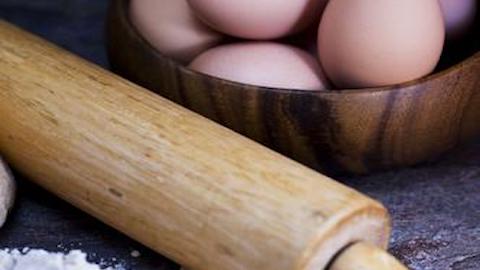
Gugelhupf Sweet Holiday Bread
by Wolfgang Puck
When I was a boy, one of the ways I knew the holidays had really arrived was waking up to the smell of gugelhupf baking.
That warm, sweet, spicy, yeasty, toasty aroma told my sisters, brother, and me that it was a special day, and we practically ran to the kitchen to enjoy it straight from the oven with hot chocolate.
Both my mother and grandmother excelled at making this special bread. They would mix and knead the rich egg-and-butter, yeast-leavened dough by hand, let it rise in a warm corner, flatten it, fill it with a mixture of raisins and nuts, and roll it up; then, they'd fill the special ring-shaped, fluted gugelhupf mold and let it rise again before baking.
Only later did I learn a little bit of the gugelhupf's history.
The name comes from two Old German words for "sphere" (gugel) and "head" (hupf), which together whimsically describe the mold's and bread's turban-like shape. The name may have been inspired by the turbans central Europeans saw on Turkish soldiers during the battles that swept across the continent in the 16th and 17th centuries. I like to think that the bread's turban shape helped make it a holiday favorite because it also recalls the headdresses worn by the Three Wise Men in the Christmas story.
You can find classic gugelhupf molds in well-stocked kitchen equipment stores or online. If you can't get your hands on one, though, you can also substitute a Bundt pan or even a simple tube pan of the same size.
Making gugelhupf is easier than ever thanks to the electric stand mixers so many of us have today. They're ideal for mixing and kneading the soft, rich, sticky dough, work my mother and grandmother did by hand. (You can also use a large-capacity heavy-duty food processor fitted with its dough blade.)
Once the dough has been mixed and kneaded, all that's left to do is let it rise once, and then roll it out and fill it before letting it rise a second time in the mold. Seedless raisins are a traditional filling feature, plumped up in the cherry-flavored brandy called kirshwasser or in rum or cognac, then tossed with chopped nuts. Feel free to use any kind of nuts you like, and substitute other dried fruit such as cherries. You could even toss in some chocolate chips.
When you bake your gugelhupf, don't shortchange its time in the oven.
The loaf will have the best flavor and texture when its crust turns a rich mahogany brown. Then, slice and serve it hot, warm, or cooled. If any is left over the next day, toast slices under the broiler and spread with butter and jam for an indescribably delicious holiday treat.
Gugelhupf Recipe
Makes 1 loaf, 8 to 12 servings
Ingredients - Gugelhupf Dough
1 cup milk
1/4 cup granulated sugar
1 ounce active dried yeast
1 pound bread flour
1 teaspoon salt
2 cage-free eggs
3 ounces unsalted butter, cut in pieces
Ingredients - For Baking Gugelhupf
2 tablespoons unsalted butter, melted
1/4 cup granulated sugar
Ingredients - Gugelhupf Filling
3 ounces unsalted butter, softened
3 ounces sugar
1 tablespoon ground cinnamon
3 ounces roasted hazelnuts, chopped
3 ounces roasted blanched almonds, chopped
3 ounces golden raisins, soaked for 30 minutes in 1/4 cup kirshwasser, then drained
Powdered sugar, for garnish
Preparation - Gugelhupf
For the dough, put the milk in a small saucepan and insert a cooking thermometer. Put the pan over medium heat and bring the milk to 100 degrees F., watching the thermometer closely. Pour the milk immediately into a small mixing bowl and stir in the sugar and yeast. Set aside at warm room temperature until the yeast begins to bubble, about 15 minutes.
In the bowl of a stand mixer fitted with the paddle attachment, combine flour and salt. Using the paddle attachment of the mixer, at low speed, slowly pour in the yeast mixture. Add the eggs, 1 at a time and lastly, the butter, a few pieces at a time.
Increase the speed to medium and continue beating until the dough looks elastic and almost forms a ball that rides around on the paddle, 3 to 4 minutes. Remove the bowl, cover with plastic wrap, and leave the dough at warm room temperature to rise until doubled in volume, 45 to 60 minutes.
Generously grease the inside of a 9-inch gugelhupf mold with the melted butter. Sprinkle the butter evenly with the granulated sugar. Set aside.
Preheat the oven to 350 degrees F.
Transfer the risen dough to a lightly floured work surface. With a lightly floured rolling pin, roll out the dough to form a 12-by-16-inch rectangle 1/4 inch thick.
To fill the dough, spread the softened butter evenly over its surface. In a small bowl, stir together the sugar and cinnamon, and sprinkle it evenly over the dough. Finally, sprinkle with the chopped hazelnuts and almonds and the drained raisins. Starting at one long edge, roll up the dough to form a compact log. Bend the log to fit it inside the prepared gugelhupf mold. Cover with a clean, damp kitchen towel and leave at warm room temperature until the dough has doubled, 45 to 60 minutes.
Bake the gugelhupf until its top is well risen a deep golden brown, 50 to 60 minutes. Transfer the gugelhupf mold to a wire rack and leave it to cool for 10 minutes. Then, place the rack on top of the mold and, holding the rack and mold securely together with potholders, invert them and lift off the mold to remove the gugelhupf.
Spoon the powdered sugar into a small, fine-meshed sieve and, holding it over the gugelhupf, gently tap its side to dust the gugelhupf. Serve warm or at room temperature, cut into wedges.
Subscribe to Receive our Gourmet Recipes
FOOD, DRINK & RECIPES [...]
APPETIZERS | SOUPS | PASTA | SALADS | MAIN COURSES | SEAFOOD | CHICKEN | PORK | LAMB | BEEF / VEAL | VEGETARIAN | SIDE DISHES | DESSERT | HEALTHY | WOLFGANG PUCK
Article: Copyright © Tribune Media Services, Inc.
Recipes: "Gugelhupf Sweet Holiday Bread Recipe
World-renowned chefs with an extraordinary passion for food share their passion on iHaveNet.com. These chefs make great cooking easier than imagined. Each gourmet recipe features expert advice and an easy-to-make recipe. Exactly what you need to transform your home cooking from acceptable to delectable