- MENU
- HOME
- SEARCH
- WORLD
- MAIN
- AFRICA
- ASIA
- BALKANS
- EUROPE
- LATIN AMERICA
- MIDDLE EAST
- United Kingdom
- United States
- Argentina
- Australia
- Austria
- Benelux
- Brazil
- Canada
- China
- France
- Germany
- Greece
- Hungary
- India
- Indonesia
- Ireland
- Israel
- Italy
- Japan
- Korea
- Mexico
- New Zealand
- Pakistan
- Philippines
- Poland
- Russia
- South Africa
- Spain
- Taiwan
- Turkey
- USA
- BUSINESS
- WEALTH
- STOCKS
- TECH
- HEALTH
- LIFESTYLE
- ENTERTAINMENT
- SPORTS
- RSS
- iHaveNet.com: Pets
by The Daily Cat
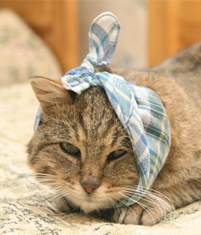
If your veterinarian were to ask you to take your cat's temperature at home, would you know what to do? This often-necessary task might seem simple, but it requires preparation and practice. Dr. Jodi Korich, a veterinarian and the director of Partners in Animal Health at Cornell University's College of Veterinary Medicine, explains what you should do both now and when the moment of need arises.
Cat First-aid Kit
It helps to create mini "sub-kits" within your cat's basic first-aid kit, with each containing items required for specific tasks. For the temperature-taking portion of the kit, you'll need:
Thermometer
While you can use a standard glass thermometer, Korich believes a digital one is safer. "If you accidentally drop the thermometer, which can happen when trying to control a squirming cat, it won't then break and shatter," she explains. "A digital thermometer is also flexible and will move with your cat."
Lubricant
It facilitates insertion of the thermometer. Korich suggests three choices that work equally well: mineral oil, KY Jelly and petroleum jelly.
Alcohol
You should have this in your kit anyway, for treating certain wounds. In this case, it will be used to clean off the thermometer.
Paper towel
This is useful during cleanup.
Taking Your Cat's Temperature
Even before your cat is ill, it's important that you perform a few practice temperature-taking runs. These instructions assume that you are using a digital thermometer. To begin, lightly coat the tip of the thermometer with lubricant. Have all the other required items within reach.
If possible, "Try to find a friend or family member who can help out," advises Dr. Korich. One individual can then serve as the "cat holder," securing the cat with both hands between the feline's neck and shoulders. If the cat might bite or scratch, have this second individual wear gloves and use a towel to hold the feline patient.
If you're working alone, hold your cat against your side. Wrap an arm around the front of your cat so it cannot break free. If possible, place your cat on a raised surface, such as a table.
Lift your cat's tail, but be gentle. If you pull too hard, you can hurt your cat, which might then bolt. Insert the thermometer into your cat's anus. "There will be some initial resistance, due to contraction of the anal muscles," warns Korich. Hold the thermometer until it beeps, signifying that a temperature has been taken.
When finished, "It's important that you don't forget the treat," says Korich. This will help to ease your cat's tension and reinforce that the temperature-taking process is rewarding and not threatening.
Korich says temperatures falling between 100.4 F to 102 F "are considered to be normal for cats." If your cat is emotionally stressed, however, its temperature could go up to around 103 F.
When to Take Your Cat's Temperature
According to the Hale Veterinary Group of Wiltshire, England, "pyrogens," or substances that change the level at which the body temperature is maintained, cause fever. Pyrogens include "bacteria, viruses, toxins, some drugs and natural substances released by the body in response to inflammation." Cat temperatures tend to hold steady, so rises and falls strongly indicate that something is wrong.
Korich says your veterinarian might ask that you take your cat's temperature after it has undergone a surgical procedure or has been diagnosed with an illness. "Visits to the hospital can be tremendously stressful for cats, so home monitoring under a veterinarian's supervision can allow the cat to recover quicker," she explains.
"Cats are notoriously secretive about illness," says Korich. Temperature is one key indicator of sickness that your clever feline cannot fake or hide.
AUTOS | HOBBIES | EDUCATION | FAMILY | FASHION | FOOD & RECIPES | HOME DECOR | RELATIONSHIPS | PARENTING | PETS | TRAVEL | WOMEN
PET STORIES and PET ARTICLES ...
- Is Your Dog Cut out for Field Trials?
- Should You Crate-train Your Puppy?
- How to Play Soccer With Your Dog
- The Best Way for Your Dog to Ride in the Car with You
- Good Dog Park Etiquette
- What Is Freestyle Dancing With Dogs?
- Canicross: An Easier Way to Run With Your Dog
- Reading Your Dog's Body Language
- Kitten Kindergarten
- Tips to Keep Your Dog Safe While Flying
- Keep Your Dog Warm in the Winter
- Scottish Deerhound: The Ideal Exercise Buddy
- Teach Your Dog to Fetch
- Is Your Dog Bored?
- 7 Ways to Pamper Your Cat
- The Best Games to Play With Your High-Energy Dog
- Dog Feeding Mishaps Corrected
- How to Succeed at Off-Leash Dog Play
- ID Your Relationship With Your Cat
- Photographing Your Elusive Feline
- How to Keep Your Pet Safe During the Holidays
- When Good Dogs Turn Bad
- From Finicky Fido to Chowhound Charlie
- Insure Your Kitty's Health
- Unconditional Love: My Cat Forgives Me Every Day
- From Feline to Family Member
- Is Water From a Christmas Tree Stand Harmful to Cats?
- A Day in the Life of a Sheepherding Dog
- Go on a Desert Retreat With Your Dog
- Dog Food Goes Natural and Holistic
- Determining a Food Allergy
- Exercise Gone to the Dogs
- Find the Right Sport for Your Dog
- Make Your Dog a Part of Your Wedding
- Hydrotherapy Helps Dogs Get in Shape
- How Your Cat Says 'I Love You'
- Lost Cats Found
- De-stress Veterinary Visits for Your Cat
- Keeping Cat Food Fresh
- Second-Hand Cat, First-Rate Pet
Copyright ©
Pets | The Daily Cat: The Easiest Way to Assess Your Cat's Health