- MENU
- HOME
- SEARCH
- WORLD
- MAIN
- AFRICA
- ASIA
- BALKANS
- EUROPE
- LATIN AMERICA
- MIDDLE EAST
- United Kingdom
- United States
- Argentina
- Australia
- Austria
- Benelux
- Brazil
- Canada
- China
- France
- Germany
- Greece
- Hungary
- India
- Indonesia
- Ireland
- Israel
- Italy
- Japan
- Korea
- Mexico
- New Zealand
- Pakistan
- Philippines
- Poland
- Russia
- South Africa
- Spain
- Taiwan
- Turkey
- USA
- BUSINESS
- WEALTH
- STOCKS
- TECH
- HEALTH
- LIFESTYLE
- ENTERTAINMENT
- SPORTS
- RSS
- iHaveNet.com

HE SAID IT: BRODEUR ON BRODEUR
(Player Media Tour, New York, September 2008)
Q: Take us back to March of '92. You get called up by the Devils from junior and go from making $44 a week to the NHL. Talk about finally realizing your dream.
Martin Brodeur:
"Well, it was surreal a little bit. When you play junior, you don't expect to make the big jump to the NHL, especially not in a week. You always dream about it but common sense says it usually doesn't happen.
"Just the experience to get called up, not knowing exactly the reason why. When I got there, I found out that the two goalies - Chris Terreri and Craig Billington, were hurt at the time.
"At the time, the two goalies from the American Hockey League were up. So there wasn't anybody in the minors and I couldn't go to minors because I was too young. The only place I could play was on emergency recall in New Jersey.
"So I got there and a game went by -- I think we played San Jose, and I didn't play. I was just sitting on the bench. The next thing I know, I got the call. We were playing Boston. And I will always remember where I was standing. And Coach Tom McVie kind of put me on the spot in the morning and says: 'You're playing kid'. From there, it was quite a day. It was a really fun time."
Martin Brodeur Related
Q: After that game, Devils captain Bruce Driver said you played with a lot of confidence out there. Talk about the support you received from the veteran guys.
Martin Brodeur:
"I think right from the get go everybody was happy about me playing my first game. You have to realize that, back then, as a 19 year old, you didn't see many goalies playing that early. Now it's a little different the way the game is played. Guys are playing at a younger age and they're prepared to play at a younger age, also.
"There were a lot of veterans on that hockey club when I first played. And it was nice that I got the support from other guys, because sometimes when you're a young kid coming in, people just put you on the shelf. But that was not the case in New Jersey. People were really into it."
Q: Before you came into the League, only two teams had starting goalies from Quebec. Today, one-third of the teams have Quebec-born starters. Talk about why Quebec is able to produce such great goalies.
Martin Brodeur:
"It's pretty amazing when you look at it. I think Patrick Roy was probably the pioneer - the first top goalie that played in the NHL, in our era, anyway.
"And from there, I think everybody fed off of him. I know I did. Guys like Felix Potvin and Stephane Fiset. It trickled down to younger guys than me - guys like (Jean-Sebastien) Giguere, (Jose) Theodore, (Roberto) Luongo. I think when you look up at somebody and you say this guy played in our league and you look at him and all the success, I think you feed off of that and it makes you believe that you're able to live your dream.
"And I think you can see that today - we're seeing a lot of European goalies playing in the League because Dominik Hasek was so successful and people looked at him being one of the top goalies in the League. They feed off that.
"So I think Quebec is no different. We had a lot of great goalie coaches that came out of there that now coach in the NHL - Benoit and Francoise Allaire and Jacques Caron, to name a few. And tons of guys that helped make the position a better position."
Q: Talk about Mario Baril, one of your first goalie coaches and what he did for you as goaltender.
Martin Brodeur:
"He's a good friend of the family, first and foremost. And I grew up with him. So when I played Midget Triple A, he was my goalie coach. When I moved to juniors, he was my goalie coach. So he really paved the way for me and handed me off to another goalie coach in the NHL.
"But I think just the confidence, just a guy that was there. He had the chance to coach Stephane Fiset and Felix, myself and Luongo -- a lot of goalies. He did a great job with all of us to bring us to the level that we needed to be at when it was time for us to compete."
Q: Talk about what Vladislav Tretiak taught you as a young kid when you would go to his goalie school.
Martin Brodeur:
"It was fun just to see. For me, international hockey, because my dad played in the Olympics, it was always a big thing. When I grew up, there were no NHL players playing in these Olympics or the World Championships.
"So because of my dad, we followed international hockey a lot and Tretiak was always an icon, one of the best goalies in the world that never played in the NHL. So when he had his camp, it was a great honor for me to be part of it -- first, as a student for a couple of years, and after that as a teacher with him. So definitely, just hanging out a couple of weeks every summer was really good for me to learn how to conduct myself and learn how to play the game also."
Q: You guys had goalie coaches at a young age in Quebec when some NHL teams did not even have them.
Martin Brodeur:
"We were well-structured. Right from the get go, we had goalie hockey schools. You see them a lot now. But back then, you didn't see it that often. For us, I know since I was maybe 8 or 9 years old, I always had a goalie coach or at least a day a week I was doing a goalie clinic throughout my hockey season.
"And I was getting followed all through my minor hockey with goalie coaches or goalie consultants. And for me, it was normal. I didn't know nobody else had that. But I think it's one of the keys as to why goalies from Quebec are where they are now."
Q: Talk about what it was like as a 13 year old goaltender to watch the Canadiens win the Stanley Cup.
Martin Brodeur:
"It was unbelievable. To see the Canadiens win the Stanley Cup and then going to the parade. I left school with my buddies, took our bikes and we went downtown to Peel and Saint Catherine Streets, sat on the corner to see the Stanley Cup parade right in front of us. It was a great feeling. Like any kid, my dream was to play in the NHL. And seeing my favorite team always with the Cup in downtown Montreal was a thrill.
"And I think that's where everything started for me - to see Patrick Roy at a young age be able to do what he did during the playoffs that year - it just made you believe that you're able to do it when it hits you so close to home."
Q: What was it about Ron Hextall that you liked when you watched him while you were teenager?
Martin Brodeur:
"I just loved big goalies. I loved the fact that he was playing the puck. He was probably one of the first goalies that came out and played the puck. He was a little rough, maybe, for my liking. But I thought that was entertaining.
"But I think his ability to play the puck was the biggest thing. My dad came back one night after working a game against the Flyers in Montreal and said: 'Watch this guy, he's like a third defenseman out there.' And that stayed with me and I was always looking to see him all the time in the news or even some of the games, just to see what he was doing.
"Like everybody knows, that's one of the things I put in my own game and it's really because of Ron Hextall."
Q: You talk about loving goaltending because of the imagination and the innovation of the position. Expand on that.
Martin Brodeur:
"I think that's what is fun about being a goalie. As a forward, when you're the top guy, you're the top guy. If you look at goalies, there's different ways of stopping the puck. There are different beliefs. And I think it's really up to yourself to find what you need to do to be successful. And you go from goalies that used to be stand-up to guys that are all over the place to really spectacular goalies and then you have conservative goalies.
"And I guess it's just a fun position. When you really take the time to look at the skills of each of the guys, it's pretty impressive. And definitely Hextall was one of the guys - he put something into the game that nobody else saw before. And after that you look at guys like Dominik Hasek - people don't understand how he was able to stop the puck. But he was probably the best goalie when he was on top of his game. So it's really an amazing position."
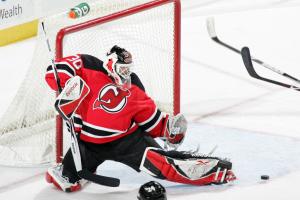
Q: Tell us how you got your start as a goalie.
Martin Brodeur:
"Somebody asked me to be a back up goalie on a team. So all year, I was playing forward on one team and I was back-up goalie on the other. Next thing you know, I was able to play a little more than the other goalie. So I kind of liked it.
"The following year, coming into the rink, I got my hockey equipment on, didn't even have my goalie equipment. (I was) just getting in as a forward because I was only a back up. The coach said: 'What do you want to do this year?' I'm like: 'What do you mean?' He said: 'Do you want to be a goalie or forward?'
"I look around. My mom's not there. My dad's not there. I'm 7 years old and tell him, 'I'll be a goalie.' So that kind of turned out to be probably the biggest decision I ever made."
Q: Is it true that you almost gave up the game as a 14 year old?
Martin Brodeur:
"Well, like any teenager, I think you're going through ups and downs and what do you do? And sometimes, I had had enough. I'd see all my buddies doing other things. It was like it would be fun not to have a coach, not to have a time to be somewhere for the first time in my life. You're so structured with school and activities and stuff.
"And after a week, my brother (Claude) just kind of grabbed me by the shoulder, dragged me right back to the rink. He goes, 'You're going to be playing hockey. That's what you're going to do.' I thank him every day for that, that's for sure."
Q: Talk about the influence your family had on you.
Martin Brodeur:
"I was pretty fortunate. My dad worked for the Canadiens and for the Expos, so we were really into sports. My oldest brother (Claude) played on the farm team for the Expos. So he was involved in sports.
"When I was growing up and going step by step towards the NHL, my family was really supportive. The older I was getting I was seeing I was living their dream. It pushed me to want to do more for them because they were there for me from day one, driving me to the rink and my brother dragging me back to the rink to play hockey. For me, it was just a fun experience to have my whole family at all times right beside me along the way."
Q: Do you think about being so close to surpassing Patrick Roy as the winningest goalie in NHL history?
Martin Brodeur:
"Yeah, I think about it. I think that's going to be one of the things that I'll be really excited about.
"You know, winning the most games is what it's all about. When you're playing hockey, you play to win. For a goalie, it's a beautiful thing because when you win everybody's happy around you. So it's not a selfish thing. It's like, well, you scored 500 goals or whatever. For a goalie, it's all about wins.
"And so when I will hit that record, if I do, it's going to be quite an accomplishment. But I've been playing a lot of years, playing a lot of hockey, a lot of games, to be able to get close to Patrick. And I think it's to his credit for him to be able to push that record so high. And it will be definitely a tough one to reach.
"The game is changing. Who knows what the future will bring? But just for me to be around what Patrick accomplished, along with Terry Sawchuk, is going to be a great honor. And definitely, once everything is going to be done, the pressure will go down and I'll enjoy the rest of my career."
Q: How would this record compare to all of the honors you have won along with the championships?
Martin Brodeur:
"You know what? I think it's going to be a great accomplishment. I think you don't play hockey for individual things. I think when you play hockey it's all about Stanley Cups, about winning championships and that's what drives you to have that feeling. It's a team sport. So when you do win together, you know it's a fun feeling when you help each other out through a long battle. And that's, really, for me, it's what hockey's all about.
"There will be a number, that will be a great number, and it will be an unbelievable number, actually, but it stays there. I'm not looking to win only 552 games. There will be a lot more to win if I want to continue playing in the NHL."

Q: You are also chasing Terry Sawchuk's record of 103 shutouts. Many people, through the course of the history, thought that record never would be touched.
Martin Brodeur:
"It's not touched yet. I mean there's seven to go or so. And it's going to be with the league and the scoring that the league wants to put in the game -- it gets harder and harder to get these shutouts. But we'll go for it. And hopefully we'll get to it.
"But these are the things that, again, for a goalie that's the beauty. Everybody's going to benefit by me accomplishing these feats."
Q: You have had only one extended absence in your career - six games in 2005. How proud are you of that durability?
Martin Brodeur:
"I take a lot of pride in that. I think it's important. I know the Devils are counting on me to play a lot of games every season. To be there for them for that long, for that much time, that many games, I think it's something that I'm happy about it. And I couldn't do it without having the total confidence of the organization that I play for.
"Since day one, almost, they just said, 'Be our guy.' And I think I feed off of that. I know they want me in there. I think the fans that follow us in New Jersey want me to be there all the time. So when you feel wanted, you want to be part of it. So it's definitely nice."
Q: Reflect on your career to this point.
Martin Brodeur:
"It's been a great ride. There's no doubt about it. From day one to now and hopefully for the rest of my career. Playing for one organization, being so successful as a team, as an organization, and what, every year, we try to accomplish. And it's hard.
"Last year was our 11th straight time in the playoffs. We only missed the playoffs, since I've been there, once. That's what you play hockey for. We have a chance to win every day. And for me it's all the great people I met through this organization - (Doug) Gilmour, (Alexander) Mogilny, (Slava) Fetisov, Scott Stevens, Scott Niedermayer, Ken Daneyko -- and I'm missing tons of other guys.
"So it's kind of you don't forget these things. My family is in New Jersey. My kids were all born in New Jersey. They all play hockey. The kids are in school in New Jersey. They're Americans. And for me just to have that kind of life coming in from Saint Leonard outside of Montreal, now for me, I'm like an American. So it's awesome.
"And at the same time, I was able to keep all the ties to Canada with playing in the last three Olympics and some World Championships and the World Cup. So it's the best of both worlds. And my career has been unbelievable."
Q: Probably the ultimate honor is when an arena is named in your honor. What's it like when you drive by the Martin Brodeur Arena?
Martin Brodeur:
"It's hard for me. I never call it that name. I don't say it because I have a hard time saying it. For me it's always Arena Saint Leonard. It's hard.
"When we go out in the summer, play ball hockey there, I know the kids do call it like that. But it's kind of funny. Every time you get a little smile out of it when you see your name attached to an arena."
HE SAID IT: BRODEUR ON BRODEUR
(NHL Media Conference Call, March 3, 2009)
Q. Is it possible that this injury, the silver lining could be that you'll be fresher down the stretch and in the playoffs as you've ever been in your career?
Martin Brodeur:
Well, I hope so. I think you have to take every positive you can from an injury. Sometimes it's hard to have them. But definitely not playing as many games, you know, we'll see what that translates into, what kind of success in the playoffs. Last time I haven't played a lot was in '95 when we had a lockout, so it was for different reasons. But it definitely was a pretty good year for us.
Q. Can you explain to us a little bit about what you did when you weren't playing hockey.
Martin Brodeur:
Well, you know, the first month was really hard because I was in a cast and I was in a brace, so I didn't really do much. I think the second month was probably the toughest one because I was able to function a little bit, but not allowed yet to work out or do anything.
I started to do the rehab, as far as just going to a therapist, start moving my arm a little more. When the new year came, I think it was where it was more interesting for me. I got back in the gym, got back working out, was doing a lot more rehab work. Slowly I was able to get back on the ice and start skating.
Two weeks prior to my comeback was probably the toughest because I felt really good, but knowing that I wasn't a hundred percent yet. The team was traveling a lot, so it made it a little hard.
It was a long process, something that hopefully I'll never have to go through again.
Q. As you get closer to the milestones and records, are you comfortable with people saying you're the greatest goalie of all time, being in that conversation?
Martin Brodeur:
It's never comfortable to hear that. When people tell you stuff like that, you don't like to believe it. It's understandable. I think I'm going to go and try to accomplish some pretty big milestones or establish some records. I mean, it's normal that people will talk about it.
But I don't think as an athlete you can see yourself like that. I think if you do, it's not the right way to approach who you are, where you want to be. I think you really have to stay humble when these things are approaching.
Q. You mentioned Zach Parise. How good is he? Pretty young player, but putting up very good scoring numbers. And is this the first New Jersey team in a long while that can score tons of goals and it doesn't put quite as much pressure on the goaltender to win the games 2-1?
Martin Brodeur:
Your first question, I think Zach, people are starting to recognize his talent. We've had him for a few years in New Jersey. I think this year is probably the first year that I think his responsibility as a player has grown big time. He's killing penalties, doing a lot of different things. I think it just translates in him being a more complete player.
He went to the All-Star Game this year and I think he'll be a permanent guy every year. He'll be a shoo-in to be one of the top players in the league just because of how he is, how he conducts himself. He's really come along really well with all the responsibility the team has given him.
Your second question, you know, through the years, you had teams, you play with what you have. I think we always did a great job with the coaching staff that was in place in New Jersey, always to try to maximize what we had. Sometimes we had to play defensively to be successful and other times, like in 2000, it was okay to score goals, don't match up and fight fire with fire when we had one of the greatest lines with Arnott, Sykora, Elias, at that time was one of the best lines in the league.
So this year is similar. We feel we have the horses to go out and score goals. But we're still a good defensive team. Nobody wants on our team to really take away from what we do defensively and go through some tough stretches on our defense. We concentrate on playing well and we believe the depth and the size of our hockey club will help us do the right things in the offensive zone when the defensive zone is taken care of.
Q. What is the secret to getting shutouts? Patrick Roy got 66. You've got 100. You played about the same amount of time. As the game wears on, are you thinking of shutouts?
Martin Brodeur:
I think the fact that for a lot of years we didn't score many goals, sometimes I had to win the game 1-0. It's all about winning the game. When you're in a tight game, it's easier for everybody to make a commitment, knowing the next goal we can go to overtime. I think guys are bearing down a lot more.
It's a pride factor. In our organization, for the longest time, even now, they take a lot of pride in shutting down teams. People blamed us about playing defensively, but we loved it, people said that about us. We really took a lot of pride in playing defensively.
So when you get to these games, 4- or 5-0, it's easy to get scored on a lot of times because your team is not concentrated on playing well the game, you just want goals. That's not the philosophy we've had in New Jersey.
Q. Talk a little bit about your connection with the New Jersey fans, that you're back, how happy they are.
Martin Brodeur:
Well, it was pretty nice the other night when we played against Colorado. I've been for so long playing in the same organization. Just to be back, it was nice just the way they welcomed me, applauding me for every save I made, every time I touched the puck. It's funny. I said after the game, it's usually on the sarcastic side when a goalie stops a puck from a red line.
But it's been a great relationship. I think our fans, especially in the last couple years with the new building, it's been a great turnaround. A lot of young people going out to the games. We've been drawing real well in our new building. It's kind of a nice time right now.
Q. A week ago when we talked, you said you weren't really worried about the records, that they would come, you just wanted to see how things went. Now three starts, three wins, two shutouts later, are you starting to think about those records?
Martin Brodeur:
Well, you know, a little bit. Everybody's been talking about it. Every time I move closer to them, people are mentioning it. It's hard not to think about it.
But, again, I'm concentrated on getting my game to the level that I need to be when the playoffs come. It's nice. I think it's a great start for me. Especially coming back from an injury I didn't expect. I didn't have much expectation about the way I would come back and how quickly I was able to get some wins.
But definitely now, you know, being on the eve of it, it's always something that will be in the back of my mind. Like I said, hopefully we'll do it really quick so we can move on.
Q. On that note, your dad obviously has a long history in the game. How much do you know about Terry Sawchuk?
Martin Brodeur:
You know, not much. Not as much as I should actually. I think his name has been brought up to me so much that definitely it's something that I will do in the next couple weeks.
Q. You've been off for such a long time. What were your expectations coming back? Could you have even envisioned playing so well coming back, let alone back-to-back shutouts?
Martin Brodeur:
No, not really. Like I said earlier, like my expectations weren't that big. I just wanted to go out and feel good and be second nature again playing hockey. It's been for so long that I haven't played games, I was a little worried how I was going to feel in there.
After the first game, that was pretty tough. Second and third game, I just felt natural in there. I felt that I belonged, you know, in the games and stuff.
But the expectation for me was just having fun again. I'm coming into a good hockey club in New Jersey and I want to follow the path of what these guys started building all year long.
Q. A lot of people had the Devils pegged for dead after you went down. Scott Clemmensen really played well for the Devils, kept them in the race. Can you talk about his importance to the team, how well he's played.
Martin Brodeur:
I think it was definitely a great surprise to everybody. I think Scott came in, and it was a tough situation. I think everybody pegged on Kevin Weekes to be the guy to take the work load. Clemmer got his chance to play and played real well and didn't give a chance to Weeksie because he played so well.
That definitely made a difference in the way I was able to come back. I didn't have to worry about the positioning of my team. I think he took care of that. I wish him the best moving forward now.
Q. During the few months when you were recovering from the injury, did you have many moments you had to fight a little bit of doubt about your ability to come back at the level you set for yourself over the last few years?
Martin Brodeur:
Not much because I think just because of the nature of my injury, it's the elbow. It's not like your knees or your groin or your hip that really can kind of tweak your mobility or whatever as a goalie that you need a lot. So I didn't have that doubt that much.
You know what, the doctors, they kept on telling me, 'Marty, you'll see in a week you'll feel like that, in two months you'll be like that.' They were right on the dot about everything they talked about. They made me feel real confident that I was going to be able to go back healthy.
After that, it's about your game. I think that's where the doubt comes in a little more. It's like when you come in, it's four months, these guys have been playing high-paced hockey for the last four months. The playoffs are coming. There's a big push. So for me it was like the level of play where I was going to be at.
I'm still looking at it to be a challenge for me. Even though I've won my first three games, I still want to make sure I take baby steps towards getting where I'm supposed to be.
Q. You talked a little bit about the records, how you're approaching them. How do you look at the two different records individually? Does either one mean something different to you than the other? Having both those records in your sights, is that a little different than having just one or the other?
Martin Brodeur:
I don't know. I think for me the most important one would be the wins. I think when you play hockey, you play to win. When you win, everybody's happy. That's the bottom line.
Shutouts, I think if you win enough, you'll have shutouts. You'll have a chance to creep up on that record. I've been fortunate enough to play on good teams and that's the reason why I'm approaching both records.
But, again, the importance of them are not too big a thing for me. Especially like the shutout one, that one just happened. It's hard. You don't get up in the morning and say, I'm going to shut them down. You get up and say, I want to win this game. That's sometimes the way you have to go through it.
Q. Is there something in the water in New Jersey, something they feed to the goalies? Is there a reason you've been so successful over a long period of time? And now Scott Clemmensen comes in for these games you missed and he's able to be so successful. Is it Lou, the legacy of having a defensive-minded team, something in the coaching staff? Is there something you can pin down as to why you've been so successful?
Martin Brodeur:
I don't know. I think it's been a good organization to play for. I think they care about the way they play hockey. Defensively, we've been as good a team in the league in the past 15 years or so.
Definitely I think the importance of paying attention to details all the time, being accountable for everything you do, that comes from our coaching staff and definitely from our general manager. I've had a great relationship with my goalie coach all these years, and he's been goalie coach also with Clemmers and Weeksie and Mike Dunham. There's a lot of guys that came through and did well with our hockey club also.
Q. You mentioned your new building. Last year there were worries you wouldn't have that sort of intimidation factor you had in the Meadowlands. Since you probably will have it in the opening round, can you talk about how your team is getting comfortable in its new surroundings.
Martin Brodeur:
I think it's important. You always want to make your life a lot easier. I think now, you know, being our second year in this building, I think now it's home to us. It's what we're used to go to every day. Practice or game is the same thing for us. Just feel comfortable.
The support of our fans has been unbelievable. I know it's not a Canadian team, don't get me wrong, a club like Montréal or Toronto or other places like that. But, you know, I think it's coming along real well. Even our fans are calling the Rock being a home place for them also.
Q. There's so much talk in Canada about the Olympics. I think while you were out for an extended period of time, people started looking around and thinking that maybe Marty is not going to be there, conceded the spot to Roberto. Now Roberto got hurt, came back slowly. Did you make a statement here about the old guy not being done yet in terms of starting for Canada in 2010?
Martin Brodeur:
You know, it's a long ways from now. But it's in my mind. I'd love to participate at the Olympics, there's no doubt about that. I've been in three of them so far and had great memories from it and definitely would like to add some more. Especially being in Canada, it would be an awesome place for me to be.
We'll see. They'll make the decision when it comes down to it. But I concentrated last summer to get myself -- knowing I'm getting a little older, you got to prepare yourself differently. So I definitely worked really hard last summer to be in great shape, coming into training camp, wanting to have a good season.
Definitely got disrupted a little bit with my injury, but got back at it early this new year, working out, getting back in the best shape I can to finish the season strong.
Again, these are things that are out of my control, what people think or if I'm going to get picked or not. But definitely I'll welcome the challenge to be part of the Canadian team again.
Q. You were 3-0, two goals allowed. I know you said you had no expectations coming back. But looking back, did you surprise yourself at all with what you were able to do in those three games?
Martin Brodeur:
A little bit. I was surprised how quickly I felt good in the net. I thought it was going to take me a little longer to really feel at ease, not being nervous, not worry about making decisions, playing the puck, doing different things. I thought it was going to take a little longer to get used to it.
I've had some great practices. You know, games is different. After my first game, I didn't feel like my old self. It took me that one game. I came in against the Panthers and felt really good. Definitely yesterday I felt good also.
Yeah, it was a little bit surprising to a certain extent, like I said, because my expectation, I didn't know. I don't have anything to fall back on because it's the first time that I have done it.
Q. It looked like the defense in front of you was playing so well, too, that it was making your job that much easier. It's a no-name defense. Can you touch on these guys playing in front of you?
Martin Brodeur:
Well, you know, these guys, you got to give them a lot of credit. They've been playing really good hockey all year long. I've noticed that for me in the last three games, you know, how fast we are -- mobile. We get the pucks. We're making plays. We have good support.
Our defense, we don't rely on two or three like top players like we used to, with Niedermayer, Stevens, all these guys. It's a five-man unit the way we play defensively. Our system gives us a great opportunity to support each other in our own zone.
I think these guys, you know, they've been playing together all year now, and you can see the cohesiveness has set in in their plays. There's a lot of good communication between each other. It's been pretty nice for me anyway to play behind them.
Q. Touching on records -- your 48 wins two years ago, there's been a little talk of Kiprusoff taking a run at the record. Are you surprised somebody is looking at trying to get 50? And do you think, given the fact that Mike (Keenan) likes to play his number one guy 'til he falls over, that he has a decent shot at it?
Martin Brodeur:
I was looking at it. He's definitely got a shot at it. He's got lots of games left. You still got to win them. But I think definitely in Calgary, it's a pretty good hockey club there, so he'll have a great chance.
That's what it is. You got to play a lot of games if you want to get to that number. That's the bottom line. It's almost impossible if you play 60, 65 games, to be able to break that record. I've done it with playing over I don't know exactly the amount of games, but it was definitely way over 70 games. Kipper has been doing that for a lot of years.
For me, I appreciate that. I appreciate a goalie that wants to be in the net, wants to be successful every single day. I think he's definitely on his way of getting close or beating my record. Hopefully he'll get 50. I think it will be a great mark for a goaltender to get.
Q. You're not secretly saying I'd like him to get to 47, but... Or is it?
Martin Brodeur:
Well, you know what, I think he's got to play until he can't. I think when you're a competitor, you play to win games.
HE SAID IT: BRODEUR ON BRODEUR
(Appearance on Sirius XM Radio's NHL Live, March 9, 2009)
Q: What were you doing while you were out for (four) months?
Martin Brodeur:
"Listening to you guys every afternoon. Actually, it was pretty good."
Q: How are you feeling? You obviously came back and won your first few starts and then had a rough one Saturday.
Martin Brodeur:
"I'm feeling pretty good. It's been a nice ride so far since I came back. The weekend started real well for me. And definitely last game was a tough one, but that's going to happen in the course of the season. But hopefully we'll shake it off and play well tomorrow."
Q: What happened there?
Martin Brodeur:
"I think it's a combination of a lot of things. Definitely, I didn't play up to par. But as a team, we probably didn't expect the Islanders to give us the challenge that they gave us. But they've been doing it to a lot of teams. They have a lot of young guys, a lot of guys you don't know about. But they're playing really well."
Q: All kidding aside, what was it like for you being out? You're a guy that has always played so many games and, for the first time in your life, you had all that time off?
Martin Brodeur:
"It was definitely tough, especially the first few months. I was really out of commission - after surgery I was in that cast and a brace for a month and a half or so. And after that I couldn't really do much. I tried to travel, went to Montreal. But it was so cold there I had to go back to New Jersey.
"It's definitely something that I think makes you realize what you have and makes you appreciate the game of hockey. When you get older, you always think retirement is around the corner. But spending four months like that, I'm definitely not ready to retire."
Q: You can tie the record Saturday in Montreal. You can break the record at home against the Chicago Blackhawks back at home on St. Patrick's Day. Have you gotten confirmation about whether Patrick Roy will be in attendance when you tie and break the record?
Martin Brodeur:
"You know, I don't know. I know a lot of people have been talking to him and he said he'll definitely try to be a part of it. I think everybody has their own (schedule) to a certain extent - especially him, being a coach in the Quebec Junior League, it can be kind of tough to get around sometimes.
"But I think just the fact that he's answering some of the questions is pretty nice of him. I don't expect much of him just because I don't like to make this out to be a bigger deal than it is."
Q: Is this tough for you? We're asking questions about three or four games down the road. You've been around for a while, and you're as good at handling this as anyone. But is it tough trying to stay in the present and not think too far down the road?
Martin Brodeur:
"Yeah, it is a little hard. I really have to stay grounded and try not to get overexcited about what is about to happen. But I think the fact that I'm coming back from an injury and I just want to get my game to the best level I can for playoff time puts that record kind of on the side burner.
"It's there, I know. But I think the fact that I won the four games right away kind of amplified the expectations of people that I'm going to go out and win eight straight to grab it, you know? I know it's going to be a tough road - especially the last few games to go will be the hardest to get. Mentally, it plays with you. A lot of people are expecting it.
"But I'm going to take it one game at a time. We've got a lot of games to get it. And my goal is not to get this wins record, it's really to get myself playing a great level of hockey."
Q: How surprised were you that when you came back, you came back to a first-place team?
Martin Brodeur: "You know, I've been watching a lot of the games and followed the team. So I wasn't too surprise. I think we've played extremely well throughout the season. And it was nice for me to have a team that was in a good position like that so that I didn't have to rush things with my injury."
Q: Did you have a lot of interaction with the guys while you were injured?
Martin Brodeur:
"I was away a lot. It's so hard. These guys are fighting, playing every day and traveling. And you're just trying to get back into shape and working on your own game. I've been to most of the home games in the last two months. But even over the last few games, you want to get back in the loop but it's hard - -guys are going left and right.
"It's definitely something I've never experienced in my career because I've been fortunate not to get injured. But it definitely makes you appreciate your time with your teammates more now than when you never get hurt and you take it for granted."
Q: Are you all the way back now?
Martin Brodeur:
"I feel good. My arm is 100 percent. Now, it's just a matter of getting myself to play consistent."
Q: When you were out for so long, were you watching more NHL games and, if so, was there anything you noticed?
Martin Brodeur:
"You know what? I didn't watch as many games at first as I did in the latter part of my recovery. When I was getting closer to coming back I wanted to make sure that when I did, I knew what was going on around the league - who's hot and who's not and what kind of teams are playing what system.
"We went from a team when I left, 10 games in, in New Jersey, not scoring many goals to a team that is scoring at will. System-wise, we've definitely played different - a lot more forechecking and upbeat tempo. So I definitely wanted to make sure I was up to par when I was going to get back."
Q: Was there any apprehension about the first time you'd have to swing that arm up and make a save - that there might be pain there?
Martin Brodeur:
"A little bit. But part of my rehab, I was in the gym with a therapist. And I'd grab my goalie glove and had a lacrosse ball and I'd throw it up against the wall and I was practicing.
"But definitely, when it was time for me to be back in front of a puck and start moving with all your equipment, definitely the first few times you're hesitant a little bit. But the process was pretty good. A lot of times you're going to go out and break some scar tissue and feel some pain. And that didn't really happen on the ice for me - it happened more in the gym. So that made me feel more comfortable catching pucks.
"We had a couple of good guys. Scott Stevens came in for a couple of days and was taking slap shots. So I had to start out with the older guys and worked my way up to the real lineup pretty soon."
Q: Can Scott Stevens still crank it?
Martin Brodeur:
"Hey, he's in great shape. He shoots the puck as hard as anybody. It's amazing, this guy doesn't age too much."
Q: Brent Sutter, what does he have left on his shot, anything? Martin Brodeur:
"You know, the off-speed shots are the toughest sometimes."
Q: Let me ask you about the good, young goaltenders coming up in the league. Anybody impress you watching on television?
Martin Brodeur:
"Well, I think that Mason in Columbus - definitely the way he plays, how big he is and how composed he looks. For him, he comes in in a great situation with a good defensive team that's really well coached with Ken Hitchcock. So the future for him looks really bright.
"The guy in Nashville, Rinne, looks awesome too. You look at these guys, they're all mobile and they're big boys. It's awesome.
"Back then, there were big goalies but they didn't move that well. These guys are big and they're athletic. And you can see in the goaltending - we went from having goalies that weren't that big or didn't move that well to bigger goalies, butterfly goalies. But now, I think we have guys that are really athletic - great athletes are playing goaltender."
Q: Let me ask you about another guy, Tim Thomas up in Boston. I always thought you were successful because you do different things - you don't just drop and block, you present different problems for shooters. This guy is like that in his own way because he doesn't always do the same thing.
Martin Brodeur:
"I've been watching a lot of him this year - just because I think it's been an interesting story in Boston the way they came out and have been so dominant all year long.
"But for him, he's just a competitive guy. And that's the bottom line. You can have all the technique you want, but if you're not there competing, it's tough to be successful. And this guy every night just competes - he wants to make saves. It's never pretty, but he gets his job done and I have a lot of respect for him.
"He came along late in his career to the NHL and right now he's just showing everybody just how talented and how determined he is to be the top goalie."
Q: What do you think about Claude Lemieux being back in the League?
Martin Brodeur:
"For me, it's nice. Claude meant a lot to me in my career. When I broke into the league in New Jersey, I really put myself under his wing and he did a lot of good things for me. He showed me how competitive and what a winner really is. So for him to have a crack at it at age 43 is pretty impressive."
HE SAID IT: BRODEUR ON BRODEUR
Upon scoring a goal in the playoffs with 44.6 seconds left of a 5-2 victory over Montreal in Game 1 of the Eastern Conference Quarter-Final at New Jersey, April 17, 1997
Martin Brodeur:
"I was freaking out. When I went behind the net, I was really trying (to score), but the puck kept going and I had a hard time controlling it. When I got a good piece of it, I just shot it as hard as I could. If I do that, it means that I'm trying to score, not just clear the puck, because I wouldn't put that much juice on it.
"It was unbelievable. When I shot it, it went over everyone and I kind of lost it after that. I saw John MacLean raise his arm up and I thought, 'Wow, that's got to go in if he's doing that.' The guys in front of me went on the side and I saw it go in. I'll never forget that moment."
Martin Brodeur Related