- MENU
- HOME
- SEARCH
- WORLD
- MAIN
- AFRICA
- ASIA
- BALKANS
- EUROPE
- LATIN AMERICA
- MIDDLE EAST
- United Kingdom
- United States
- Argentina
- Australia
- Austria
- Benelux
- Brazil
- Canada
- China
- France
- Germany
- Greece
- Hungary
- India
- Indonesia
- Ireland
- Israel
- Italy
- Japan
- Korea
- Mexico
- New Zealand
- Pakistan
- Philippines
- Poland
- Russia
- South Africa
- Spain
- Taiwan
- Turkey
- USA
- BUSINESS
- WEALTH
- STOCKS
- TECH
- HEALTH
- LIFESTYLE
- ENTERTAINMENT
- SPORTS
- RSS
- iHaveNet.com
Katherine Hobson
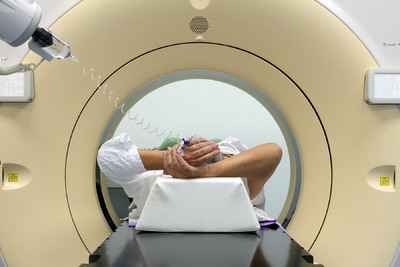
Many expensive high-tech medical tools are valuable but arguably overused
Americans adore technology. We love our iPods, our Kindles, our TiVos, our Xboxes, and our smartphones.
So it's no surprise that our high-tech infatuation extends to our medical system, where we zap prostate cancer in multimillion-dollar proton-beam therapy centers, implant defibrillators in chests to shock hearts back to life, use robots to perform surgery, and take detailed pictures of every part of our bodies using constantly advancing imaging technology.
The trouble is, we really can't afford it.
Experts say that spending on new health technology -- not just fancy machines but also drugs, devices, and procedures -- makes up as much as two thirds of the more than 6 percent annual increase in healthcare costs (this year's costs: $2.5 trillion).
"It's one of the key reasons why U.S. healthcare is so expensive," says Winifred Hayes, founder and CEO of Hayes Inc., a health technology research and consulting firm.
The problem isn't usually the technology itself but rather its use in certain patients where it hasn't been shown to help more than cheaper options do -- or at all.
Several forces are driving this excess use of high-tech medicine
The most commonly cited: "technology creep"
First, a device, say, gets approved for a high-risk population in which there's a proven benefit. But its use then expands to lower-risk groups, changing the calculus of clinical and financial risk and reward. "I don't think we have a lot of technologies that aren't useful," says Paul Ginsburg, president of the Center for Studying Health System Change.
"Our issue is that some of them are valuable but applied too broadly."
Take the implantable cardioverter-defibrillator, a battery-operated device that is surgically implanted in the chest.
"These were first used for people who had survived" cardiac arrest, explains Rita Redberg, a cardiologist at the University of California-San Francisco. "Now they're being used for primary prevention" -- that is, in people who face some risk of cardiac arrest but haven't experienced it.
Overstated benefits
A paper published last year in the Journal of the American College of Cardiology suggested the benefits of ICDs have been overestimated and the risks probably understated. In primary prevention trials, about 90 percent of ICDs will never save a life, but recipients still get exposed to risks such as infection and unnecessary shocks, says Roderick Tung, a cardiologist at the University of California-Los Angeles.
And at $30,000 each, ICDs are cost-effective only in patients most likely to suffer cardiac arrest, research shows.
Technology creep is also at work in imaging, where the number of CT and MRI scans charged to Medicare increased more than 15 percent annually between 2000 and 2004.
Consider CT angiograms, which use multiple X-ray images to form a picture of blockages in arteries and can cost more than $1,000. The most accepted use is to evaluate patients in the ER with chest pain, says Redberg, but some physicians use them to screen people with no symptoms. Yet there's no solid evidence they prolong or improve the quality of life or that they're cost-effective, according to Steven Nissen, chair of cardiology at the Cleveland Clinic .
The odd economics of health also abet the spread of technology.
Healthcare providers are paid for each procedure or service rather than for improving the total health of patients, which means there's an incentive to offer more tests and treatments. Hospitals, meantime, compete to attract doctors and patients in part by buying advanced tools, whether or not they're needed in the community. "Say Hospital A has a PET scanner and an MRI.
If Hospital B in the same locale doesn't have them, Hospital B loses in reputation and volume," says Melanie Nallicheri, a partner and member of the global health team at management consultancy Booz & Co.
Once a piece of expensive high-tech medical equipment is in place, it will be used
Proton-beam therapy, a kind of radiation requiring an investment of as much as $150 million, has soared in popularity in recent years. "With the current regulations ... you can use it for any malignancy that needs radiation," says Theodore Lawrence, chair of radiation oncology at the University of Michigan Medical School.
It's being offered for pediatric cancers and certain rare tumors, which Lawrence feels is appropriate, but mostly for prostate cancer, for which it has never been compared in a head-to-head trial against conventional radiation treatments.
Some technologies are advertised directly to consumers before they've been evaluated by the kind of clinical trials that demonstrate whether they're appropriate for widespread use. The American Cancer Society recommends that most women have mammograms -- the regular or digital kind -- starting at age 40.
Only women with a 20 percent or higher lifetime risk of breast cancer are advised to get an MRI also. And no public-health group recommends screening with ultrasound. But there's a perception even among women of average risk, says Connie Lehman, director of breast imaging at Seattle Cancer Care Alliance, that a high-tech test is superior to a mammogram.
"If they're going to go in [to be screened], they want an ultrasound or an MRI," she says. Ads encouraging women to have more advanced tests have helped sow that perception, she says.
Avoiding lawsuits. Defensive medicine is another factor pushing the heavy use of technology
Obstetricians get sued at a particularly high rate, which is one of the reasons childbirth now involves so many aggressive procedures and tests, says Maureen Corry, executive director of Childbirth Connection, a nonprofit organization that promotes evidence-based maternity care. Just one example of an overused intervention not supported by evidence: constant electronic fetal monitoring during labor.
"When you look at all the systematic reviews and all the randomized controlled trials, it has no benefit compared to intermittent monitoring," says Corry. And it has downsides: a lot of false alarms that lead to more unnecessary care, and a less comfortable labor, since it means women lie flat on their backs. Despite all that, says Corry, constant monitoring is standard practice.
"I understand some doctors may feel the need to order more tests and treatments to avoid being legally vulnerable," President Obama recently told members of the American Medical Association. He went on to say physicians must be supported in their choices not to order that test.
Reversing the trend toward excessive care, some economists argue, requires a fundamental realignment of our current fee-for-service system toward a system more like the Mayo Clinic's, which rewards the quality, not quantity, of care.
Technology creep might be ameliorated by other changes, such as a higher bar for approval of devices and technology, says Dana Goldman, director of health economics at the Rand Corp.
Currently, a device, for example, can reach the market if it's similar to an already-approved device, whether or not it's proven to produce better outcomes for patients. More practically, the current system could stand, but patients might pay more depending on whether treatments have been shown to significantly improve health, says Goldman.
One sign there may be changes on the payment front: Medicare -- whose coverage decisions are often followed by private insurers -- recently said it would not pay for CT, or "virtual," colonoscopies, saying the evidence was inadequate. (Comparative-effectiveness research attempts to provide data on which to base these judgments.)
Hospitals and doctors can also question their own habits
"What we're really doing is asking people to reflect on their own practice and ask whether what they do makes sense," says Julie Bynum, a geriatrician at Dartmouth Medical School. At Massachusetts General Hospital in Boston, researchers studied whether a simple software program would help cut the number of outpatient CT and MRI scans and ultrasounds ordered.
When a doctor ordered a test, she'd get a score reflecting the level of evidence supporting its use in that particular circumstance. Control still remained in the doctor's hands, says James Thrall, radiologist-in-chief at MGH, but the annual growth in CT scans declined by 11 percent.
Patients, too, can play a role. There are some sources of comparative information for patients.
The Blue Cross and Blue Shield Association conducts effectiveness reviews of technology through its Technology Evaluation Center, all of which are available on its website. The Cochrane Collaboration also publishes effectiveness reviews. And you can start by talking with your doctor when faced with a test, procedure, or anything else. "If you have a physician who isn't willing to give you a good reason why to do something, you've got a problem," says Bynum.
The latest technology or test may be exactly what you need -- or there may be a more effective and less pricey alternative.
"Technology is great," says Redberg. "But all technology is not great for all people."
WORLD | AFRICA | ASIA | EUROPE | LATIN AMERICA | MIDDLE EAST | UNITED STATES | ECONOMICS | EDUCATION | ENVIRONMENT | FOREIGN POLICY | POLITICS
Health: High-Tech Medical Devices, Treatments & Cost of Medicine