iHaveNet.com
Why No One Can Guess When Main Street Economic Recovery will Occur | Paul A. Samuelson
Online Breaking News Headlines Single Source to Headlines Breaking News Current Events Top Stories. Find out what is happening in News & the World. Check out iHaveNet.com for the latest news & current events articles plus Movie Reviews, Wolfgang Puck Recipes, NFL Previews Analysis and Politics. Your Single Source to News Articles, Current Events & Reviews.
  • HOME
  • WORLD
    • Africa
    • Asia Pacific
    • Balkans
    • Caucasas
    • Central Asia
    • Eastern Europe
    • Europe
    • Indian Subcontinent
    • Latin America
    • Middle East
    • North Africa
    • Scandinavia
    • Southeast Asia
    • United Kingdom
    • United States
    • Argentina
    • Australia
    • Austria
    • Benelux
    • Brazil
    • Canada
    • China
    • France
    • Germany
    • Greece
    • Hungary
    • India
    • Indonesia
    • Ireland
    • Israel
    • Italy
    • Japan
    • Korea
    • Mexico
    • New Zealand
    • Pakistan
    • Philippines
    • Poland
    • Russia
    • South Africa
    • Spain
    • Taiwan
    • Turkey
    • United States
  • USA
    • ECONOMICS
    • EDUCATION
    • ENVIRONMENT
    • FOREIGN POLICY
    • POLITICS
    • OPINION
    • TRADE
    • Atlanta
    • Baltimore
    • Bay Area
    • Boston
    • Chicago
    • Cleveland
    • DC Area
    • Dallas
    • Denver
    • Detroit
    • Houston
    • Los Angeles
    • Miami
    • New York
    • Philadelphia
    • Phoenix
    • Pittsburgh
    • Portland
    • San Diego
    • Seattle
    • Silicon Valley
    • Saint Louis
    • Tampa
    • Twin Cities
  • BUSINESS
    • FEATURES
    • eBUSINESS
    • HUMAN RESOURCES
    • MANAGEMENT
    • MARKETING
    • ENTREPRENEUR
    • SMALL BUSINESS
    • STOCK MARKETS
    • Agriculture
    • Airline
    • Auto
    • Beverage
    • Biotech
    • Book
    • Broadcast
    • Cable
    • Chemical
    • Clothing
    • Construction
    • Defense
    • Durable
    • Engineering
    • Electronics
    • Firearms
    • Food
    • Gaming
    • Healthcare
    • Hospitality
    • Leisure
    • Logistics
    • Metals
    • Mining
    • Movie
    • Music
    • Newspaper
    • Nondurable
    • Oil & Gas
    • Packaging
    • Pharmaceutic
    • Plastics
    • Real Estate
    • Retail
    • Shipping
    • Sports
    • Steelmaking
    • Textiles
    • Tobacco
    • Transportation
    • Travel
    • Utilities
  • WEALTH
    • CAREERS
    • INVESTING
    • PERSONAL FINANCE
    • REAL ESTATE
    • MARKETS
    • BUSINESS
  • STOCKS
    • ECONOMY
    • EMERGING MARKETS
    • STOCKS
    • FED WATCH
    • TECH STOCKS
    • BIOTECHS
    • COMMODITIES
    • MUTUAL FUNDS / ETFs
    • MERGERS / ACQUISITIONS
    • IPOs
    • 3M (MMM)
    • AT&T (T)
    • AIG (AIG)
    • Alcoa (AA)
    • Altria (MO)
    • American Express (AXP)
    • Apple (AAPL)
    • Bank of America (BAC)
    • Boeing (BA)
    • Caterpillar (CAT)
    • Chevron (CVX)
    • Cisco (CSCO)
    • Citigroup (C)
    • Coca Cola (KO)
    • Dell (DELL)
    • DuPont (DD)
    • Eastman Kodak (EK)
    • ExxonMobil (XOM)
    • FedEx (FDX)
    • General Electric (GE)
    • General Motors (GM)
    • Google (GOOG)
    • Hewlett-Packard (HPQ)
    • Home Depot (HD)
    • Honeywell (HON)
    • IBM (IBM)
    • Intel (INTC)
    • Int'l Paper (IP)
    • JP Morgan Chase (JPM)
    • J & J (JNJ)
    • McDonalds (MCD)
    • Merck (MRK)
    • Microsoft (MSFT)
    • P & G (PG)
    • United Tech (UTX)
    • Wal-Mart (WMT)
    • Walt Disney (DIS)
  • TECH
    • ADVANCED
    • FEATURES
    • INTERNET
    • INTERNET FEATURES
    • CYBERCULTURE
    • eCOMMERCE
    • mp3
    • SECURITY
    • GAMES
    • HANDHELD
    • SOFTWARE
    • PERSONAL
    • WIRELESS
  • HEALTH
    • AGING
    • ALTERNATIVE
    • AILMENTS
    • DRUGS
    • FITNESS
    • GENETICS
    • CHILDREN'S
    • MEN'S
    • WOMEN'S
  • LIFESTYLE
    • AUTOS
    • HOBBIES
    • EDUCATION
    • FAMILY
    • FASHION
    • FOOD
    • HOME DECOR
    • RELATIONSHIPS
    • PARENTING
    • PETS
    • TRAVEL
    • WOMEN
  • ENTERTAINMENT
    • BOOKS
    • TELEVISION
    • MUSIC
    • THE ARTS
    • MOVIES
    • CULTURE
  • SPORTS
    • BASEBALL
    • BASKETBALL
    • COLLEGES
    • FOOTBALL
    • GOLF
    • HOCKEY
    • OLYMPICS
    • SOCCER
    • TENNIS
  • Subscribe to RSS Feeds EMAIL ALERT Subscriptions from iHaveNet.com RSS
    • RSS | Politics
    • RSS | Recipes
    • RSS | NFL Football
    • RSS | Movie Reviews
Why No One Can Guess When
Main Street Recovery will Occur

Paul A. Samuelson

HOME > FINANCIAL MARKETS > ECONOMY >
Why No One Can Guess When Main Street Economic Recovery will Occur


No One Can Guess When Economic Recovery will Occur - Paul A. Samuelson | iHaveNet.com
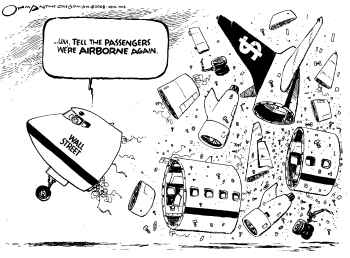
Editorial Cartoon - Jack Ohman

Subscribe to Barack Obama Presidential Inauguration  RSS     SocialTwist Tell-a-Friend

Henry Ford said, "History is bunk." Even more cynically, Napoleon said, "History is a set of fables agreed upon."

Both had a point.

But back in the early 1930s, during the Great Depression, President John F. Kennedy's father, Old Joe Kennedy, made two fortunes betting that stocks would keep falling and unemployment would keep growing.

He disbelieved in early New Deal recoveries.


By contrast, the leading U.S. economist at Yale, Professor Irving Fisher, after (1) marrying a fortune; and (2) earning a second fortune by inventing a profitable visual filing system, nevertheless ended up losing no less than three fortunes!
The story of these two opposites illustrates how and why economics can never be an exact science.

Joseph Kennedy Sr. was a tough and crafty speculator. Apparently he sold stocks short from 1929 to, say, 1931 or 1932.

Professor Fisher early on first lost his own fortune when the stocks he bought went bust. So he restudied the Wall Street and Main Street statistics.

Admitting that he had been too optimistic, Fisher wrote a new book. In it he admitted his previous error. But his new book said: The stock market is now a bargain.

Alas, his heiress wife's assets collapsed under this guidance. Stubborn Fisher persisted in his optimism. He went on to advise his sister-in-law, the president (I believe) of Wellesley College, to stay with stocks! This time she balked and fired him as investment adviser.

While Fisher was going broke, Joe Kennedy persevered by selling short the stocks that still were falling. No paradox.

However, as the New Deal recovery program finally began to succeed, Kennedy Sr. left the stock market and bought the Chicago Merchandise Mart Building -- the biggest structure in the world at that time.

Which speculator was right? And which was wrong between these two well-informed giants? No sage can answer that question.


Today, Federal Reserve Gov. Ben Bernanke glimpses a possible recovery by year's end.

He is a cautious scholar, backed by the best forecasters in the world at the Federal Reserve Board.

I would be a rash fool to quarrel with this official's quasi-optimistic view that by year's end some stability will occur.

You and I should hope that there will indeed be a glimmer of light at the end of the tunnel ahead.

But shift our vision now to the future.


Even if the short run prospect for a 2009-2010 recovery turns out to be good, I must warn once again that the long-run outlook for the U.S. dollar is hazardous.

China is the new important factor.

Up until now, China has been willing to hold her recycled resources in the form of lowest-yield U.S. Treasury bills. That's still good news. But almost certainly it cannot and will not last.

Some day -- maybe even soon -- China will turn pessimistic on the U.S. dollar.

That means lethal troubles for the future U.S. economy.

When a disorderly run against the dollar occurs, I believe a truly global financial panic is to be feared. China, Japan and Korea now hold dollars not because they think dollars will stay safe.

Why then? They do this primarily because that is a way that can prolong their export-led growth.

I am not alone in this paranoid future balance-of-payment fear.

Warren Buffett, for one, has turned protectionist. Alas, protectionism may well soon become more maligned.

President Obama struggles to support free trade. But as a canny centrist president, he will be very pressed to compromise.

And he will be under new chronic pressures. His experts should right now be making plans for America to become subordinate to China where world economic leadership is concerned.

The Obama team is a good one.

But will they act prudently to adjust to America's becoming the secondary global society?

In the chess game of geopolitics between now and 2050, much stormy weather will take place. Now is the time to prepare for what the future will likely be.


Happy Economic Recovery vs. An Anemic One
Paul A. Samuelson

The number-one question preoccupying economists, policy agents of government and Main Street families is this: Will "recovery" from the current U.S. financial meltdown arrive before the end of 2009?

Joseph Stiglitz:
Will Capitalism Survive Wall Street Apocalypse

Matthew Bandyk

A few days after writing about how the United States is not heading towards socialism, Joseph Stiglitz suggests that might not be true about the rest of the world. Stiglitz argues that the lesson many Third World nations might take from the financial crisis is that capitalism is fundamentally flawed.

Not Going to Be Economic Depression
Global Economic Viewpoint

Last week at the Milken Global Conference, three Noble Laureates in Economics sat down to discuss the global recession -- Gary Becker (Nobel Prize, 1992), Roger Myerson (Nobel Prize, 2007) and Myron Scholes (Nobel Prize 1997).

All three agreed that this is not going to be a depression and that the free-market economy is fundamentally healthy.

The Complex Case of Complexity
by Alvin and Heidi Toffler

In an important recent speech, months after the current financial crisis began, the chairman of the U.S. Federal Reserve Board, Ben Bernanke, placed partial blame for the catastrophe on "the sharp increase in the complexity of the financial products offered to consumers." Unfortunately, his description of the problem comes late and underestimates its importance. ...

Why are Bankers Still Being Treated as Beltway Royalty
by Arianna Huffington

President Obama said that he's been "sobered by the fact that change in Washington comes slow" and "humbled by the fact that the presidency is extraordinarily powerful, but we are just part of a much broader tapestry of American life and there are a lot of different power centers." Well, one of those different power centers -- the entrenched special interests that continue to call so many shots on Capitol Hill -- is the main reason change in D.C. comes so slow. But despite all that I know about the reform-killing power unleashed by the nexus of lobbying, campaign cash and legislation, I have been flabbergasted by the amount of behind-the-scenes influence recently being wielded by the banking lobby.

Recent Commentary on the Economic & Financial Crisis

  • Some Good News About Banking
  • Obama Economic Team's Flawed Cosmology
  • Larry Summers: Brilliant Mind, Toxic Ideas
  • Tim Geithner, CNBC & The Second Coming of Known Unknowns
  • Could America Suffer Japan's 'Lost Decades'
  • The Global Economy: Worse & Worser
  • Today's Global Economic Debacle: The Japan Fallacy
  • Financial Outrages Past, Present & Future
  • Even the US can Manage Itself into Economic Irrelevance


Receive iHaveNet.com on Politics & the Economy -- Enter your email address:


Delivered by FeedBurner


(C) 2009 PAUL A. SAMUELSON; (TM) TRIBUNE MEDIA SERVICES, INC.


Search Powered By Google

Google Search   

POLITICS

Subscribe to Politics

Delivered by FeedBurner


More Political News Analysis Commentary and Opinion

Advertisement

Job & Career Search

career & job search                    job title, keywords, company, location

Search Powered By Google

Google Search   

Advertisement

Your Ad Here
Your Ad Here
  • HOME
  • WORLD
  • USA
  • BUSINESS
  • WEALTH
  • STOCKS
  • TECH
  • HEALTH
  • LIFESTYLE
  • ENTERTAINMENT
  • SPORTS

Why No One Can Guess When Main Street Economic Recovery will Occur | Paul A. Samuelson

  • Services:
  • RSS Feeds
  • Shopping
  • Email Alerts
  • Site Map
  • Privacy