iHaveNet.com
Why Neither Ronald Reagan Nor United States Won the Cold War | Alex Kingsbury
Online Breaking News Headlines Single Source to Headlines Breaking News Current Events Top Stories. Find out what is happening in News & the World. Check out iHaveNet.com for the latest news & current events articles plus Movie Reviews, Wolfgang Puck Recipes, NFL Previews Analysis and Politics. Your Single Source to News Articles, Current Events & Reviews.
  • HOME
  • WORLD
    • Africa
    • Asia Pacific
    • Balkans
    • Caucasas
    • Central Asia
    • Eastern Europe
    • Europe
    • Indian Subcontinent
    • Latin America
    • Middle East
    • North Africa
    • Scandinavia
    • Southeast Asia
    • United Kingdom
    • United States
    • Argentina
    • Australia
    • Austria
    • Benelux
    • Brazil
    • Canada
    • China
    • France
    • Germany
    • Greece
    • Hungary
    • India
    • Indonesia
    • Ireland
    • Israel
    • Italy
    • Japan
    • Korea
    • Mexico
    • New Zealand
    • Pakistan
    • Philippines
    • Poland
    • Russia
    • South Africa
    • Spain
    • Taiwan
    • Turkey
    • United States
  • USA
    • ECONOMICS
    • EDUCATION
    • ENVIRONMENT
    • FOREIGN POLICY
    • POLITICS
    • OPINION
    • TRADE
    • Atlanta
    • Baltimore
    • Bay Area
    • Boston
    • Chicago
    • Cleveland
    • DC Area
    • Dallas
    • Denver
    • Detroit
    • Houston
    • Los Angeles
    • Miami
    • New York
    • Philadelphia
    • Phoenix
    • Pittsburgh
    • Portland
    • San Diego
    • Seattle
    • Silicon Valley
    • Saint Louis
    • Tampa
    • Twin Cities
  • BUSINESS
    • FEATURES
    • eBUSINESS
    • HUMAN RESOURCES
    • MANAGEMENT
    • MARKETING
    • ENTREPRENEUR
    • SMALL BUSINESS
    • STOCK MARKETS
    • Agriculture
    • Airline
    • Auto
    • Beverage
    • Biotech
    • Book
    • Broadcast
    • Cable
    • Chemical
    • Clothing
    • Construction
    • Defense
    • Durable
    • Engineering
    • Electronics
    • Firearms
    • Food
    • Gaming
    • Healthcare
    • Hospitality
    • Leisure
    • Logistics
    • Metals
    • Mining
    • Movie
    • Music
    • Newspaper
    • Nondurable
    • Oil & Gas
    • Packaging
    • Pharmaceutic
    • Plastics
    • Real Estate
    • Retail
    • Shipping
    • Sports
    • Steelmaking
    • Textiles
    • Tobacco
    • Transportation
    • Travel
    • Utilities
  • WEALTH
    • CAREERS
    • INVESTING
    • PERSONAL FINANCE
    • REAL ESTATE
    • MARKETS
    • BUSINESS
  • STOCKS
    • ECONOMY
    • EMERGING MARKETS
    • STOCKS
    • FED WATCH
    • TECH STOCKS
    • BIOTECHS
    • COMMODITIES
    • MUTUAL FUNDS / ETFs
    • MERGERS / ACQUISITIONS
    • IPOs
    • 3M (MMM)
    • AT&T (T)
    • AIG (AIG)
    • Alcoa (AA)
    • Altria (MO)
    • American Express (AXP)
    • Apple (AAPL)
    • Bank of America (BAC)
    • Boeing (BA)
    • Caterpillar (CAT)
    • Chevron (CVX)
    • Cisco (CSCO)
    • Citigroup (C)
    • Coca Cola (KO)
    • Dell (DELL)
    • DuPont (DD)
    • Eastman Kodak (EK)
    • ExxonMobil (XOM)
    • FedEx (FDX)
    • General Electric (GE)
    • General Motors (GM)
    • Google (GOOG)
    • Hewlett-Packard (HPQ)
    • Home Depot (HD)
    • Honeywell (HON)
    • IBM (IBM)
    • Intel (INTC)
    • Int'l Paper (IP)
    • JP Morgan Chase (JPM)
    • J & J (JNJ)
    • McDonalds (MCD)
    • Merck (MRK)
    • Microsoft (MSFT)
    • P & G (PG)
    • United Tech (UTX)
    • Wal-Mart (WMT)
    • Walt Disney (DIS)
  • TECH
    • ADVANCED
    • FEATURES
    • INTERNET
    • INTERNET FEATURES
    • CYBERCULTURE
    • eCOMMERCE
    • mp3
    • SECURITY
    • GAMES
    • HANDHELD
    • SOFTWARE
    • PERSONAL
    • WIRELESS
  • HEALTH
    • AGING
    • ALTERNATIVE
    • AILMENTS
    • DRUGS
    • FITNESS
    • GENETICS
    • CHILDREN'S
    • MEN'S
    • WOMEN'S
  • LIFESTYLE
    • AUTOS
    • HOBBIES
    • EDUCATION
    • FAMILY
    • FASHION
    • FOOD
    • HOME DECOR
    • RELATIONSHIPS
    • PARENTING
    • PETS
    • TRAVEL
    • WOMEN
  • ENTERTAINMENT
    • BOOKS
    • TELEVISION
    • MUSIC
    • THE ARTS
    • MOVIES
    • CULTURE
  • SPORTS
    • BASEBALL
    • BASKETBALL
    • COLLEGES
    • FOOTBALL
    • GOLF
    • HOCKEY
    • OLYMPICS
    • SOCCER
    • TENNIS
  • Subscribe to RSS Feeds EMAIL ALERT Subscriptions from iHaveNet.com RSS
    • RSS | Politics
    • RSS | Recipes
    • RSS | NFL Football
    • RSS | Movie Reviews

ECONOMICS | EDUCATION | ENVIRONMENT | FOREIGN POLICY | POLITICS | OPINION | TRADE

U.S. CITIES:  

HOME > USA

Why Neither Ronald Reagan Nor United States Won the Cold War
Alex Kingsbury


Jack Kemp 1935 - 2009  | Republican Leaders Debate Reagan's Relevance
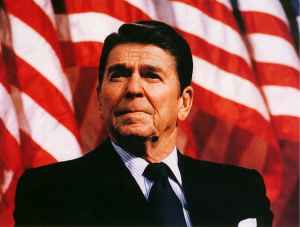
Ronald Reagan (February 1911 – June 2004)
40th President of the United States

SocialTwist Tell-a-Friend

Ronald Reagan never claimed to have bested the Soviet Union and won the Cold War.

Indeed, the very idea that there was a winner of the decades-long rivalry between the superpowers was a political formulation rather than one based on the historical facts. The notion that the United States forced the collapse of the Soviet Union and vanquished communism is not only a myth but a dangerous canard, Jack Matlock says in his new book, Superpower Illusions: How Myths and False Ideologies Led America Astray--And How to Return to Reality

Matlock, a U.S. ambassador to the U.S.S.R. during the Reagan and George H. W. Bush administrations, chatted with Alex Kingsbury about the end of the Soviet Union and why Barack Obama is the new Ronald Reagan.

Excerpts:

How did the Cold War end?

The Soviet Union didn't collapse because of external pressures. Nor did the Cold War end with the collapse of the Soviet Union. It ended because of a negotiated settlement that was potentially to the benefit of both sides. Communist rule ended because Mikhail Gorbachev maneuvered it out of exclusive power. It was Gorbachev who ended Communist rule. He did it in the Soviet Union's own interest. The people who present it as a victory of one country over another are incorrect, but it was the victory of one idea over another. This idea that somehow the U.S. beat the Soviet Union has led to failed policies from Washington but also misunderstandings from other countries, particularly the Russians.

The Russians also believe they lost the war?

Because Americans are prone to repeating this line, that the Soviet Union lost, there is a widespread belief in Russia of the myth that Gorbachev was tricked by Reagan and Bush Sr. to give away the store and that ever since, the U.S. has been set on turning Russia into a colony fit only for supplying cheap energy and raw materials. In the U.S., the collapse of the Soviet Union was seen as a military victory, which led to a spirit of triumphalism and a feeling of omnipotence as the "sole superpower." If the U.S.S.R. has indeed been brought to its knees by military pressure, then this would mean that the U.S. has the means to take down any ideology or political system it finds dangerous or repugnant. Other countries drew this conclusion, too: If a country had a problem, then the U.S. was expected to set it right.

Is this myth a result of intellectual laziness or malice?

It's some of both. One thing to note is that modern histories of the Cold War start at the end of World War II, which gives a very short and simplified view of history. The histories of the Cold War published in the 1960s started back in 1917. But the modern incarnations of the U.S. victory myth are even more recent. Reagan, for example, never claimed that we won the Cold War. He wrote about it in his memoirs as a negotiated settlement between partners. In 1992, when George H. W. Bush was losing the [presidential] election, he began saying that "we won the Cold War" on the campaign trail. Since then, a lot of this triumphalist mythology has come from the neocons whose ideas were rejected by Reagan, who in the end was more interested in negotiating. Reagan warned early on that in our negotiations with the Soviets, we should never question their legitimacy. That it was important to deal with them with respect. He always did, which is why he was able to accomplish what he did.

Yet conservatives frequently trumpet the virtues of tough talk.

Neocons especially point to Reagan saying, "Tear down this wall," as if that kind of rhetoric is effective. That speech was made in 1987, but the wall didn't come down until years later after the first President Bush refused to make aggressive statements about Gorbachev, who was then able to quietly withdraw support from Eastern Europe that led to the end of the Berlin Wall. The neocons simply misrepresented what happened and claimed that Reagan had followed their approach in dealing with the So?viet Union. The only shreds of evidence to support it are snippets of political rhetoric taken out of context.

How has this view shaped the Russians' foreign policy?

The U.S. may not have won the Cold War, but U.S. leaders did start acting like they had. At the end of the Cold War, the U.S. made promises to Moscow not to extend NATO to the borders of the former U.S.S.R. But NATO went ahead and expanded anyway. Then, in the early 1990s, NATO, which had always described itself as a defensive alliance, bombed Serbia without any authorization from the U.N. Security Council. The U.S. left the ABM [Antiballistic Missile] Treaty to develop a missile shield that Russia fears. And the U.S. began to act unilaterally on the world stage, in particular with the Iraq war. My argument is not that all would have been sweetness and light in Europe if only the U.S. had been kind to Russia. The U.S. should have made every effort to bring the European states, West and East and including Russia, into new security agreements. The Clinton administration's action in bombing Serbia without U.N. approval not only enraged Russia; it also sent a message to other countries with policies or practices that met American disapproval: Better get nuclear weapons as fast as you can or become a target of the Air Force. The idea that nuclear weapons are the only way for nonsuperpower states to defend against invasion or regime change is quite strong in places like North Korea and Iran.

What lessons can we learn from all this?

We need creative thinking and political leadership to deal with the agonizing problems of failed states, international criminal activity, and the crimes of genocide and ethnic cleansing. Existing international structures are inadequate to meet these challenges. It's because of the Obama administration's ideas about talking with nations that don't agree with the U.S. that I say that the president whom Barack Obama most resembles is Reagan. Not all their policies are the same, but their leadership qualities are strikingly similar.


Read the latest political news.

Available at Amazon.com:

Superpower Illusions: How Myths and False Ideologies Led America Astray--And How to Return to Reality

Rendezvous with Destiny: Ronald Reagan and the Campaign That Changed America

Rise Of The Vulcans: The History of Bush's War Cabinet

The Rebellion of Ronald Reagan: A History of the End of the Cold War

New View of Ronald Reagan and End of the Cold War
Jules Witcover

Ever since Ronald Reagan left the White House in 1989, it has been debated whether he was indeed responsible for the collapse of the Soviet Union, or whether it just happened after his watch. In 'The Rebellion of Ronald Reagan: A History of the End of the Cold War,' author James Mann makes a persuasive case that Ronald Reagan actually played a part, intentionally or otherwise, in the Soviet Union's disintegration.

Ronald Reagan and the Ascendency of Conservatism
Robert Schlesinger

Until the votes were cast, the 1980 election was too close to call, with polls showing President Jimmy Carter leading Republican challenger Ronald Reagan. The former actor won comfortably, marking the conservative political ascendancy. Craig Shirley recently chatted with Robert Schlesinger about pivotal elections, today's GOP, and how close Reagan came to losing.

Reagan, Obama and Legacy of the Berlin Wall
Kenneth T. Walsh

The fall of the Berlin Wall was a conclusive sign that the United States and the other Western democracies had finally won the Cold War. In the end, two presidents deserve much of the credit: George H.W. Bush and Ronald Reagan. Twenty years later there are plenty of lessons for President Obama's approach to foreign policy.

Polarization is the New Political Bipartisanship
by Mary Kate Cary

Gone are the days of Tip O'Neill and Ronald Reagan's famous friendship; George H. W. Bush and Bill Clinton's joint humanitarian efforts seem like a relic from a different era.

Republican Leaders Debate Reagan's Relevance
by Kenneth T. Walsh

Ronald Reagan still stands larger than life -- 7 feet tall and full of vim and vigor. Actually, it's a bronze statue of the 40th president, unveiled in the Capitol Rotunda with much fanfare in early June. But to his admirers, the ceremony and the statue were reminders that Reagan can still teach the country lessons about leadership and charisma. Beyond the true believers, however, political leaders are increasingly debating Reagan's relevance.

Reagan Unveiled
by Cal Thomas

Many Republicans, and even some conservatives, think Reagan's ideas are passe. Before moving on, Republicans, and those conservatives who don't want to live in the past, should be asked what better ideas they have to offer.


SocialTwist Tell-a-Friend


  • Obama's Job No. 1: Create Jobs & Strengthen the Economy
  • The State of the President
  • Obama Courts Small-Business Owners
  • Prosperity Isn't Coming Without Structural Rebalancing
  • Obama's Policies are Becoming More Populist
  • Internet Buzz on Obama Drops After State of the Union Address
  • Top Advisers Sent Obama on Wrong Track
  • Obama's Post-Partisan Pipedream
  • Obama: A More Realistic President
  • Obama Letting It Ride on a Bad Bet
  • Obama's Popularity Plunge
  • Duped President's Wasted Foreign-Policy Year
  • Obama - Trashing the Job Makers
  • Obama: On Being a One-Term President
  • Controversial Supreme Court Decision Expected to Reshape Financing of Elections
  • Why Wall Street Won't Buy Candidates
  • Supreme Court Decision: The Source of Corporate Power
  • Supreme Court Decision: Quotes of the Day
  • Supreme Court Decision: How Corporations Became 'Persons'
  • Supreme Court Decision: Corporate Personhood
  • Obama Vs. the Supreme Court
  • The Power of the Unconscious on Terrorism, Race and Politics
  • Bring Democracy to the Senate
  • How the Filibuster Changed and Brought Tyranny of the Minority
  • Trouble Keeps Coming for Reid & Democrats
  • State of the Union Obama's Chance to Reset His Presidency
  • Why Neither Ronald Reagan Nor United States Won the Cold War
  • Time for Obama to Look at Terrorism Differently

Receive Political Commentary Enter your email address:


Delivered by FeedBurner and iHaveNet.com

Why Neither Ronald Reagan Nor United States Won the Cold War | Alex Kingsbury


(c) 2010 U.S. News & World Report


Search Powered By Google

Google Search   

Job & Career Search

career & job search                    job title, keywords, company, location

ADVERTISEMENT

POLITICS

Subscribe to Politics

Delivered by FeedBurner


Political Commentary

Advertisement

ADVERTISEMENT

Advertisement

Your Ad Here
Your Ad Here
  • HOME
  • WORLD
  • USA
  • BUSINESS
  • WEALTH
  • STOCKS
  • TECH
  • HEALTH
  • LIFESTYLE
  • ENTERTAINMENT
  • SPORTS

Why Neither Ronald Reagan Nor United States Won the Cold War | Alex Kingsbury

  • Services:
  • RSS Feeds
  • Shopping
  • Email Alerts
  • Site Map
  • Privacy