- MENU
- HOME
- SEARCH
- WORLD
- MAIN
- AFRICA
- ASIA
- BALKANS
- EUROPE
- LATIN AMERICA
- MIDDLE EAST
- United Kingdom
- United States
- Argentina
- Australia
- Austria
- Benelux
- Brazil
- Canada
- China
- France
- Germany
- Greece
- Hungary
- India
- Indonesia
- Ireland
- Israel
- Italy
- Japan
- Korea
- Mexico
- New Zealand
- Pakistan
- Philippines
- Poland
- Russia
- South Africa
- Spain
- Taiwan
- Turkey
- USA
- BUSINESS
- WEALTH
- STOCKS
- TECH
- HEALTH
- LIFESTYLE
- ENTERTAINMENT
- SPORTS
- RSS
- iHaveNet.com: Politics
by Michael Waldman
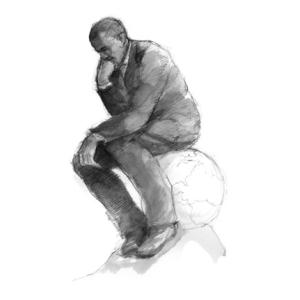
© Paul Tong
Barack Obama won a cinematically stirring election, then took office amid the greatest economic collapse since the Great Depression.
For most new presidents, Franklin Roosevelt comparisons are unfair. In Obama's case, they make plain that -- because of dire times, presidential ambition, and political skill -- he may be a deeply consequential president.
First impressions matter. Obama has glided into the presidency with remarkable panache.
He blithely sheds taboos, from holding a White House Seder to moving to normalize relations with Cuba. He speaks inconvenient truths without getting scalded, as when he admitted America's appetite for illegal drugs was the root of much of Mexico's trouble.
Obama seems born to inhabit the office.
Think of the distance he has traveled in five years, from state senator and law professor. It feels less like passing the baton than breaking the sound barrier. No president since Roosevelt has had a more immediate impact. FDR passed 15 major laws in his first weeks. But budget rules were different then.
Obama's stimulus would have been four or five separate new laws: the biggest infrastructure bill since the 1950s interstate highway system and the biggest tax cut, energy conservation program, and federal education investment ever.
It's hard to escape the feeling that we have entered into a new, unfamiliar epoch.
The past quarter century was marked by free market fundamentalism, widening inequality, and a derogation of government. Historian Sean Wilentz dates the Age of Reagan from 1974 to 2008.
Certainly, Bill Clinton saw himself as a progressive governing a conservative country. But swift economic calamity angrily punctuated that era's end. Indeed, government assumed a more assertive role even in George W. Bush's final months: TARP was enacted, AIG, Fannie Mae, and Freddie Mac were nationalized, and the taxpayers bought much of the banking industry.
Obama has continued to reassert government's invisible hand. Such policy changes ripple outward.
When Ronald Reagan fired the striking air traffic controllers in 1981, it tipped the labor-management balance throughout the economy. Obama's firing of GM CEO Rick Wagoner may also be felt far more widely. As Dorothy might have put it, "Toto, I have a feeling we're not in What's the Matter With Kansas anymore."
Untidy process. Obama displays two surprising weaknesses.
First, there is a mismatch between his bold political intuitions and his technocratic policies.
Even his most ardent supporters couldn't explain the banking or healthcare plans. But history teaches that too complicated policies quickly lose public support. (Jimmy Carter's energy plan, meet Clinton's health plan.) Obama's personal approval may not be enough to rally citizens.
More unexpectedly, he has been needlessly reticent as communicator in chief.
The speech before Congress was magnificent, but the inaugural was flat. His prime-time press conferences were informative but dry.
He has not given a prime-time speech explaining in relaxed and simple terms the crisis's roots in the recent era of reckless deregulation, why a more assertive government is necessary, and what is next.
Interestingly, his most moving explanation of broad themes was not a policy speech but his talk commemorating Abraham Lincoln's birthday. He evoked Lincoln's notion of the union.
"Only by coming together, all of us, and expressing that sense of shared sacrifice and responsibility -- for ourselves and one another -- can we do the work that must be done in this country," he thundered. "That is the very definition of being American."
We haven't heard words like that in prime time-but we should.
Of course, the true test will be the months to come: not simply stemming the emergency, but ensuring it doesn't happen again. At its roots, this economic crisis is political, the product of years of weak public participation, money-dominated politics, and a retreat from the rule of law.
Reform must accompany recovery, in areas ranging from voting rights to curbs on secrecy.
Obama must reshape the courts and ensure that the law again reflects a concern for racial justice. Truly consequential presidents leave major policies and also a legacy of expanded democratic rights and restored confidence in government.
That's an untidy process.
President Obama will spur demands from his supporters and respond to them, creating a revolution of rising expectations.
Doing so, he would ensure something that seemed utterly improbable just a few years ago: that the Age of Reagan is followed by the Age of Obama.
Michael Waldman is director of the Brennan Center for Justice in New York. He was chief speechwriter for Bill Clinton
AMERICAN POLITICS
WORLD | AFRICA | ASIA | EUROPE | LATIN AMERICA | MIDDLE EAST | UNITED STATES | ECONOMICS | EDUCATION | ENVIRONMENT | FOREIGN POLICY | POLITICS
Receive our political analysis by email by subscribing here
© Tribune Media Services