- MENU
- HOME
- SEARCH
- WORLD
- MAIN
- AFRICA
- ASIA
- BALKANS
- EUROPE
- LATIN AMERICA
- MIDDLE EAST
- United Kingdom
- United States
- Argentina
- Australia
- Austria
- Benelux
- Brazil
- Canada
- China
- France
- Germany
- Greece
- Hungary
- India
- Indonesia
- Ireland
- Israel
- Italy
- Japan
- Korea
- Mexico
- New Zealand
- Pakistan
- Philippines
- Poland
- Russia
- South Africa
- Spain
- Taiwan
- Turkey
- USA
- BUSINESS
- WEALTH
- STOCKS
- TECH
- HEALTH
- LIFESTYLE
- ENTERTAINMENT
- SPORTS
- RSS
- iHaveNet.com: Economy
by Amanda Ruggeri
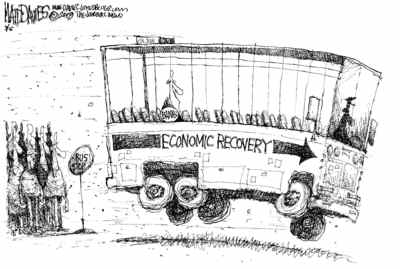
One report shows that the GDP rose about 2.3 percentage points
In Washington, talk of the $787 billion stimulus package has been largely overshadowed by healthcare reform -- a debate that seems to be putting Democrats on the defensive. Yesterday's report by the
First, the good news
While slightly less than a fifth of the stimulus package has been paid out so far, when it comes to gross domestic product, the Council's first quarterly report says that the stimulus package has already provided a bump of about 2.3 percentage points. It's an inexact estimate, since calculating the stimulus' effect on the economy requires predicting what the economy would have done in its absence. But the council's number falls within the range of predictions made by a number of other forecasters. Moody's Economy.com, for example, has asserted that the stimulus pumped up GDP by about 3 percentage points. And, forecasters say, that boost is likely to be even higher in the third quarter, once more projects are underway.
Another note of optimism from the council's report was the job count. Like estimating impact on GDP, counting jobs is not an exact science. And reports from individual agencies on how many people have been hired or retained because of stimulus funding are still being put together. But using both historical data analysis and statistical assessments, the council estimates that the package created or saved 600,000 to 1.1 million jobs in its first six months.
Not everyone is convinced
"How can anyone tell the American people with a straight face that the more than 2 million jobs that have been lost since the stimulus was enacted is actually 1 million jobs 'saved or created'?" Senate Republican Leader Mitch McConnell said in a statement. Still, until recipients of stimulus money provide their own reports on how many jobs they saved or created with funding--which aren't due until next month--there are few other ways to estimate the count.
Meanwhile, the GAO analysis of the stimulus' impact on states showed some of the stimulus' job retention effects in action. For example, most school districts in the 16 states and District of Columbia that the GAO's report covered told officials they would use their state fiscal stabilization funds, which are targeted mainly toward education, to help retain jobs in schools. In the Miami-Dade County area in Florida, the report says, local officials told the GAO that they will be able to save almost 2,000 teaching positions because of the funds. In Mississippi, officials said the funding meant they could undo a planned hiring freeze.
An important note, though, is that even if the stimulus is boosting the economy, that doesn't mean individual projects will have particularly notable results. When it comes to education funding, the GAO report points out that "although school districts are preventing layoffs and continuing to provide educational services with [state fiscal stabilization] funding, most did not indicate that they would use these funds to pursue education reforms." That's because they have too many other obligations, not to mention "lack of guidance from states" and "insufficient planning time," the report says.
And it's not just schools that are using stimulus funds to simply try to maintain the status quo, rather than launching far-reaching projects. Much has been made, for example, of what effects the package's $28 billion in transportation funding could have on American infrastructure. But the need for speed and creating jobs immediately was always going to hamper the abilities of officials to launch transformational projects. Sure enough, the GAO report finds that nearly half of transportation funding that's been allocated is going to pavement improvement projects, like resurfacing highways.
© U.S. News & World Report
WORLD | AFRICA | ASIA | EUROPE | LATIN AMERICA | MIDDLE EAST | UNITED STATES | ECONOMY | EDUCATION | ENVIRONMENT | FOREIGN POLICY | POLITICS
Economy: Reports Show Mixed Results for Obama's Stimulus