- MENU
- HOME
- SEARCH
- WORLD
- MAIN
- AFRICA
- ASIA
- BALKANS
- EUROPE
- LATIN AMERICA
- MIDDLE EAST
- United Kingdom
- United States
- Argentina
- Australia
- Austria
- Benelux
- Brazil
- Canada
- China
- France
- Germany
- Greece
- Hungary
- India
- Indonesia
- Ireland
- Israel
- Italy
- Japan
- Korea
- Mexico
- New Zealand
- Pakistan
- Philippines
- Poland
- Russia
- South Africa
- Spain
- Taiwan
- Turkey
- USA
- BUSINESS
- WEALTH
- STOCKS
- TECH
- HEALTH
- LIFESTYLE
- ENTERTAINMENT
- SPORTS
- RSS
- iHaveNet.com
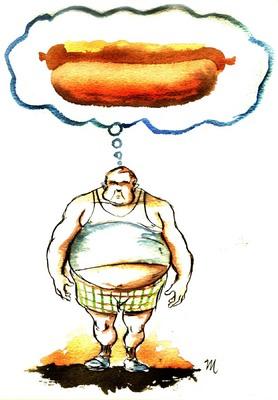
We're still getting fatter, albeit at a slightly slower rate.
That's the chief takeaway from a yearly report on the U.S. obesity epidemic, which found that rates of obesity rose in 23 states (last year, rates rose in 37 states). Almost two thirds of states now have adult obesity rates above 25 percent, according to the report, which was produced by the Trust for America's Health and the Robert Wood Johnson Foundation.
Obesity is defined as a body mass index, or BMI, of more than 30, which translates to upwards of 197 pounds on a 5-foot, 8-inch person.
Some other themes gleaned from the report:
The South is a trouble spot.
Mississippi tops the list of fat states, with an obesity rate of 32.5 percent. Eight of the 10 states with the highest rates are in the South, and those states also rank high in physical inactivity and in rates of adult diabetes and hypertension.
It's a similar story among children; the percentage of obese and overweight (a larger category encompassing BMIs of 24.9 and up) 10-to-17-year-olds in Mississippi is 44.4 percent.
Exercise and obesity don't always move in tandem.
You might imagine that the least obese states would also be the most physically active, and vice versa. Not necessarily so. It is true that eight of 10 states with the highest rates of inactivity are also on the most obese list. But New Jersey is actually on both the least active and lowest obesity lists. (Perhaps they don't eat much in Jersey?)
And only four states -- Colorado, Hawaii, Vermont, and Utah -- are on both the lowest obesity and most active lists, suggesting exercise is not the dominant or sole variable in weight status.
Things are looking up in schools.
One bright spot pointed out by the report is that 19 states now set school nutritional standards that are more stringent than the federal government's requirements. More states are setting standards not just for cafeteria meals but also for the individual snacks and drinks sold in vending machines and school stores.
The report also praises 30 states for having a snack tax and four for enacting menu-labeling legislation. Food at school is important; research suggests that overeating is the key reason kids are overweight.
But kids still need to move more.
Less than one third of all kids between the ages of 6 and 17 engage in regular vigorous physical activity, defined as 20 minutes at a time of exercise intense enough to cause sweating and heavy breathing. While exercise is no guarantee of a healthy weight, it has been shown to have a host of other health benefits.
The economy has a role.
The report's authors say obesity rates are likely to "grow even more in the next year due to the economic downturn."
Food prices are going up, and nutritious foods are often much more expensive than empty calories. And when folks are stressed and budgets are stretched, physical activity may be the first thing to go.
Things are even worse for the Americans for whom poverty is a constant; poorer neighborhoods have fewer grocery stores and fewer areas for kids to play safely.
The report says seven of the states with the highest poverty rates are also among the top 10 for obesity.