- MENU
- HOME
- SEARCH
- WORLD
- MAIN
- AFRICA
- ASIA
- BALKANS
- EUROPE
- LATIN AMERICA
- MIDDLE EAST
- United Kingdom
- United States
- Argentina
- Australia
- Austria
- Benelux
- Brazil
- Canada
- China
- France
- Germany
- Greece
- Hungary
- India
- Indonesia
- Ireland
- Israel
- Italy
- Japan
- Korea
- Mexico
- New Zealand
- Pakistan
- Philippines
- Poland
- Russia
- South Africa
- Spain
- Taiwan
- Turkey
- USA
- BUSINESS
- WEALTH
- STOCKS
- TECH
- HEALTH
- LIFESTYLE
- ENTERTAINMENT
- SPORTS
- RSS
- iHaveNet.com: Health
Could Cigarette Smoking Ever Get Safer
Linda Geddes, New Scientist Magazine
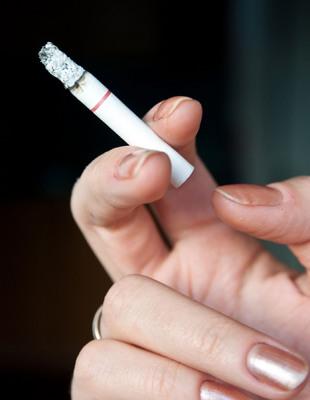
Tobacco companies have begun "clinical trials" to assess whether a range of prototype "safer cigarettes" really do slash levels of toxic
chemicals entering the body. The job of regulating any health claims firms might want to make for these cigarettes, or restricting whether
they bring such products onto the market at all, has been handed over to the
Allowing the
"What I hope it will do is make it harder for tobacco companies to market products without some evidence that they are likely to reduce the death and disease associated with smoking," says Thomas Eissenberg, a drug dependence researcher at
However, anti-smoking campaigners question whether such products should ever find their way to market. "I would be extremely skeptical of any attempt to produce healthy cigarettes," says Deborah Arnott of anti-smoking charity ASH-UK. "The conclusion we have reached is that it's really difficult to do anything to significantly reduce the harm caused by cigarettes."
Many tobacco companies across the world are already pinning their hopes of future growth on the development of so-called "potentially reduced exposure products." These include a type of powdered tobacco called snus, e-cigarettes and so-called "reduced harm" cigarettes containing lower levels of toxicants and modified filters.
Meanwhile, the prospect of having their claims vetted by government is prompting companies to devise new, more accurate ways to test the health impact of cigarettes.
Traditionally, tobacco companies look at the chemical composition of tobacco and the smoke it produces when drawn through a "smoking machine" to assess its potential for harm. But machines don't reflect the way real people smoke -- smokers often puff harder on "low-tar" cigarettes to get the same experience of smoking, for example.
"Machine measurements do not reflect what any individual, let alone a population of smokers gets from a cigarette," says David O'Reilly, head of public health and scientific affairs at
So companies are now searching for new ways to assess a person's exposure to the toxicants in smoke. The most promising approach is to look for biomarkers such as the carcinogen pyrene in body fluids like urine.
"Development of biomarkers is critical for assessment of tobacco products," says Dorothy Hatsukami of the
So far BAT has identified several biomarkers which it is using to compare the amounts of toxicants smokers get from conventional cigarettes against prototype cigarettes which have been modified to be less harmful. A pilot study looked at concentrations of nicotine metabolites and three toxicants -- NNK, acrolein and pyrene -- in the urine of 150 smokers, with 50 non-smokers as controls. It found that urine levels correlated with those in the filters of the cigarettes the volunteers smoked (Regulatory Toxicology and Pharmacology). This is proof of the principle that it is possible to work out from urine samples whether a potentially safer cigarette exposes smokers to lower levels of damaging chemicals.
BAT now started a trial in which 250 smokers are either given conventional cigarettes, prototype cigarettes, or asked to quit smoking. The study will compare the levels of biomarkers in urine to see whether people smoking modified cigarettes are exposed to lower levels of toxicants or not.
Meanwhile, U.S. tobacco giant
Can we trust such claims?
"If they come up with a biomarker of risk or exposure I think we'd be silly not to be extremely interested in it," Eissenberg says. "But we would have to independently verify it -- simply because there isn't the level of trust for us to accept that."
Even if that happens, researchers will then have to correlate how levels of exposure, as measured through biomarkers, relate to the risk of developing smoking-related diseases. To work this out will mean running longer-term trials in which smokers of conventional and reduced-risk products are followed to see how many them go on to become ill.
It's not simply a matter of tobacco companies proving that their cigarettes reduce the risk of cancer, says Hatsukami.
"You don't want a product that decreases your risk of cancer but increases your risk of pulmonary disease." What's needed are biomarkers for a wide range of diseases, she says.
What everyone does agree on is the need for some kind of regulation.
Eissenberg points out that there may be another, more cynical reason to give tobacco companies a second chance.
"I think that there are some very smart people in the tobacco industry who have realized that if their customer base lives until they're 80 instead of dying when they're 60, then they're going to make a lot more money," he says.
A GUIDE TO CIGARETTE ALTERNATIVES
Reduced toxicant cigarettes
Several tobacco companies are creating cigarettes with a combination of modified filters and new blends of tobacco in the hope of lowering amounts of carcinogens and other toxicants per unit of tar.
Warning: Deborah Ashby of anti-smoking charity ASH-UK points out that while Canadian tobacco contains lower levels of carcinogenic nitrosamines than other countries, death rates from smoking in Canada don't differ significantly.
E-cigarettes
Electronics company Ruyan of Beijing, China, has come up with a battery-powered electronic device that delivers nicotine when you puff on it. Ruyan says it sold over 300,000 e-cigarettes in 2008, and Smart Smokers, which sells Ruyan's cigarettes in the UK, says sales are increasing exponentially.
Warning: David Burns of the
Snus
Long-favored by Scandinavians seeking a nicotine fix, snus is a moist form of powdered tobacco, which releases nicotine when placed under the upper lip. Advocates believe snus could provide a safer alternative to cigarettes if smokers can be persuaded to switch, although its sale is banned in many countries, including much of Europe.
Warning: Although less dangerous than smoking, several studies have suggested that snus use increases the risk of mouth and pancreatic cancer.
© NEW SCIENTIST MAGAZINE. REED BUSINESS INFORMATION LTD. ALL RIGHTS RESERVED. DISTRIBUTED BY TRIBUNE MEDIA SERVICES, INC.
AGING | ALTERNATIVE | AILMENTS | DRUGS | FITNESS | GENETICS | CHILDREN'S | MEN'S | WOMEN'S
Health: Could Cigarette Smoking Ever Get Safer