- MENU
- HOME
- SEARCH
- WORLD
- MAIN
- AFRICA
- ASIA
- BALKANS
- EUROPE
- LATIN AMERICA
- MIDDLE EAST
- United Kingdom
- United States
- Argentina
- Australia
- Austria
- Benelux
- Brazil
- Canada
- China
- France
- Germany
- Greece
- Hungary
- India
- Indonesia
- Ireland
- Israel
- Italy
- Japan
- Korea
- Mexico
- New Zealand
- Pakistan
- Philippines
- Poland
- Russia
- South Africa
- Spain
- Taiwan
- Turkey
- USA
- BUSINESS
- WEALTH
- STOCKS
- TECH
- HEALTH
- LIFESTYLE
- ENTERTAINMENT
- SPORTS
- RSS
- iHaveNet.com
Danielle Arnet
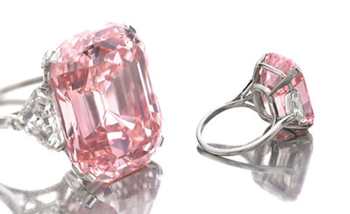
25 carat rare intense pink diamond
This rare intense pink diamond of almost 25 carats brought $46.2 million recently at Sotheby's
Q: My family describes the set of 12 individual, lead crystal saltcellars we inherited as heirlooms that traveled to America on the Mayflower. Supposedly, they came with the White family, whose son, Peregrine, was the first child born to Pilgrims in the New World.
A: The writer expresses doubts about the saltcellars, and wonders if the Mayflower conjecture could be "years of family lore." She adds that she bears the family name, "White." That goes a long way toward explaining the lure of the lore.
If all that's claimed to have come with the Mayflower actually did, the ship could never have left the harbor! The cachet of Mayflower provenance seems to be deeply regional; I'm sure this is not the only family with a Mayflower story.
To clue readers on saltcellars, we need to explain that salt has a long history of cultural, religious and economic importance. Presentation at the table was important until very recently. As a result, small salts or saltcellars (containers for the table) were produced in a vast array, from Sandwich glass to Steuben's Aurene, as a variety of art glass including Burmese, in silver or enamels, as Quimper and other pottery -- you name it.
Collecting salts is very popular,, and many collectors amass large numbers.
We know nothing about the writer's salts. Are they open or covered? Are they molded or blown? Footed or flat? And so on.
It would be beyond astounding to have 12 matching open salts survive from that long ago.
Early European salts were usually fancy or art glass, sometimes set in a precious metal frame. Blown by major glassmakers, they were rare and expensive, as befitting the contents.
Sometime between 1765 and 1825, an early glass house in New England began making molded flint glass footed table salts. The technique exploded, leading to products by the prolific Boston and
Many types of clear glass molded, cut, or pressed salts date from after that period. And many, many others are later copies.
Considering all that, lore seems to win. If you want a definitive answer, professional appraisal will settle the issue.
FYI: "The Open Salt Compendium," by Sandra Jzyk and Nina Robertson (Schiffer, $79.95) is an excellent visual reference to the immense variety of open salts.
Q: I picked this up at a thrift shop years ago. It's a cookie jar. What is its value? It's very light.
A: The white molded ceramic pot with lid is not a cookie jar, but a decorative molded ceramic pot with a fish theme. As the bottom mark indicates, it was made in Portugal. It fits the category of giftware, and value is minimal.
AUCTION ACTION: The extremely fine pink diamond that recently sold for $46.4 million at Sotheby's Geneva is unique for its pure pink color, because it weighs close to 25 carats, and because it is GIA graded in a class that applies to fewer than 2 percent of all of the world's gem diamonds. The stone may be potentially flawless after repolishing. It is an emerald cut, sought in unusual color diamonds, and it has slightly rounded corners that soften the stone. Flanked by shield-shaped diamonds and set in platinum, the stone was bought by jeweler Laurence Graff, known for his pursuit of remarkable diamonds. Last on the market 60 years ago, the diamond was originally bought from Harry Winston himself.
COLLECTOR QUIZ:
Q: One of these art glass techniques was not used on salts. Which one?
a. Pate de verre
b. Quezal
c. Crackle glass
d. Mary Gregory
e. Intaglio
A: The answer is d. Mary Gregory types exist (origin of those salts is almost certainly Bohemia) but they are not true Mary Gregory.
WORLD | AFRICA | ASIA | EUROPE | LATIN AMERICA | MIDDLE EAST | UNITED STATES | ECONOMICS | EDUCATION | ENVIRONMENT | FOREIGN POLICY | POLITICS
Collecting - Did Saltcellars Come Over On the Mayflower? Probably Not