- MENU
- HOME
- SEARCH
- WORLD
- MAIN
- AFRICA
- ASIA
- BALKANS
- EUROPE
- LATIN AMERICA
- MIDDLE EAST
- United Kingdom
- United States
- Argentina
- Australia
- Austria
- Benelux
- Brazil
- Canada
- China
- France
- Germany
- Greece
- Hungary
- India
- Indonesia
- Ireland
- Israel
- Italy
- Japan
- Korea
- Mexico
- New Zealand
- Pakistan
- Philippines
- Poland
- Russia
- South Africa
- Spain
- Taiwan
- Turkey
- USA
- BUSINESS
- WEALTH
- STOCKS
- TECH
- HEALTH
- LIFESTYLE
- ENTERTAINMENT
- SPORTS
- RSS
- iHaveNet.com: Politics
by James P. Pinkerton
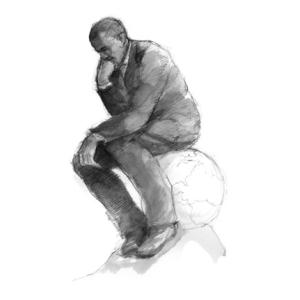
© Paul Tong
President Obama might be modeling his presidency after Franklin D. Roosevelt's.
In hard times, most Democrats think fondly of the New Deal -- certainly Obama's media fans are making the connection -- but thus far, he is shaping up less like the 32nd president and more like the 18th, Ulysses S. Grant.
Little that we have seen in his first months suggests that the 44th president sees the danger of overreliance on high finance. Yet in the Grant administration, it was wheeling, dealing, and outright corruption that plagued the nation and besmirched the incumbent. And now that trillions are sloshing up and down K Street, the same muckraked fate looms for the Obama administration.
After being inaugurated in 1933, Roosevelt proclaimed, "The money changers have fled from their high seats in the temple of our civilization." This wasn't just aspirational rhetoric; it was directional policy.
So FDR closed the banks, temporarily, and drafted legislation that led to major changes in the regulation of not only banks but also stock brokerages and utilities. Indeed, all of corporate America was transformed.
In his inaugural address, Obama attacked "greed and irresponsibility," adding that sometimes "the market can spin out of control." But few will remember those words, because it's unlikely that anyone will remember Obama as a financial reformer.
If anything, the financiers are more solidly in charge now than they were during George W. Bush's presidency, when the New York Times declared that "Government Sachs" was a reality.
Today, such figures as Timothy Geithner, Lawrence Summers, and Steven Rattner are accelerating the Bush era's finance-favorable policies, piling bailout on top of bailout.
Even nonfinancial policies are being drafted to serve Wall Street; the "cap and trade" greenhouse gas proposal, for example, would do more to boost the bottom line of neo-Enron-esque pollution mongers than to reduce carbon dioxide.
Wall Street influence. How did this happen?
As economist Simon Johnson observed recently, "A whole generation of policymakers has been mesmerized by Wall Street." And now Obama seems similarly ensorcelled. Johnson, a former chief economist for the International Monetary Fund, writes in the Atlantic that America is descending into the financial vortex that Russia, Argentina, and Thailand plummeted into back in the '90s.
How so?
The same insiders and self-dealers who created the crisis "are now using their influence to prevent precisely the sorts of reforms that are needed." And yet, he adds, "the government seems helpless, or unwilling, to act against them." That "quiet coup," Johnson warns, could turn America into a "banana republic."
Meanwhile, out beyond the Bailout Cities of Washington and New York, times are hard and getting harder.
Unemployment is rising. Off the top of one's head, it's possible to think of three ways to put people back to work. The first, of course, is the orderly functioning of the free market. But when that fails, government jobs are a proven expedient. A third possibility, simply giving money to banks in the hopes that they will lend money and create employment -- after the bankers pay themselves their bonuses, of course -- is the worst option.
After all, in this globalized, funds-are-fungible world, why shouldn't the banks use their bailout money to create jobs in China, India, or Dubai?
In fact, that's exactly what they have done, according to a congressional study by Ohio Democratic Rep. Dennis Kucinich.
By contrast, FDR took on unemployment directly.
By January 1934, Uncle Sam had hired 4.25 million Americans, some 8 percent of the U.S. workforce. That's the history Obama should study.
But since he seems unaware of a non-trickle-down approach to recovery, Obama, like Grant before him, is easy prey for the finance-minded sharpies infesting his administration. Nobody's accusing him of any personal foibles, but few accused Grant of personal wrongdoing, either. His problem was that his economic vision seemed limited to railroad men and land speculators; similarly, Obama's inbox is filled with briefing papers from the once-and-future Wall Streeters who dominate his economic team.
But the Grant precedent isn't all bad for Obama.
Scandals and all, Grant was easily re-elected. And like any new president, Obama has deep reserves of goodwill nationally -- at least until a real crisis tests him.
The new president aced his Somali pirates pop quiz, but his larger foreign policy theme, apologizing for America's alleged misdeeds, is risky:
Such international hair-shirting will soon wear thin with Middle Americans.
And if the debt-ridden contours of his domestic policy are all too clear, we have yet to see how he will handle a foreign conundrum that he can't (a) throw money at or (b) apologize for.
James P. Pinkerton served in the Ronald Reagan and George H.W. Bush White Houses and contributes regularly to Fox News
AMERICAN POLITICS
WORLD | AFRICA | ASIA | EUROPE | LATIN AMERICA | MIDDLE EAST | UNITED STATES | ECONOMICS | EDUCATION | ENVIRONMENT | FOREIGN POLICY | POLITICS
Receive our political analysis by email by subscribing here
© Tribune Media Services