iHaveNet.com
New View of Ronald Reagan and End of the Cold War | Jules Witcover
Your Single Source to Current Events, News Analysis & Reviews.
  • HOME
  • WORLD
    • Africa
    • Asia Pacific
    • Balkans
    • Caucasas
    • Central Asia
    • Eastern Europe
    • Europe
    • Indian Subcontinent
    • Latin America
    • Middle East
    • North Africa
    • Scandinavia
    • Southeast Asia
    • United Kingdom
    • United States
    • Argentina
    • Australia
    • Austria
    • Benelux
    • Brazil
    • Canada
    • China
    • France
    • Germany
    • Greece
    • Hungary
    • India
    • Indonesia
    • Ireland
    • Israel
    • Italy
    • Japan
    • Korea
    • Mexico
    • New Zealand
    • Pakistan
    • Philippines
    • Poland
    • Russia
    • South Africa
    • Spain
    • Taiwan
    • Turkey
    • United States
  • USA
    • ECONOMICS
    • EDUCATION
    • ENVIRONMENT
    • FOREIGN POLICY
    • POLITICS
    • OPINION
    • TRADE
    • Atlanta
    • Baltimore
    • Bay Area
    • Boston
    • Chicago
    • Cleveland
    • DC Area
    • Dallas
    • Denver
    • Detroit
    • Houston
    • Los Angeles
    • Miami
    • New York
    • Philadelphia
    • Phoenix
    • Pittsburgh
    • Portland
    • San Diego
    • Seattle
    • Silicon Valley
    • Saint Louis
    • Tampa
    • Twin Cities
  • BUSINESS
    • FEATURES
    • eBUSINESS
    • HUMAN RESOURCES
    • MANAGEMENT
    • MARKETING
    • ENTREPRENEUR
    • SMALL BUSINESS
    • STOCK MARKETS
    • Agriculture
    • Airline
    • Auto
    • Beverage
    • Biotech
    • Book
    • Broadcast
    • Cable
    • Chemical
    • Clothing
    • Construction
    • Defense
    • Durable
    • Engineering
    • Electronics
    • Firearms
    • Food
    • Gaming
    • Healthcare
    • Hospitality
    • Leisure
    • Logistics
    • Metals
    • Mining
    • Movie
    • Music
    • Newspaper
    • Nondurable
    • Oil & Gas
    • Packaging
    • Pharmaceutic
    • Plastics
    • Real Estate
    • Retail
    • Shipping
    • Sports
    • Steelmaking
    • Textiles
    • Tobacco
    • Transportation
    • Travel
    • Utilities
  • WEALTH
    • CAREERS
    • INVESTING
    • PERSONAL FINANCE
    • REAL ESTATE
    • MARKETS
    • BUSINESS
  • STOCKS
    • ECONOMY
    • EMERGING MARKETS
    • STOCKS
    • FED WATCH
    • TECH STOCKS
    • BIOTECHS
    • COMMODITIES
    • MUTUAL FUNDS / ETFs
    • MERGERS / ACQUISITIONS
    • IPOs
    • 3M (MMM)
    • AT&T (T)
    • AIG (AIG)
    • Alcoa (AA)
    • Altria (MO)
    • American Express (AXP)
    • Apple (AAPL)
    • Bank of America (BAC)
    • Boeing (BA)
    • Caterpillar (CAT)
    • Chevron (CVX)
    • Cisco (CSCO)
    • Citigroup (C)
    • Coca Cola (KO)
    • Dell (DELL)
    • DuPont (DD)
    • Eastman Kodak (EK)
    • ExxonMobil (XOM)
    • FedEx (FDX)
    • General Electric (GE)
    • General Motors (GM)
    • Google (GOOG)
    • Hewlett-Packard (HPQ)
    • Home Depot (HD)
    • Honeywell (HON)
    • IBM (IBM)
    • Intel (INTC)
    • Int'l Paper (IP)
    • JP Morgan Chase (JPM)
    • J & J (JNJ)
    • McDonalds (MCD)
    • Merck (MRK)
    • Microsoft (MSFT)
    • P & G (PG)
    • United Tech (UTX)
    • Wal-Mart (WMT)
    • Walt Disney (DIS)
  • TECH
    • ADVANCED
    • FEATURES
    • INTERNET
    • INTERNET FEATURES
    • CYBERCULTURE
    • eCOMMERCE
    • mp3
    • SECURITY
    • GAMES
    • HANDHELD
    • SOFTWARE
    • PERSONAL
    • WIRELESS
  • HEALTH
    • AGING
    • ALTERNATIVE
    • AILMENTS
    • DRUGS
    • FITNESS
    • GENETICS
    • CHILDREN'S
    • MEN'S
    • WOMEN'S
  • LIFESTYLE
    • AUTOS
    • HOBBIES
    • EDUCATION
    • FAMILY
    • FASHION
    • FOOD
    • HOME DECOR
    • RELATIONSHIPS
    • PARENTING
    • PETS
    • TRAVEL
    • WOMEN
  • ENTERTAINMENT
    • BOOKS
    • TELEVISION
    • MUSIC
    • THE ARTS
    • MOVIES
    • CULTURE
  • SPORTS
    • BASEBALL
    • BASKETBALL
    • COLLEGES
    • FOOTBALL
    • GOLF
    • HOCKEY
    • OLYMPICS
    • SOCCER
    • TENNIS
  • Subscribe to RSS Feeds EMAIL ALERT Subscriptions from iHaveNet.com RSS
    • RSS | Politics
    • RSS | Recipes
    • RSS | NFL Football
    • RSS | Movie Reviews

ECONOMICS | EDUCATION | ENVIRONMENT | FOREIGN POLICY | POLITICS | OPINION | TRADE

U.S. CITIES:  

HOME > USA

New View of Ronald Reagan and End of the Cold War
Jules Witcover


Jack Kemp 1935 - 2009  | Republican Leaders Debate Reagan's Relevance
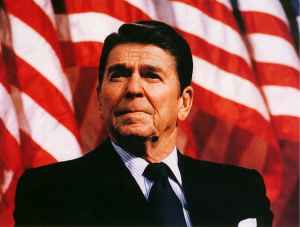
Ronald Reagan (February 1911 – June 2004)
40th President of the United States

SocialTwist Tell-a-Friend

Ever since Ronald Reagan left the White House in 1989, it has been debated whether he was indeed responsible for the collapse of the Soviet Union, or whether it just happened after his watch.

The first major indication of the crumbling empire came less than ten months after Reagan departed office with the fall of the Berlin Wall on November 9, 1989. That was roughly 18 months after Reagan went to the Brandenburg Gate and demanded that Soviet leader Mikhail Gorbachev "tear down this wall."

Reaganites point to the event in claiming their hero's buildup of American defenses, and particularly his pursuit of a costly missile defense system, ultimately bankrupted the Soviet Union in its efforts to keep pace. But critics and many Russian scholars say the regime eventually collapsed of its own economic and ideological unsustainability.

Author James Mann, who in his excellent book "Rise Of The Vulcans: The History of Bush's War Cabinet" first alerted readers to the George W. Bush embrace of neo-conservatism that produced his invasion of Iraq, has now turned his informed eye to Reagan as the supposed architect of the Soviet fall.

In "The Rebellion of Ronald Reagan: A History of the End of the Cold War," Mann makes a persuasive case that the man once disparaged as "an amiable dunce" by Democratic wise man Clark Clifford actually did have a part, intentionally or otherwise, in that great Soviet disintegration. .

Mann argues that Reagan, for all his casual and supposedly malleable persona, did perceive Gorbachev's recognition of his own country's internal weakness and corruption, and his attempts to set it on a more conciliatory path toward the West, the United States particularly.

Despite Reagan's first-term belligerent talk of "evil empire," Mann notes, upon meeting Gorbachev in Geneva in 1985 and at Reykjavik a year later he saw in him the beginnings of a serious quest toward nuclear arms control. It was dismissed at the time, Mann says, by Richard Nixon, with whom Reagan met secretly, and Henry Kissinger.

At the same time, he writes, Reagan was "horrified by the possibility of nuclear war," and that "doomsday exercises of the early 1980s" that Mann uncovered "may have scared Reagan into trying to change American policy" in his second term, prodding "military and defense officials to accept cutbacks in nuclear weapons and ballistic weapons."

Ronald Reagan comes through as a conservative leader who, behind his combative rhetoric and advisers frozen in Cold War thinking, saw and encouraged the possibilities for lowering the temperature in Gorbachev's policies toward the Soviet satellite states, and in his personal contacts with the man.

Days after the Senate ratified the Intermediate Nuclear Forces Treaty in 1988, Reagan in a visit to Moscow declared that in his earlier description of the Soviet Union as an evil empire he "was talking about another time and another era." The fall of the Berlin Wall the next year with no resistance or displeasure from Gorbachev confirmed it.

Mann writes that although Reagan's first-term aggressiveness may have had "a long-term effect on the Soviet economy that might have eventually led to the country's disintegration ... there is little evidence that the American actions brought down the Soviet regime."

The Soviet economy, he writes, "was foundering because of deep-seated and chronic problems that had nothing to do with the Reagan administration's policies. Although the Soviet system was in decline, it was not headed toward a collapse, and Reagan's first-term policies, including the defense buildup and the covert-action programs, did not cause the collapse."

Rather, Mann writes, "the proximate cause ... was Gorbachev himself," in his decision "not to intervene in Eastern Europe in 1989" and in his "partially democratized" domestic reforms that nevertheless left the Communist Party and KGB in place.

Still, he says: "Reagan's willingness to do business with Gorbachev gave the Soviet leader the time and space he needed to demolish the Soviet system. ... Gorbachev existentially destroyed the Soviet system. Reagan gave him the help he needed to do it."

That conclusion alone, however, casts Clark Clifford's "amiable dunce" in a considerably more favorable light for history's judgment.


Read the latest political news.

Available at Amazon.com:

Rise Of The Vulcans: The History of Bush's War Cabinet

The Rebellion of Ronald Reagan: A History of the End of the Cold War


SocialTwist Tell-a-Friend


  • Why 2010 Congressional Elections Won't Repeat 1994
  • Critics Say Obama Lacks Emotion
  • Dick Cheney's War on Obama
  • Meet the Real Barack Obama: Inside Obama's Brain
  • Obama Has Failed His Words
  • Resolved: Tell the Truth
  • Senate Health Care Bill: Leave No Special Interest Behind
  • Jesus the Socialist
  • Year of Living Quotably: Quirky Quotes 2009
  • 2009: The Things I Want to Forget
  • Kathleen Kennedy Townsend vs. Catholic Church on Health Reform
  • End of a Woeful Decade
  • Northwest Flight 253: Targeting the Prime Enemy
  • Avatar and the Faith Instinct

Receive Political Commentary Enter your email address:


Delivered by FeedBurner and iHaveNet.com

New View of Ronald Reagan and End of the Cold War | Jules Witcover


(c) 2009 U.S. News & World Report


ADVERTISEMENT

Advertisement

Search Powered By Google

Google Search   

Job & Career Search

career & job search                    job title, keywords, company, location

POLITICS

Subscribe to Politics

Delivered by FeedBurner


Political Commentary

Advertisement

ADVERTISEMENT

  • HOME
  • WORLD
  • USA
  • BUSINESS
  • WEALTH
  • STOCKS
  • TECH
  • HEALTH
  • LIFESTYLE
  • ENTERTAINMENT
  • SPORTS

New View of Ronald Reagan and End of the Cold War | Jules Witcover

  • Services:
  • RSS Feeds
  • Shopping
  • Email Alerts
  • Site Map
  • Privacy