- MENU
- HOME
- SEARCH
- WORLD
- MAIN
- AFRICA
- ASIA
- BALKANS
- EUROPE
- LATIN AMERICA
- MIDDLE EAST
- United Kingdom
- United States
- Argentina
- Australia
- Austria
- Benelux
- Brazil
- Canada
- China
- France
- Germany
- Greece
- Hungary
- India
- Indonesia
- Ireland
- Israel
- Italy
- Japan
- Korea
- Mexico
- New Zealand
- Pakistan
- Philippines
- Poland
- Russia
- South Africa
- Spain
- Taiwan
- Turkey
- USA
- BUSINESS
- WEALTH
- STOCKS
- TECH
- HEALTH
- LIFESTYLE
- ENTERTAINMENT
- SPORTS
- RSS
- iHaveNet.com: Politics
by Mortimer B. Zuckerman
© Paul Tong
President Franklin D. Roosevelt inspired the standard test for a new president.
In the famous first 100 days, inheriting a nation in a crisis even graver than ours, he saved the banks and got no fewer than 15 historic bills through Congress.
Those 100 days set the rhythm for the rest of FDR's first term: constant action, experimentation, and a dramatic expansion of the federal government he called the New Deal.
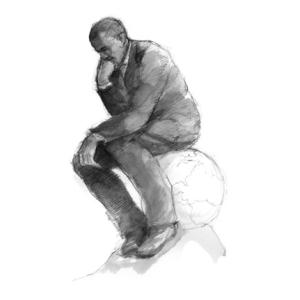
How shall we mark President Obama's 100-day report card?
The first thing that can be said is that President Obama is no longer the first black president.
He is the president; he has shed his skin and will be tested by policies, not pigmentation. He has clearly been popular enough, with an approval rating of over 60 percent so far. He has dominated the news, appearing on television in one form or another virtually every day. He has conveyed an unflappability -- a calmness and coolness under fire -- along with a seriousness and freshness of purpose. He has displayed a fluency of language that captures the intelligence and lucidity voters acknowledged when they elected him.
He is now trusted by the people to explain what has to be explained as he leads us through a painful journey from the familiar to the unknown.
His spontaneous clarity and articulation stand in contrast to his predecessor, even though Obama still lacks the great lines, the catchphrase, or even the humor that would help communicate the complexities of our predicaments.
We are certainly getting words, lots of them, in what has seemed to be a perpetual political campaign, so much so that on occasion he seems to be a rock star rather than the CEO of the world.
Still early.
But the romance of campaigning is over, and we have to deal with real-life problems and the hangover of the deeply unpopular Bush administration, a political fact that, if anything, has helped Obama. "Yes, we can," he has said, and Americans repeat this mantra. The question remains, can he? He had a great start when he surrounded himself with people of talent who are professional, experienced, and comfortable with one another--and apparently can engage in open and candid conversation with the boss. His staff has proved able to move rapidly in the immediate crisis and, simultaneously, launch ambitious long-term efforts without much confusion or conflict.
The result is a president who not only seems to be in charge but seems to have mastered the management of the presidency, a critical ingredient for a chief executive.
We want our president to succeed.
We want a presidency that works; we know we cannot afford a failed president. So politically, he has the wind at his back. But as Nelson Mandela once said, "There is no easy walk to freedom." The public understands this, and if there is a danger for the president, it is that there is often a gap between his rhetoric and his politics. He seems to trust his powerful rhetoric to obscure what he sometimes is or is not doing. So our faith in the future has not yet been fully restored nor our confidence rebuilt, for this will take place only when there is a sense that the Obama policies have been solidly grounded.
Obama's major hurdle is the collapse of the financial system. Without mending that, our economy will continue to flounder and unemployment rise: The gross national product grew markedly under FDR, but five years into the New Deal, 10 million people (19 percent of the workforce) were out of work. Obama is to be commended for losing no time with his $787 billion stimulus plan, a bank financial restructuring package, a massive expansion of the role of the Federal Reserve Board, and housing recovery measures. On top of all that, he introduced an ambitious budget containing fundamental changes intended to transform and reform American capitalism and American values.
Americans judge that Obama has the right priorities: More than 90 percent consider the economy to be the most important issue. No wonder. Sixty-five percent say it is difficult for them and their families to get ahead. Clearly, the economy presents the president and his party with the opportunity to establish a Democratic era. At the same time, they cannot stumble on this, for if they do, their political capital will erode and the party will be vulnerable during the midterm congressional elections.
The stakes could not be higher.
Millions of people are jobless, billions of dollars are now dedicated to recovery, and trillions of dollars of additional U.S. debt loom.
The stimulus program was introduced without delay, but it also demonstrated a troubling lack of political experience and toughness. It was fiercely partisan, attracting only three Republican votes in the Senate and none in the House. It gave the vastly weakened Republican Party the leverage to launch an aggressive attack, magnified by a 24-hour news cycle that focuses on sharpening differences. And yet the stimulus itself was substantially weaker than what is likely to be necessary. Too much of it applies to extended programs that will take effect too late, indeed after 2010. Just last week the Government Accountability Office reported that only a small proportion of the funds, $49 billion, would go out to the states and communities by September 30, and two thirds of that is for state Medicaid programs to maintain coverage and for preventing layoffs. The rest is for slow-starting state budgets and transportation infrastructure programs, with $108 billion to be disbursed in fiscal 2010 and $123 billion more to trickle out in the years to follow. A similar delay in delivery of dollars impeded the efforts of both Herbert Hoover and FDR.
Achilles' heel.
So Obama's program is simply inadequate to address the trillion-dollar-plus hole in national demand (in 2009 alone) that comes from declines in consumer spending, investment spending, and exports. This is the Achilles' heel of his presidency, threatening disillusion. He will be blamed for overreaching, spending political and monetary capital on issues like healthcare and energy rather than concentrating on three clear priorities: recovery, recovery, recovery. It will not easily be forgotten that the stimulus package and the budget package both contained thousands of earmarks and pork to placate members of Congress--something that he had promised he would no longer tolerate. But Obama let them get away with it. Moreover, his budget (and the stress tests for the banks) have lost credibility because of their wildly optimistic assumptions about long-term economic growth and the cost of the programs, raising fears that the fiscal deficits necessary for recovery will be bloated by dubious and even partisan policies. The partisan gap is manifest in the difference between the high approval by the president's political base (over 90 percent) and the low approval from the opposition party--the biggest gap for any president since the end of World War II.
Obama's rationale for dealing now with long-term problems such as healthcare and energy is that this is the moment to do it or, as some of his advisers have put it, let's not waste a good crisis. But programs of this scale have in the past defeated much less overburdened administrations. Given that the programs have little to do with the short-term financial and economic crisis, they risk overloading the system and the ability of the public to cope.
Many administrations are lucky to do one thing at a time, never mind two. But winning the economic war will be tougher when you are trying to jam a whole bunch of bills through Congress, particularly when they involve a huge expansion of federal spending. Franklin Roosevelt's big mistake early on was to create the National Recovery Administration. It was meant to stimulate business and labor in new endeavors, but he had too much on his plate. The act was not thought through and flopped in a torrent of bureaucratic regulations discouraging to enterprise and threatening to individual liberties.
So far, concerns over Obama's policies have not translated into a loss of public support despite the rise in the numbers out of work. But how long will the public be patient? The danger sign is that 53 percent of Americans believe his policies have not yet improved the economy; 26 percent say they have made conditions better; 16 percent say they have made things worse. Without real results (in bank lending, in reduced foreclosures), the public may well conclude that he was trying to do too much too quickly while trying to deal with a financial crisis that could overwhelm any administration, let alone one that is trying to learn on the job.
President Obama has had an outstanding start.
He has demonstrated the capacity to lead and to manage on the national scale. For example, he is to be commended for his remarkably forthright reform views on education and his determination to connect all Americans on the Web. He speaks forcefully on behalf of introducing more merit pay for good teachers and dispensing with bad ones, and creating more charter schools because of their successes. This is remarkable because it is a frontal challenge to one of the most important support groups of the Democratic Party, namely the teachers unions. Obama is courageous in his insistence that education is a critical issue. Education, including retraining in new skills, is where the future of our country will be shaped and ensured.
Yet his convictions and charm will be enough to carry the country forward only if his policies are adequate to meet the financial and economic crises.
Similarly, his willingness to meet and treat with the enemies of America will not pay dividends (notably in dealings with Iran, Iraq, Afghanistan, and Russia) unless America's economic strength is restored.
There is a palpable sense of hope in the country, even as everyone's eyes are trained on one person: Obama.
He is our nation's leader and teacher who still retains the trust of the class.
He has succeeded in evoking huge expectations and hopes; the challenge now is in living up to them.
Available at Amazon.com:
The Political Fix: Changing the Game of American Democracy, from the Grassroots to the White House
AMERICAN POLITICS
WORLD | AFRICA | ASIA | EUROPE | LATIN AMERICA | MIDDLE EAST | UNITED STATES | ECONOMICS | EDUCATION | ENVIRONMENT | FOREIGN POLICY | POLITICS
Receive our political analysis by email by subscribing here
© Tribune Media Services