- MENU
- HOME
- SEARCH
- WORLD
- MAIN
- AFRICA
- ASIA
- BALKANS
- EUROPE
- LATIN AMERICA
- MIDDLE EAST
- United Kingdom
- United States
- Argentina
- Australia
- Austria
- Benelux
- Brazil
- Canada
- China
- France
- Germany
- Greece
- Hungary
- India
- Indonesia
- Ireland
- Israel
- Italy
- Japan
- Korea
- Mexico
- New Zealand
- Pakistan
- Philippines
- Poland
- Russia
- South Africa
- Spain
- Taiwan
- Turkey
- USA
- BUSINESS
- WEALTH
- STOCKS
- TECH
- HEALTH
- LIFESTYLE
- ENTERTAINMENT
- SPORTS
- RSS
- iHaveNet.com: Pets
by The Daily Cat
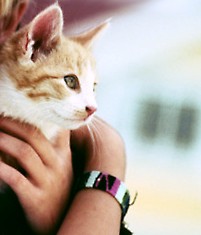
Did you know that, like vibrating piano strings, the sounds and vibrations your purring cat emits are in perfect musical harmony with each other? Those positive vibrations form the basis of one of the most soothing and pleasurable means of communication in the entire animal kingdom. Usually, your cat is telling you, "I'm feeling good."
In addition to the messages purring can send to you and others, it offers physical benefits to both felines and the lucky people petting them.
Purring Mechanics
Despite all of our high-tech advancements, the anatomical and mechanical roots of your cat's purr aren't entirely known. "Theories are that it is a vibration of the larynx [voice box] or diaphragm," says Elaine Wexler-Mitchell, DVM, author of Ask the Vet about Cats (BowTie Press 2004). "The vibration is stimulated by neural messages sent from the brain."
Cat behavior expert Amy Shojai, author of PETiquette: Solving Problems in Your Multi-Cat Household (M. Evans 2005), says that purring results when laryngeal muscles alternately open and close the glottis [the combination of the vocal chords and the space between the folds], causing a sudden separation of the vocal chords. The sound is due to the sudden buildup and release of pressure from the inhaling and exhaling of breath.
Purring Messages
Even though your cat purrs the same way no matter what's going on, the circumstances surrounding the purring determine what your pet is communicating. Often it's contentment -- a reflection of your cat's perception that all is right in its world. However, those feline rumbles may be sending a different message in some situations. These messages include:
"I'm a nice kitty"
Some cats may purr to signal to other cats that they're friendly and want to come closer to them. In certain situations, a cat purrs to signal to another party -- feline or human -- that it poses no threat to that individual. If your cat purrs while being handled at the vet and also head bumps with forward-facing ears, she's probably signaling that she poses no threat and feels minimal fear.
"I want to reassure myself"
A cat that's feeling nervous or upset may respond by purring. "Cats that are gravely ill will purr," notes Wexler-Mitchell. "Purring in this situation may provide some comfort." Dying cats are also known to purr, as are cats giving birth.
"I'm OK, you're OK"
Many experts believe that kittens, which can purr when they are only 2 days old, do so to signal to their mothers that everything is fine. The mother not only hears the sound of the kitten's purring but also feels the vibration. Mother cats are likely to purr back to their offspring in the same spirit of reassurance.
Physical Benefits
While mother cats and kittens use purring to let each other know that everything's all right, purring also helps ensure the kittens' survival. That's because newborn kittens, like many newborn animals, can't see or hear. However, they can feel the vibrations of their mother's purring, and those vibrations can guide them to their mother and enable them to nurse. The kittens then continue to purr while they nurse, as the vibrations reassure the mother cat that her babies are where they're supposed to be and doing what they're supposed to be doing.
Researchers have additionally found that purring may have healing properties too. "Interesting studies indicate that purrs help speed healing, particularly of broken bones," notes Shojai. Scientists have also found that low-level vibrations, such as those in feline purring, may help strengthen bones as well as muscles, ligaments and tendons -- which may account for the relative rarity of muscle and bone diseases in cats.
Finally, purring has a calming effect. Because of this quality, cats often serve as therapy animals in health care facilities, especially nursing homes. But a person doesn't need to be sick to benefit from feline therapy. "Nothing can be quite so therapeutic as a purring kitty on your lap," says Shojai. "My cat, Seren, seems to know when I need this sort of purr therapy. Petting her calms and reduces my stress."
Do you need a break from everyday pressures and hassles? Hang out with your purring kitty and feel those stresses melt away.
AUTOS | HOBBIES | EDUCATION | FAMILY | FASHION | FOOD & RECIPES | HOME DECOR | RELATIONSHIPS | PARENTING | PETS | TRAVEL | WOMEN
PET STORIES and PET ARTICLES ...
- Is Your Dog Cut out for Field Trials?
- Should You Crate-train Your Puppy?
- How to Play Soccer With Your Dog
- The Best Way for Your Dog to Ride in the Car with You
- Good Dog Park Etiquette
- What Is Freestyle Dancing With Dogs?
- Canicross: An Easier Way to Run With Your Dog
- Reading Your Dog's Body Language
- Kitten Kindergarten
- Tips to Keep Your Dog Safe While Flying
- Keep Your Dog Warm in the Winter
- Scottish Deerhound: The Ideal Exercise Buddy
- Teach Your Dog to Fetch
- Is Your Dog Bored?
- 7 Ways to Pamper Your Cat
- The Best Games to Play With Your High-Energy Dog
- Dog Feeding Mishaps Corrected
- How to Succeed at Off-Leash Dog Play
- ID Your Relationship With Your Cat
- Photographing Your Elusive Feline
- How to Keep Your Pet Safe During the Holidays
- When Good Dogs Turn Bad
- From Finicky Fido to Chowhound Charlie
- Insure Your Kitty's Health
- Unconditional Love: My Cat Forgives Me Every Day
- From Feline to Family Member
- Is Water From a Christmas Tree Stand Harmful to Cats?
- A Day in the Life of a Sheepherding Dog
- Go on a Desert Retreat With Your Dog
- Dog Food Goes Natural and Holistic
- Determining a Food Allergy
- Exercise Gone to the Dogs
- Find the Right Sport for Your Dog
- Make Your Dog a Part of Your Wedding
- Hydrotherapy Helps Dogs Get in Shape
- How Your Cat Says 'I Love You'
- Lost Cats Found
- De-stress Veterinary Visits for Your Cat
- Keeping Cat Food Fresh
- Second-Hand Cat, First-Rate Pet
Copyright ©
Pets | The Daily Cat: How and Why Cats Purr