- MENU
- HOME
- SEARCH
- WORLD
- MAIN
- AFRICA
- ASIA
- BALKANS
- EUROPE
- LATIN AMERICA
- MIDDLE EAST
- United Kingdom
- United States
- Argentina
- Australia
- Austria
- Benelux
- Brazil
- Canada
- China
- France
- Germany
- Greece
- Hungary
- India
- Indonesia
- Ireland
- Israel
- Italy
- Japan
- Korea
- Mexico
- New Zealand
- Pakistan
- Philippines
- Poland
- Russia
- South Africa
- Spain
- Taiwan
- Turkey
- USA
- BUSINESS
- WEALTH
- STOCKS
- TECH
- HEALTH
- LIFESTYLE
- ENTERTAINMENT
- SPORTS
- RSS
- iHaveNet.com: Oscars 2009
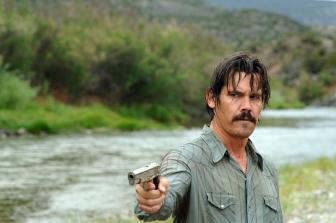
The movie "No Country For Old Men" is a mesmerizing thriller from Academy Award-winning film makers Joel and Ethan Coen, based on the acclaimed novel by Pulitzer Prize winning American master, Cormac McCarthy.
The time is our own, when rustlers have given way to drug-runners and small towns have become free-fire zones.
"No Country for Old Men" Received eight nominations for the 80th Academy Awards, including nominations for best picture, best director, best screenplay and best supporting actor.
Out of the 8 Academy Award Nominations, the movie "No Country for Old Men" garnered Oscars for Best Director (Joel and Ethan Coen), Best Picture (Scott Rudin, Joel and Ethan Coen), Best Screenplay – Adapted (Joel and Ethan Coen) and Best Supporting Actor (Javier Bardem)
"No Country For Old Men" features a cast that includes Academy Award-winner Tommy Lee Jones ("The Fugitive," "Men in Black"), Josh Brolin ("Grindhouse"), Academy Award-nominee Javier Bardem ("The Sea Inside"), Academy Award-nominee Woody Harrelson ("The People Vs. Larry Flynt") and Kelly Macdonald ("Trainspotting").
A Scott Rudin/Mike Zoss Production - Scott Rudin, Ethan Coen and Joel Coen, Producers
This is the second nomination in the Best Picture category for Scott Rudin. He was also nominated for The Hours (2002).
This is the sixth nomination for both Ethan Coen and Joel Coen. It is the first nomination in this category for Joel Coen and the second for Ethan Coen, who was nominated for Fargo (1996).
Joel Coen received a directing nomination for Fargo. The Coens won Oscars for writing Fargo, and were nominated for their screenplay for O Brother, Where Art Thou? (2000). They are also nominated this year for directing and writing No Country for Old Men. Ethan Coen and Joel Coen have also been nominated twice for Film Editing under the pseudonym Roderick Jaynes, for Fargo and again this year.
The movie NO COUNTRY FOR OLD MEN is a mesmerizing thriller from Academy Award- winning filmmakers Joel and Ethan Coen, based on the acclaimed novel by Pulitzer Prizewinning American master, Cormac McCarthy. The time is our own, when rustlers have given way to drug-runners and small towns have become free-fire zones. Featuring a cast that includes Academy Award-winner Tommy Lee Jones ("The Fugitive," "Men in Black"), Josh Brolin ("Grindhouse"), Academy Award-nominee Javier Bardem ("The Sea Inside"), Academy Award-nominee Woody Harrelson ("The People Vs. Larry Flynt") and Kelly Macdonald ("Trainspotting"), NO COUNTRY FOR OLD MEN is written for the screen and directed by Joel and Ethan Coen, produced by Scott Rudin, Ethan Coen and Joel Coen, and executive produced by Robert Graf and Mark Roybal.
The story begins when Llewelyn Moss (BROLIN) finds a pickup truck surrounded by a sentry of dead men. A load of heroin and two million dollars in cash are still in the back. When Moss takes the money, he sets off a chain reaction of catastrophic violence that not even the law – in the person of aging, disillusioned Sheriff Bell (JONES) – can contain. As Moss tries to evade his pursuers – in particular a mysterious mastermind who flips coins for human lives (BARDEM) – the film simultaneously strips down the American crime drama and broadens its concerns to encompass themes as ancient as the Bible, and as bloodily contemporary as this morning’s headlines.
About The Production "No Country for Old Men"
At once a modern legend and a literary maverick, Cormac McCarthy was already renowned for his extraordinary stories set against the changing American West when he published No Country For Old Men in 2005. The book, featuring one of his most visceral, multilayered and contemporary stories, was an instant success. A sinewy, suspenseful, humor-spiked thriller, McCarthy’s page-turning tale of an honest man who happens upon $2.4 million in cash on the Texas borderlands is a story of headlong pursuit. It’s also a provocative meditation on good and evil in a modern West that has grown into a land more violent and lawless than the mythic frontier of yore.
At the heart of the story lie some of McCarthy’s most evocative themes, which he has explored in ten novels that have become classics: the fast-approaching end of an entire way of Western life; the last stand of honor and justice against a broken world; the ongoing human struggle against the sinister; the dark comedy and violence of modern times; the interplay of temptation, survival and sacrifice; and, added into the mix, a touch of sustaining love and a sliver of hope in the darkness.
McCarthy’s complex characters and symbolic themes were writ so large in No Country For Old Men it was clear that it would take filmmakers with their own equally distinctive skills for rich, wry and resonant storytelling to transform the power of what was on the page into striking images and crisp dialogue. It’s hard to imagine a better match for the dusky wit and stark humanity of McCarthy’s characters than Joel and Ethan Coen – who burst onto the American cinema scene with the influential comic noir classic BLOOD SIMPLE and have gone on to forge some of the most inventive motion picture tales of our times including RAISING ARIZONA, MILLER’S CROSSING, BARTON FINK, the Oscar-winning FARGO, THE MAN WHO WASN’T THERE and O BROTHER WHERE ART THOU? With this film, the Coens marry McCarthy’s voice – complex, nuanced, layered and often humorous – with their own unique vision; the result is incredibly compelling and action-packed cinema.
The Coens first became aware of McCarthy’s novel through producer Scott Rudin. "He brought it to us thinking we might have an affinity for it," remembers Ethan, "and we did like the book. We also thought we could do something with it."
"It’s as close as we’ll ever come to doing an action movie," adds Joel. "It’s a chase story – with Chigurh chasing Moss and the Sheriff bringing up the tail. It’s a lot of physical activity to achieve a purpose. It’s interesting in a genre way; but it was also interesting to us because it subverts the genre expectations."
The Coens now set about adapting the story into a taut cinematic structure, emphasizing the darkly humorous and humanly revealing interplay between Llewelyn Moss, who discovers millions of dollars in the wreckage of a drug deal gone wrong, and the two antithetical men who are tracking him: the chilling psychopath Chigurh, on the one extreme, and the town’s profoundly decent Sheriff Bell, on the other. The result was a film that would take the Coens forward into new territory. "There is a good deal of humor in the book, although you wouldn’t call it a humorous novel, exactly," says Joel. "It’s certainly very dark – and that was our defining characteristic. The book is also quite violent, quite bloody. So the movie is probably the most violent we’ve ever made. In that respect it reflects the novel, I hope, fairly accurately."
The screenplay’s fresh view of McCarthy’s distinctly American themes, its rapid-fire pace and its inky black comic tone rapidly drew a cast of some of the finest actors working in films today. Tommy Lee Jones, who was ultimately cast in the role of Sheriff Bell, initially read McCarthy’s book shortly after it was published and was intrigued even then – and only more so when he learned the Coen Brothers would adapt the story. "Cormac McCarthy is arguably the best living prose stylist that we have in America," comments Jones. "His work raises intriguing questions for people who make films."
Josh Brolin is another big McCarthy fan who read the novel long before the screenplay.
"This book is one of the most amazing, violent and perfectly vernaculared stories that I've read in a long time," Brolin says. "Even though it's a linear story, just the structure of it was incredible. I just love the trio of Moss, Chigurh and Bell, and how it seemed like it was one person split three. As for the screenplay, Brolin says: "It’s an emotional, primal ride that is also about human principles of right and wrong, temptation and honor."
Brolin’s third of the trio is Llewelyn Moss, the army vet who quickly gets himself in a jam when he decides to take a potentially life-changing stash of drug money, but more for love than greed, according to Brolin. "I think from Moss’ point of view," he explains, "the whole thing stems from his relationship with his wife, Carla Jean. He has such an incredible love for her. He wants to be able to create a better life for them and to make her happy – that’s his drivin goal."
Acclaimed Spanish actor Javier Bardem, who landed the plum role of Chigurh, the killer who embodies the sinister heart of the borderlands drug world, was not familiar with the book until he had read the script, which instantly grabbed him. "I thought it was a very powerful story about violence and about how to control and stop the huge wave of violence that the world is living through right now," he says of the adaptation.
Kelly Macdonald, who plays Moss’s young wife Carla Jean, had a similarly strong reaction to the screenplay – not only to its human drama but its humor. "I saw just how funny it was," she says. "The characters came so alive off the page and they’re all quite dry-witted and that’s the thing that really stuck with me."
Cast & Characters "No Country for Old Men"
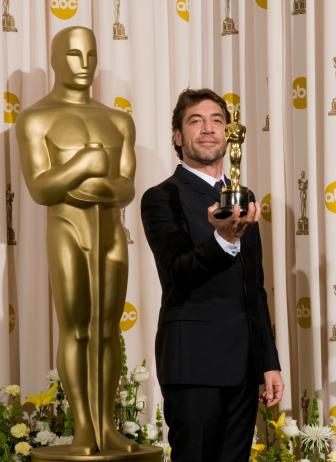
At the heart of NO COUNTRY FOR OLD MEN are its characters – men and women who inhabit a rapidly changing West – a place where lawlessness has led to a brave new world of international drug running and where the old rules no longer seem to apply. Against this backdrop, Sheriff Bell becomes a main lynchpin of the story – a stoic, philosophical law man with a dry-as-bone sense of humor and a rock-solid moral foundation who is bedeviled by the advent of the drug trade’s new breed of criminal and the violence it has brought to the land that he loves. Astonished by his new reality, Sheriff Bell represents an acute, heartbroken yearning for the more honorable way things used to be. "The movie is, no surprise given the title of the book, in part about Sheriff Bell’s perspective on time going by, on aging and on things changing," says Joel Coen.
"I assume that’s part of why the book is set in 1980, and not strictly speaking present day," adds Ethan. "It takes place just when the cross-border drug trade was getting very brutal, and that provides an opportunity for reflection by the Sheriff."
In considering who might play this riveting, yet reflective, character, the Coens found that Tommy Lee Jones quickly came to mind. "There are just very, very few people who can carry a role like this one," muses Joel. "Sheriff Bell is the soul of the movie and also, in a fundamental way, the region is so much a part of Sheriff Bell, so we needed someone who understood it." He continues: "It’s a role that also requires a kind of subtlety that only a really, really great actor can bring to it. Again, the list of these is pretty short, so when you put those two criteria together, you come up with Tommy Lee Jones. Being a Texan, the region is a part of his core." For Jones, the role proved irresistible, despite one initial hesitation. "I suppose I have played several Texas law enforcement officers," reflects Jones, modestly, "so I thought about that several times before accepting the job. But the attraction of working with Cormac McCarthy’s material was overwhelming."
Indeed, Sheriff Bell would be a complete departure from other lawmen Jones has played. Jones was especially moved by the character’s attempt to come to grips with the absurd reality that the world around him keeps getting worse despite everything he’s tried to do to make it better. He says: "In the course of the story, Sheriff Bell finds himself outmatched by this new monstrous form of criminality that he has to deal with. But he starts to learn that to react with disillusionment and disappointment is essentially all in vain."
The Coens found casting the Llewelyn Moss character somewhat more challenging than casting Sheriff Bell. Moss, a Vietnam veteran, is a decent-hearted Texas good ol’ boy who would likely never have crossed the law – until he comes across a great deal of drug money that appears to belong to a group of dead men.
"Moss is sort of a regular person who's caught up in extraordinary circumstances and has one unreflective moment where he decides to appropriate a bunch of money that isn't his," explains Ethan Coen. "He then spends the rest of the movie trying to avoid the consequences. So he's very much the action center of the movie."
Adds Joel, "In this story, you have a good guy and a bad guy, and Moss is the in-between guy." But that in-between quality proved harder to nail than anyone expected. "We thought it'd be really easy to find Moss," laughs Ethan, "because, in our minds, we thought, well, we just need a good clean kid. And it turns out it's not easy to embody that without either being dull, or being, again, not of the region."
At last, the Coens found an actor who was able to bring a dynamic presence, rife with a distinctly Western touch, to the role: Josh Brolin, who has emerged as a breakthrough screen actor. "Josh grew up on a ranch so he had a feeling for where Moss comes from," explains Ethan. "He was just a natural in the role." Brolin, who was raised in rural Central California, felt an immediate affinity with the character. He says: "Moss is really a compilation of a lot of guys that I grew up with. These are guys who have principles, yet I think they would probably do the same thing as Moss under the circumstances."
Providing the third side of the film’s taut moral triangle is Anton Chigurh, the chilling, offbeat villain who leaves no witnesses behind. The uniquely dark character would call for an actor capable of going to extremes of intensity.
"Chigurh’s actually described in the book as someone without a sense of humor," says Joel.
"But beyond that, his background’s quite sketchy. He’s relentless but there’s alsosomething mysterious about him. You don’t quite know where he’s come from."
He continues: "We needed an actor who would be able to flesh out Chigurh in a substantial way, but also without giving away too much, and keeping that sense of mystery – hence, Javier Bardem."
Bardem has quickly risen as one of international cinema’s greatest talents, garnering an Academy Award nomination for his role as Cuban poet Reinaldo Arenas in BEFORE NIGHT FALLS, and winning the Best Actor Award at the Venice Film Festival as the remarkable bedridden hero of THE SEA INSIDE. With Chigurh, Bardem faced one of his most exciting challenges yet – embodying a mythic villain whose soul appears to let in no light. Says Bardem:
"One of the themes of the movie is this huge wave of violence that the world has been taken by, and Chigurh symbolizes that violence in that he has no roots, he always takes things one step further and he’s unstoppable." In developing the character, Bardem collaborated closely with the Coens. "Talking with Joel and Ethan changed my whole perspective, and the character morphed into something more interesting, more complex, and also funnier," he says.
Alongside this trio of men are two equally compelling women. In the role of Moss’s wife Carla Jean is Scottish actress Kelly Macdonald, who garnered an Emmy Award and a Golden Globe nomination for her powerful performance in HBO’s THE GIRL IN THE CAFÉ and surprised the filmmakers with her audition. "Just as we were saying you can't really act the region, we cast Kelly Macdonald, who happens to be a Scottish actress from Glasgow," laughs Joel. "I just didn't believe she could play a gal from West Texas – but she convinced us otherwise in the audition."
Macdonald was especially impressed with how Carla Jean had been written on the page as a strong-minded young woman who seems to be on equal footing with her husband. "It's a really sweet relationship," observes Macdonald. "You get the sense that they're very well matched, and she can give as much as he can take. That's the thing that really came across when I read it.
There's kind of a nice banter between them, but there's also this real genuine kind of love."
Tommy Lee Jones was also pleased with the casting. "Kelly has the West Texan accent down perfectly," comments Jones, which is high praise coming from a real West Texan. "Between takes she was this sweet little girl from Scotland but when the camera turned on she became this pretty, tough West Texas gal. I was very impressed."
The other central relationship in the story is that of Sheriff Bell and his wife Loretta, a character who is instrumental in helping to define Bell. Playing Loretta is Academy Award and Golden Globe nominee Tess Harper, who herself hails from Arkansas. The Coens had been fans of her work since TENDER MERCIES, and note her ability to "convey a lot in a very short space of time."
Says Harper of her character: "Loretta is the rock that holds the Sheriff to where he needs to be. She’s his one port in the storm."
Under The Big Sky: The Setting "No Country for Old Men"
NO COUNTRY FOR OLD MEN unfolds against one of America’s most visceral and mythologized landscapes: the hardscrabble, desolate Texas-Mexico borderlands, where the two countries are divided only by the banks of the Rio Grande. To authentically capture this sunravaged, blood-soaked locale that straddles two countries, the production journeyed to the dry plains of West Texas and the deserts of New Mexico, where the Coens collaborated once again with five-time Academy Award nominee Roger Deakins as cinematographer. "The setting is actually part of the reason that we wanted to do this film," Ethan Coen notes. "We'd done our first movie (BLOOD SIMPLE) in Texas, although that was in Austin, but we'd also traveled through West Texas, and were attracted to it even before we read the book." He continues: "The setting is so integral to the book, to the story – it’s about where it takes place as much as anything else. It is a very beautiful landscape, but in a bleak rather than picturesque way. It's not an easy place to live in, and that's important to what the story is about – the human confrontation with this harsh environment." Joel concurs, "It’s a place with a history of violence and of being inhospitable in a way. As with all of Cormac McCarthy’s novels, the location is a character itself – and it can't be separated from the story." Deakins contributed stunningly austere visuals that allowed the locations to come to electrifying life. He recalls that in earlier conversations with the Coens, "we talked about the heat and the light and the mix of colors for the motel and the streets at night." Deakins also had his own influences in mind. "For me, NO COUNTRY FOR OLD MEN was like a Sam Peckinpah movie," he explains. "It has the feel of a period piece – but then the contemporary world intrudes. I especially thought of Peckinpah’s BRING ME THE HEAD OF ALFREDO GARCIA, where the characters still live by the rules of the past and are out of touch with the modern world."
To heighten this tension, Deakins used light as a storytelling device throughout NO COUNTRY FOR OLD MEN. "I loved contrasting the brightness of exteriors with the darkness of interiors and the bleached feel of the landscape with the garish colors of the nighttime world," he says.
"One of the biggest challenges was making a smooth transition from dawn to nighttime at the ‘drug deal’ location and into the river. We dealt with it as best we could by shooting in the dawn light, shooting at dusk and recreating a ‘fake dawn’ with lighting rigs." At the same time, Deakins believes that the landscapes are merely echoes of what really counts in the frame – characters. He says, "Every film that I’ve worked on has been primarily about character. To me, the locations are only a backdrop and I always feel that I am primarily photographing characters. If a shot is pretty, but doesn’t set a mood or help develop the story, then it is pointless. I love photographing faces and we had some of the best actors working today." Deakins’ work with the Coens has won widespread acclaim and awards, including Academy Award nominations for FARGO, BARTON FINK and THE MAN WHO WASN’T THERE.
He notes that their simpatico creative relationship lies at the core of their successful collaborations. "We know each other well and have a similar approach to visuals," the cinematographer summarizes. "I really just hope the photography works for the story and appears seamless."
That sense of seamlessness in storytelling was also aimed for in the editing room, where the Coens’ long-lived collaborator and seeming third-wheel, the enigmatic and elderly British editor Roderick Jaynes, who has been with them since BLOOD SIMPLE, once again cut their picture.
The shoot itself began in Marfa, Texas, a notoriously rugged area about three and a half hours from El Paso. Best known as the spot where the 1950s epic GIANT was filmed, Marfa – population 2030 – boasts as its main attraction the Hotel Paisano where James Dean, Elizabeth Taylor, Rock Hudson, and Dennis Hopper set up headquarters during filming. Here, rising young production designer Jess Gonchor whose work to date has included the high-fashion comedy THE DEVIL WEARS PRADA and the more intimate period drama CAPOTE, began collaborating with the Coens, searching for just the right locations for the film’s most dramatic scenes. For Gonchor, the key was understatement. Says Gonchor: "The Coens did such a tremendous job with the script, that I didn’t want to upstage anything – I just wanted to add to the storytelling with the scenery that I designed." One of Gonchor’s biggest challenges was creating Ellis’s cabin – where Sheriff Bell comes to his Uncle, a former Deputy Sheriff himself, for advice when he’s at the brink of despair. Recalls Gonchor, "We prefabricated the structure in Santa Fe where Joel and Ethan could see the progress, painted it, aged it, dressed it and then trucked the entire cabin out to Texas." Despite the long distances between locations, the unpredictable weather, poisonous desert creatures and scorching temperatures, the authentic locations proved invaluable – offering up the haunting, lonely atmosphere that makes the borderlands of Texas at once so fierce and so poetic.
Following their work in Texas, the company moved on to New Mexico, where they also shot in Las Vegas, New Mexico, a historic town seventy miles from Santa Fe, where the timeless, Western-style streets and iconic downtown plaza were able to double for several small Texas towns. It was also the site of another of Gonchor’s pre-fab marvels, the U.S.-Mexico border crossing which leads from Eagle Pass, Texas to a small Mexican town.
The simulated border crossing was erected on the University Boulevard freeway overpass in Las Vegas, and necessitated closing down the bridge and freeway exit for a week while the 50,000- pound steel structure was hauled in and put into place. Las Vegas residents took it in stride but tourists and out-of-towners driving through were mystified as to why the U.S.-Mexico border checkpoint had moved this far north or if New Mexico was really part of Mexico after all!
The landscape of NO COUNTRY FOR OLD MEN also extends to the characters’ heads, particularly that of Javier Bardem, who sports an evocative haircut in the role of Chigurh, designed by Academy Award winning Lead Hair Stylist, Paul Leblanc (AMADEUS). Explains Leblanc: "I worked very closely with Mary Zophres, the costume designer, and ‘the boys’ as I call them, in designing this look for Javier’s character. We wanted him to look strange and scary but not over-the-top. So I designed this original haircut to give the sense that he’s really mysterious – one that leads you to ask ‘where is this guy from?’ – but without necessarily giving away the fact he’s a killer. It’s kind of a bi-historical hairstyle, if you will. It could be 17th Century, it could be 1970s." Leblanc, who also worked on O BROTHER WHERE ART THOU and THE LADYKILLERS, happily came out of semi-retirement to re-team with the Coens.
"They are my favorite filmmakers to work with," he says. "They’re so collaborative and I think they really like hair, because they focus on it a lot. Ultimately, like everything else, the hair is used to create character."
Best Actress Academy Award Nominations
80th Academy Awards 2008 Best Actor Oscar Nominees
80th Academy Awards 2008 Best Picture Oscar Nominees
No Country For Old Men - Best Picture Oscar - Academy Award Winner
© iHaveNet.com
2009 Oscar Nominations
Best Picture
- Slumdog Millionaire Leads the Way
- The Curious Case of Benjamin Button
- Frost / Nixon
- Milk
- The Reader
- Slumdog Millionaire
Best Animated Feature
Best Actress
- Anne Hathaway in "Rachel Getting Married"
- Angelina Jolie in "Changeling"
- Melissa Leo in "Frozen River"
- Meryl Streep in "Doubt"
- Kate Winslet in "The Reader"
2009 Best Actor
- Richard Jenkins in "The Visitor"
- Frank Langella in "Frost/Nixon"
- Sean Penn in "Milk"
- Brad Pitt in "The Curious Case of Benjamin Button"
- Mickey Rourke in "The Wrestler"
Best Supporting Actress
- Amy Adams in "Doubt"
- Penelope Cruz in "Vicky Cristina Barcelona"
- Viola Davis in "Doubt"
- Taraji P. Henson in "Benjamin Button"
- Marisa Tomei in "The Wrestler"
Best Supporting Actor
- Josh Brolin in "Milk"
- Robert Downey Jr. in "Tropic Thunder"
- Philip Seymour Hoffman in "Doubt"
- Heath Ledger in "The Dark Knight"
- Michael Shannon in "Revolutionary Road"
2009 Oscar Nominated Movie Reviews
- Australia
- Bolt
- Changeling
- The Class
- The Curious Case of Benjamin Button
- The Dark Knight
- Defiance
- Doubt
- The Duchess
- Frost / Nixon
- Happy Go Lucky
- Iron Man
- Kung Fu Panda
- Milk
- Rachel Getting Married<
- The Reader
- Revolutionary Road
- Slumdog Millionaire
- Tropic Thunder
- WALL-E
- Waltz With Bashir
- Wanted
- The Wrestler